India's seed industry targets 10% of global seed trade by 2035, up from 1%
The Federation of Seed Industry of India has set a goal of raising the country's share of global seed trade from about 1% today to 10% by 2035. The target was presented in New Delhi on 24 September at FSII Knowledge Day 2026, held alongside the federation's 10th Annual General Meeting. FSII also put the domestic seed market at $3.6 billion and expects it to reach $5 billion by 2030.
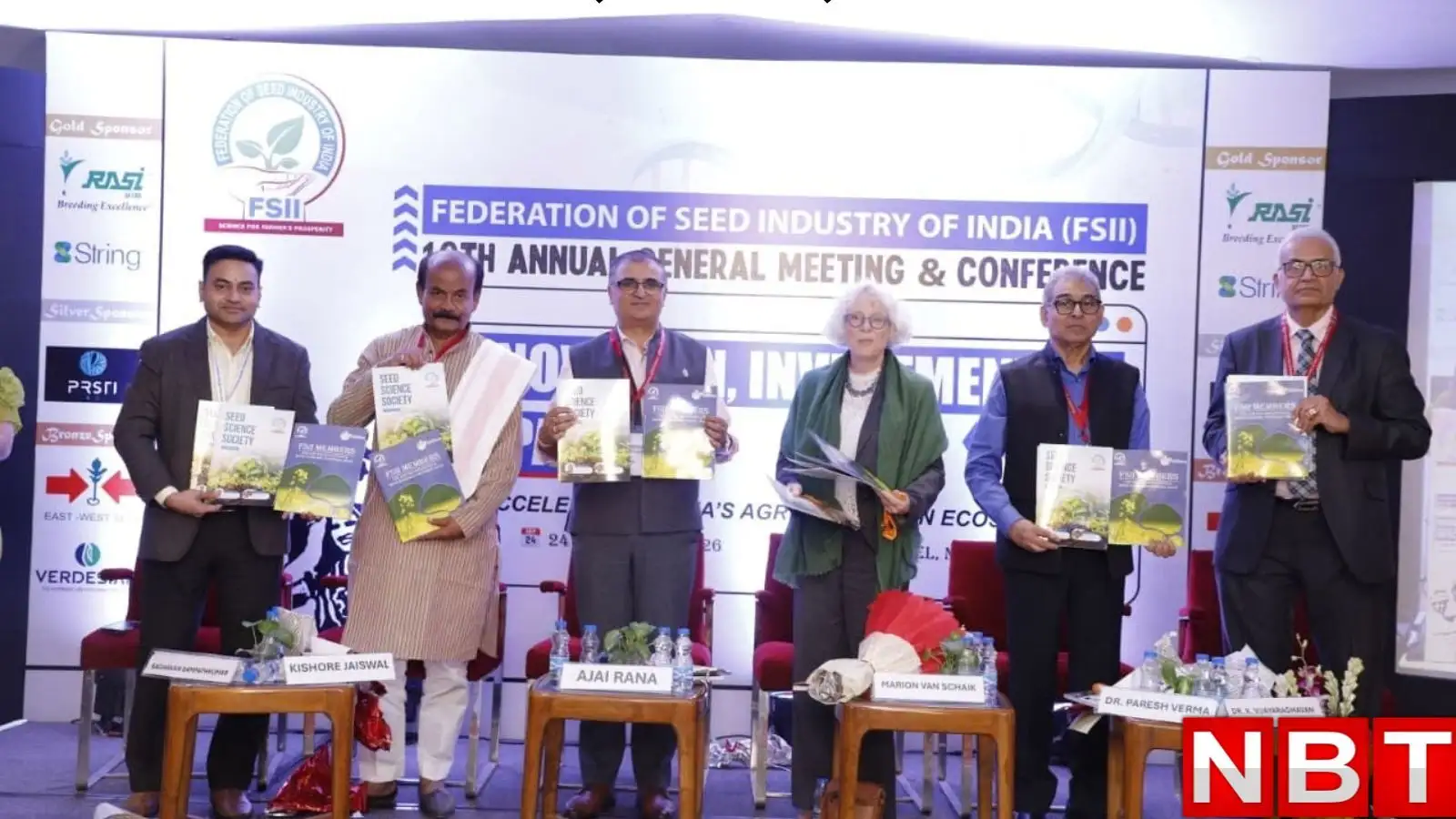
The Federation of Seed Industry of India (FSII) has set a target of lifting India's share of global seed trade from roughly 1% today to 10% by 2035. The industry body announced the goal in New Delhi on Thursday, 24 September, according to news agency Press Trust of India.
The target was presented at FSII Knowledge Day 2026, an event held to mark the federation's 10th Annual General Meeting, where members discussed the seed sector's priorities for the years ahead. Alongside the export ambition, FSII put the domestic seed market at $3.6 billion and said it expects it to reach $5 billion by 2030, as reported by Navbharat Times.
A tenfold shift in export share
Raising the share from 1% to 10% implies a tenfold increase in India's weight in the international seed business over roughly a decade. FSII did not publish a value for current Indian seed exports, a crop-by-crop breakdown, or intermediate milestones between now and 2035, so the target stands as a stated ambition rather than a costed plan.
The federation tied the goal to innovation in oilseeds and pulses, two crop groups where Indian breeders and seed companies are being pushed to deliver higher-yielding varieties. Seed trade differs from bulk commodity trade: shipments are small in volume but high in value per tonne, and market access depends on variety registration, phytosanitary clearance and performance under the destination country's growing conditions.
Domestic market: $3.6 billion now, $5 billion by 2030
The domestic figures give the nearer-term test of the strategy. Moving from $3.6 billion to $5 billion is a gain of about 39%. FSII did not state the base year for the $3.6 billion figure, so the implied annual growth rate cannot be fixed precisely.
- Current domestic seed market: $3.6 billion
- Domestic market target: $5 billion by 2030
- Share of global seed trade: about 1% now, 10% targeted by 2035
Navbharat Times linked that growth to a change in farmer behaviour: where Indian farmers once saved and conserved their own seed, most now buy improved seed from the market and sow it. That shift converts what was an on-farm practice into commercial demand, and it is the base on which the $3.6 billion market has been built.
The policy asks: one framework, faster approvals, IP protection
The industry is seeking three things from government, according to the FSII statement: a single national framework for the seed sector, faster regulatory approvals, and stronger intellectual property protection to support investment in research. The call for a unified framework indicates that companies regard the present approval environment as fragmented and slow, a recurring complaint in seed and crop-input regulation, where central rules interact with state-level implementation.
Intellectual property is the binding constraint for the crops FSII named. Oilseeds and pulses are largely self-pollinating, which means a farmer can multiply a purchased variety and re-sow it the following season. Without enforceable plant variety protection, the commercial return on a breeding programme in those crops is limited, and private investment tends to concentrate in hybrids, such as maize, cotton and vegetables, where the biology itself protects the developer's position.
What to watch
For processors, importers and traders, the practical questions are which Indian varieties clear registration abroad, in which markets, and on what timeline. For domestic seed producers, the nearer signal is whether the $5 billion figure for 2030 is met. FSII attached no financial commitment, government undertaking or legislative timetable to either target at the Knowledge Day event.