Indian rice shipments rejected overseas over residues, contamination and certification gaps, IREF says
The Indian Rice Exporters Federation says consignments of Indian rice are being rejected in overseas markets because of pesticide residues, contamination and certification gaps. The federation frames the problem as a supply-chain compliance issue rather than a series of isolated incidents, and points to stronger testing, traceability and documentation as the fixes needed to protect trade flows.
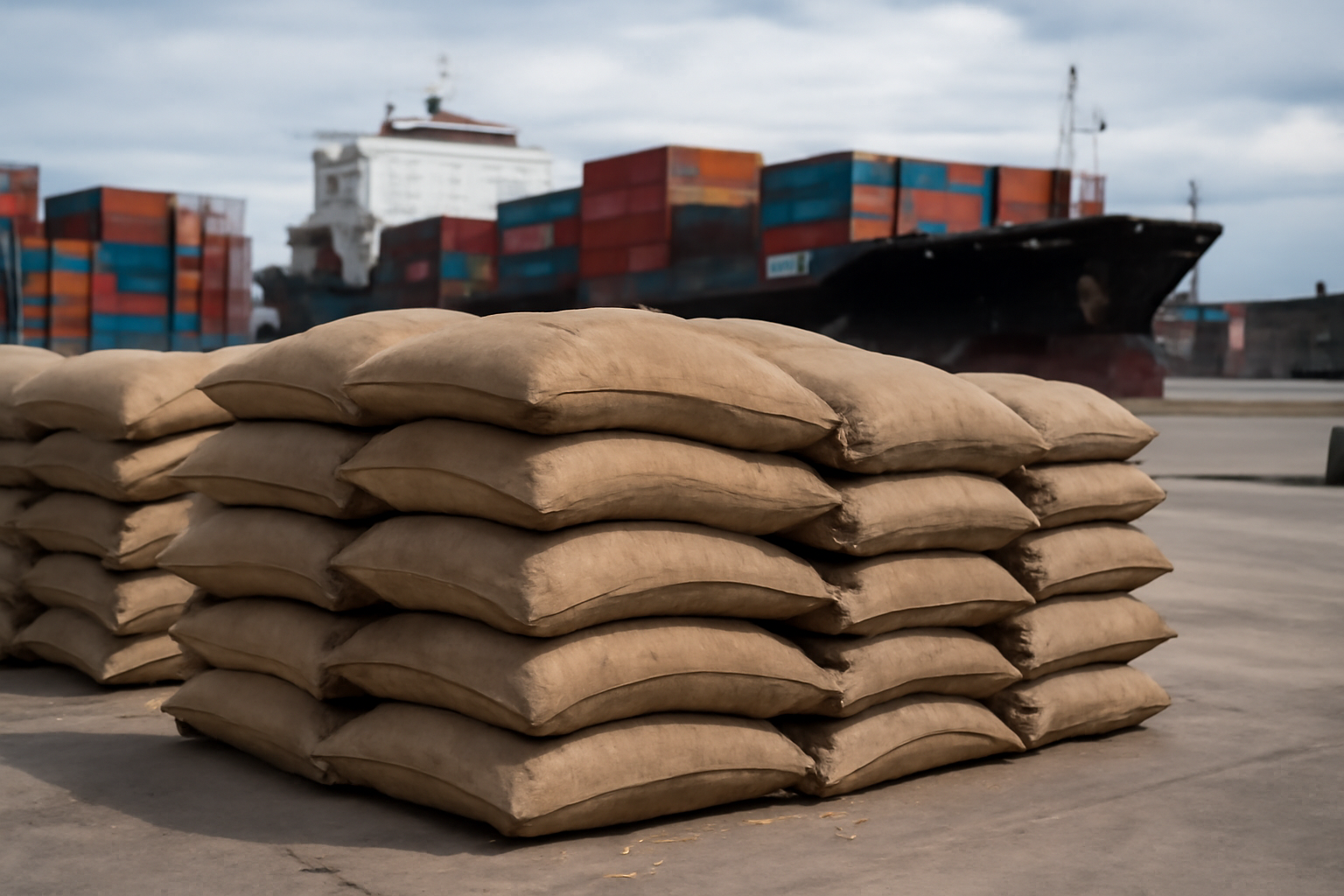
Indian rice consignments are being rejected in overseas markets because of pesticide residues, contamination and gaps in certification, according to the Indian Rice Exporters Federation (IREF). The federation, which represents the country's rice exporting trade, has described the rejections as a compliance and quality problem running through the supply chain rather than a run of isolated incidents.
IREF has not tied the rejections to a single destination market or a single grade of rice. The three causes it identifies — residues above the levels importing authorities accept, contamination in the cargo, and documentation that fails to satisfy certification requirements — are the standard grounds on which consignments are detained, downgraded or turned away at the port of entry.
Three failure points in one supply chain
Pesticide residues are the most commercially sensitive of the three. Maximum residue limits are set by importing countries and differ from market to market, so a cargo that clears one destination can fail at another without anything about the grain itself having changed. Because residues originate at farm level, they cannot be corrected once paddy has been harvested, milled and loaded. Testing at the port identifies the problem but does not remedy it.
Contamination covers a wider spread of defects, from foreign matter and excess moisture to pest infestation and cross-contamination picked up in storage, milling or transit. Unlike residues, much of this is addressable through handling discipline at warehouse and mill level, and it is usually visible in inspection before a container leaves the origin port.
Certification gaps are the most avoidable category of the three. Importing authorities require consignment-level documentation, including phytosanitary certificates, laboratory test reports and declarations that match the physical cargo. Where that paperwork is incomplete, internally inconsistent or issued by a body the destination does not recognise, cargo can be held regardless of its actual quality.
Why a rejection costs more than the cargo
The value of the rejected consignment is only part of the bill. The exporter has already paid outbound freight, and then either pays again to bring the cargo home or sells it at a discount in the destination or a third market. Demurrage accrues for as long as the container sits at the port while the case is resolved, and buyers who have arranged onward sales face their own supply gap.
The larger cost is systemic. Repeated failures from one origin typically prompt importing authorities to raise inspection and sampling rates on subsequent shipments, which lengthens clearance times and adds testing costs for every exporter shipping from that country, including those whose consignments meet the standard. Rejections also carry reputational weight in tender-driven and retail supply contracts, where buyers screen suppliers on their rejection history.
The compliance fixes in focus
IREF has linked the rejections to the need for stronger compliance and quality control across the chain that delivers rice to the container. In practice that points to pre-shipment residue testing rather than testing only on arrival, traceability that runs from the farm or aggregator through the mill to the loaded container, discipline on which agrochemicals are used and on pre-harvest intervals, adequate accredited laboratory capacity to process samples at export volumes, and documentation practices consistent enough to survive scrutiny at the destination.
Residue control is the hardest of these to implement, because it depends on practices at the growing stage, spread across a fragmented farming base, long before the exporter takes delivery. Contamination and certification, by contrast, sit largely within the exporter's own control and can be tightened faster.
What is at stake in the trade
India is the world's largest rice exporter, shipping both basmati and non-basmati grades to buyers across Asia, Africa, the Middle East and Europe. Its customer base spans markets with strict residue enforcement and markets with lighter testing regimes, which means compliance performance increasingly determines which destinations an individual exporter can serve and at what price.
For importers, the practical consequence of the IREF assessment is that supplier selection and pre-shipment verification carry more weight than before. For Indian exporters, the federation's message is that the cost of building testing and traceability into the chain is measured against the cost of cargo stopped at a foreign port.
