Post-Harvest Losses in Indian Onion, Soybean and Custard Apple Chains Carry Heavy Costs
Post-harvest losses in selected districts of Madhya Pradesh and Maharashtra represent an estimated ₹27.11 billion for onion, ₹20.87 billion for soybean and ₹200 million for custard apple annually. WRI India also linked the losses to more than 1 million tonnes of carbon dioxide equivalent emissions.
Losses extend beyond farm income
Post-harvest losses in the onion, soybean and custard apple supply chains of two major Indian agricultural states are imposing substantial economic, nutritional and environmental costs, according to research reported by The Hindu BusinessLine. A WRI India working paper examined harvesting, sorting, transportation, storage and handling in selected high-production districts of Madhya Pradesh and Maharashtra during 2023 and 2024.
Applying the study’s loss rates to annual production in those districts produced indicative annualized losses of 1.689 million tonnes of onion, 416,000 tonnes of soybean and 7,793 tonnes of custard apple. For onion, the calculation covered only the estimated storage-relevant share of the rabi crop. The respective economic losses were estimated at ₹27.11 billion, ₹20.87 billion and ₹200 million.
The geographic concentration makes the findings important for national supply. Madhya Pradesh and Maharashtra produce approximately 82.8% of India’s soybean, 57.2% of its onion and 56% of its custard apple. WRI India prepared the paper with field partners including BAIF Development Research Foundation, Samunnati and the Centre for Advanced Research and Development.
Different crops, different failure points
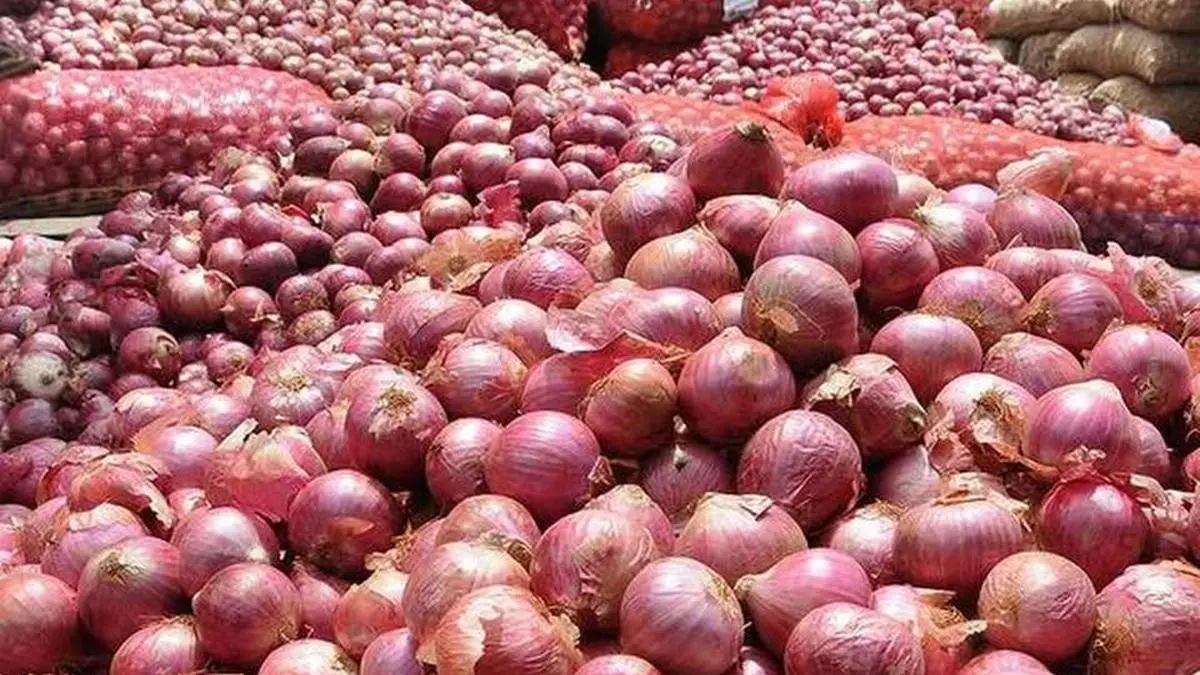
Farm-level storage was the critical loss point for rabi onion. Inadequate curing before storage and poorly ventilated structures contributed to physiological weight loss, sprouting and rotting. Nearly three-quarters of lost onions were sent to open dumps, while the balance went to composting, according to the paper.
For soybean, harvesting and threshing were the main pressure points, with collection also identified as critical. Unseasonal rain can cause moisture absorption and fungal infection, while pod shattering and incorrectly calibrated combine harvesters create additional losses. A substantial share of lost soybean goes into animal feed, moderating its emissions impact compared with disposal through open dumping.
Custard apple losses arose during harvesting, field sorting and collection or aggregation. The specific critical point varied between cultivated orchards and fruit gathered from forests or common land. Harvesting at the wrong physiological maturity, heat stress during aggregation without shade, and mechanical damage during sorting, packaging, handling and collection drove discards.
Embedded emissions and nutrition are also lost
The associated greenhouse gas emissions were estimated at 995,523 tonnes of carbon dioxide equivalent for onion, 92,206 tonnes for soybean and 6,314 tonnes for custard apple. These figures include emissions embodied in producing food that was ultimately lost as well as emissions from its disposal. Onion generated the largest total because of both its loss volume and the high proportion sent to open dumps.
Soybean carried the greatest protein cost: 147,000 tonnes, compared with 25,345.46 tonnes for onion and 126.25 tonnes for custard apple. Estimated energy losses reached 1,585.48 billion kilocalories for soybean, 811.73 billion for onion and 7.71 billion for custard apple. Carbohydrate losses were 53,160.61 tonnes, 161,000 tonnes and 1,588.30 tonnes, respectively.
The paper gives soybean interventions priority because even a relatively small reduction in physical losses could preserve a disproportionately large amount of protein. Across all three chains, it calls for better access to post-harvest technology, infrastructure and finance, stronger integration of post-harvest practices into agricultural extension, and closer alignment of policy and market support with production and sourcing. The findings indicate that equipment calibration, storage design, shade and handling practices can affect not only farmer revenue and marketable supply but also the climate footprint of every tonne that never reaches its intended buyer.