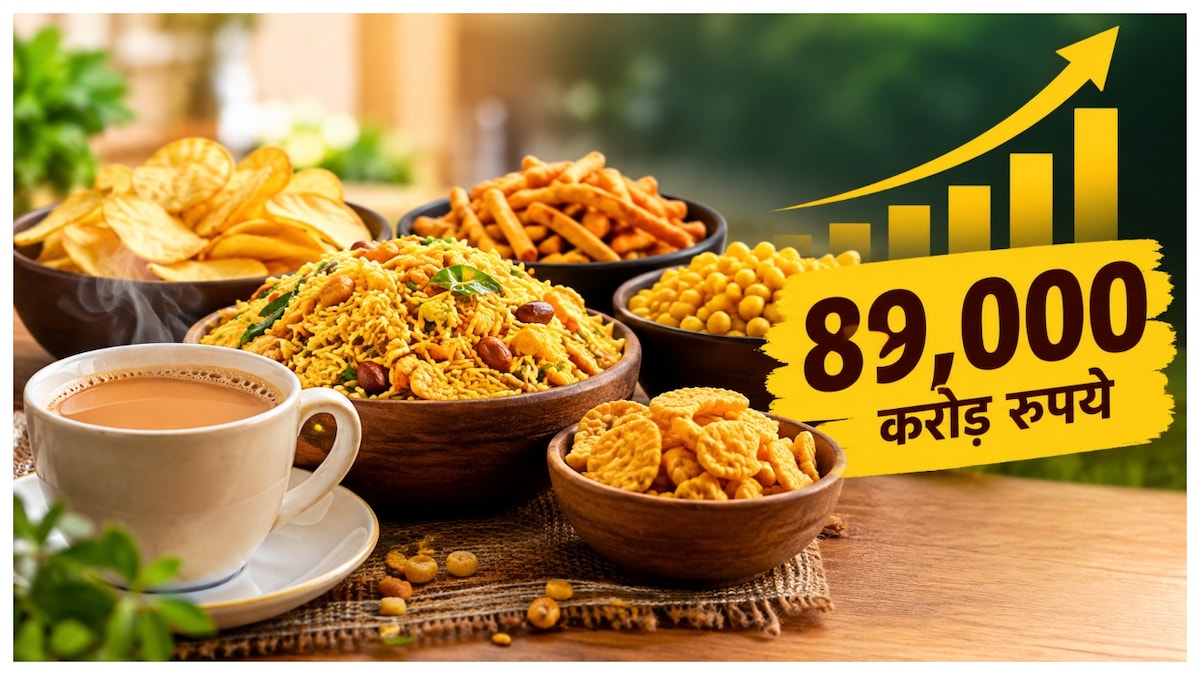
India's namkeen and savoury snacks market reached about ₹89,000 crore in FY25
India's market for namkeen and savoury snacks reached roughly ₹89,000 crore in FY25, according to the Hindi service of CNBC-TV18, which reported continued rapid growth in the category. The broadcaster linked the scale of the market to an everyday tea-time habit that has moved from home kitchens into branded, packaged formats sold nationwide.
A ₹89,000 crore category
India's market for namkeen and savoury snacks reached about ₹89,000 crore in FY25, according to the Hindi service of CNBC-TV18, which reported that the category is expanding quickly and consistently. The broadcaster tied that scale to an everyday habit rather than to a product launch cycle: namkeen eaten with tea, long prepared at home or bought loose, has shifted into branded and packaged formats.
Indian fiscal years end in March, so FY25 refers to the year ending March 2025. At ₹89,000 crore, savoury snacks rank among the larger packaged-food categories in the domestic consumer market. CNBC-TV18 presented the figure as an estimate for the category as a whole, without publishing a split between branded output and loose or regional supply.
What the category covers
Namkeen is an umbrella term for salted and spiced snacks, and the manufacturing base behind it draws on a narrow set of agricultural inputs:
- Gram flour and pulses, the base for sev, bhujia and mixtures
- Groundnut, cashew and other nuts, used both inside mixes and as standalone salted lines
- Potato and cereals such as rice and corn, used in chips, flakes and extruded snacks
- Edible oil and spice blends, which shape cost and taste profile in roughly equal measure
Most volume moves in small packs sold at fixed price points. That structure limits how much of an input-cost increase a manufacturer can pass straight to the consumer, so adjustments usually come through pack weight, recipe and packaging specification rather than the price on the shelf.
Input costs and manufacturing exposure
The raw-material basket ties snack makers to agricultural markets for pulses, groundnut, potato and grain, and to the vegetable oil complex. India buys a large share of its edible oil abroad, which means changes in import duties and movements in palm, soyabean and sunflower oil prices reach domestic snack production lines quickly. Packaging is the second cost block, since multilayer laminate film determines shelf life in an ambient distribution chain with no cold storage.
Capacity in the category runs from single-plant regional producers to national manufacturers operating multiple frying and extrusion lines. Because the product is shelf-stable and low-value per unit, plant economics depend on throughput, yield and freight radius. Investment cases in the sector therefore rest more on installed capacity and distribution reach than on product novelty.
Distribution, competition and what to watch
Namkeen is one of India's most regionalised food categories. Taste preferences, spice levels and formats change from state to state, which keeps local and unorganised producers competitive alongside national brands and makes geographic expansion slower than headline market growth suggests. Distribution still runs mainly through traditional kirana retail, with modern trade, e-commerce and quick-commerce platforms adding urban reach.
For producers, processors and investors, the CNBC-TV18 estimate sets a reference point rather than a complete picture. The variables that matter next are the pace at which loose product converts to packaged product, the share of that conversion captured by branded manufacturers, and how pulse, groundnut and edible oil prices track through the current fiscal year. Export demand from diaspora markets is a secondary channel for larger manufacturers, though the reported figure covers the domestic market.