India’s kharif rice risk tightens outlook after record global crop
The International Grains Council expects global rice production to decline in 2026/27 for the first time in more than a decade, largely because of a weaker Indian kharif crop. India’s output could fall from 154 million tonnes to 147 million tonnes, although exports are still forecast at 25 million tonnes.
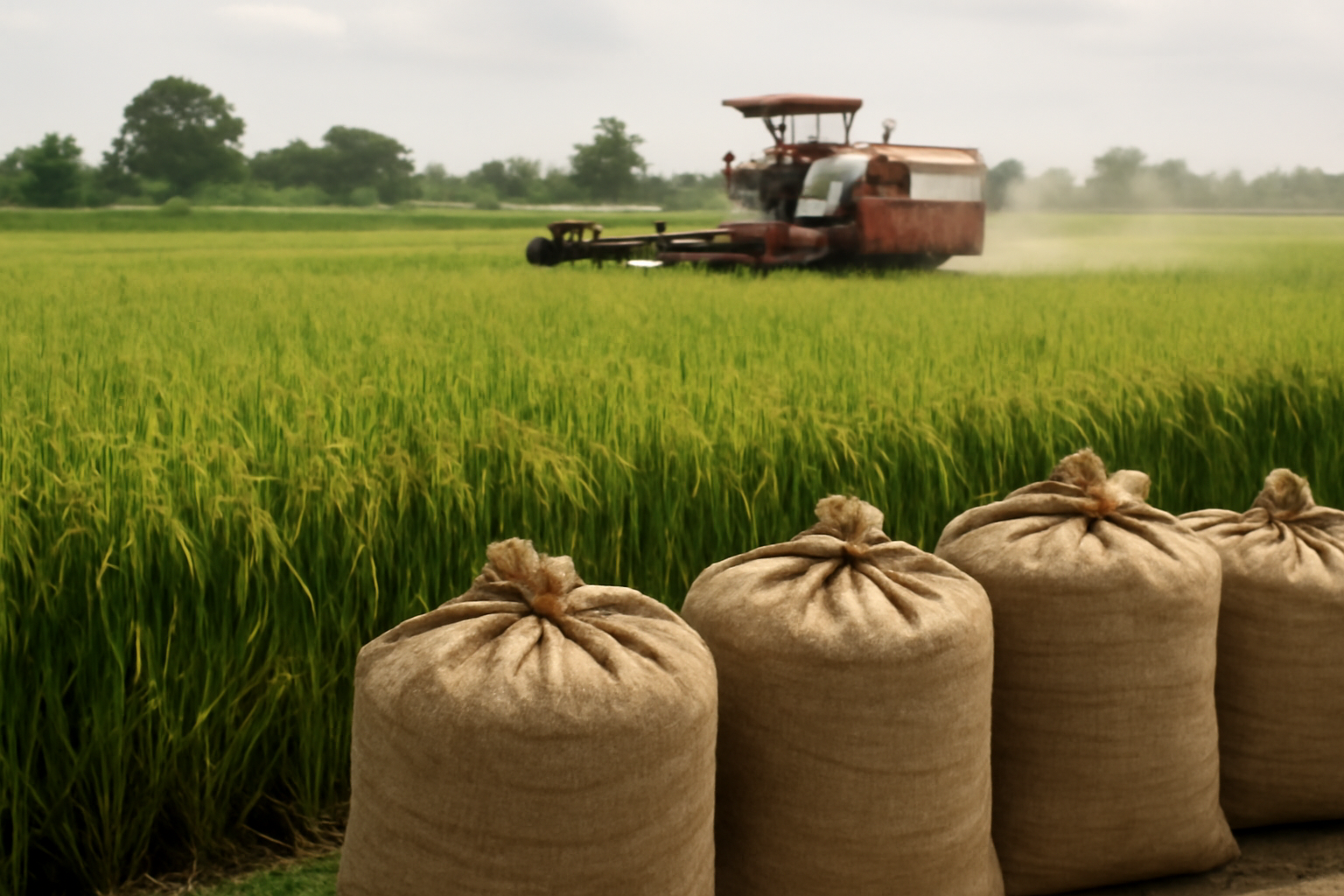
India drives a sharp change in the global forecast
World rice production is expected to decline in 2026/27 after reaching a record in 2025/26, according to the International Grains Council. It would be the first annual contraction in more than a decade. The IGC’s September outlook placed global production at about 535.7 million tonnes and cut the forecast by 5 million tonnes from the previous month, largely because of a reduced estimate for India’s kharif crop.
The revision marks a significant change from the Council’s June assessment. At that time, the IGC expected India’s production to expand and global output to remain broadly stable. The latest forecast instead identifies India as the main reason for the projected global decline, underlining how quickly the supply outlook has changed during the monsoon and planting season.
Lower acreage and a weak southern monsoon
iGrain reported that the India office of the US Department of Agriculture’s Foreign Agricultural Service expects Indian rice production to fall from 154 million tonnes in 2025/26 to 147 million tonnes in 2026/27, a reduction of 7 million tonnes. The forecast covers the October-September marketing year and attributes the decline to a substantial reduction in kharif paddy area and a weak monsoon in southern India.
India had planted 42.18 million hectares of paddy by September 4, compared with 43.819 million hectares at the same point a year earlier. The year-on-year decline was 1.637 million hectares, although the planted area remained well above the five-year average. The comparison is also affected by the exceptionally large area recorded in the previous season. Rice is grown in India during the kharif, rabi and zaid seasons, but the kharif harvest is central to annual availability.
Exports remain high despite the production decline
The USDA Post does not expect the smaller crop to disrupt domestic availability or India’s export performance. It forecasts exports of 25 million tonnes in 2026/27, unchanged from its estimate for 2025/26. That projection suggests India can continue supplying international buyers even as production falls, although it leaves less room for further growth in shipments or inventories.
At the global level, the IGC expects rice consumption to increase by 1% year on year, supported by demand in major Asian and African markets. World carryover stocks are forecast to remain near the level projected in August because higher opening reserves and a 3-million-tonne reduction in the consumption forecast offset weaker production. Indian stocks, however, are expected to contract modestly.
A record trade outlook with firmer prices
Global rice trade in calendar 2027 is forecast at 61.7 million tonnes, up 3% and at a new high. The IGC expects import demand from sub-Saharan Africa to drive the expansion. Stable Indian exports would therefore remain important for importers, particularly if lower production limits the ability of other suppliers to respond to stronger demand.
Prices have already strengthened. The IGC rice sub-index rose by 3% over the latest reporting period, supported by slow producer selling and higher export quotations in India, Thailand and the United States. The combination of declining output, expanding consumption and record trade does not imply an immediate shortage, but it reduces the market’s production cushion. Weather developments in India and the release of Indian stocks will consequently remain important signals for producers, traders and import-dependent markets.
