Pulse prices rise as oilseeds weaken in India’s Kharif wholesale markets
Wholesale mandi data show pulse prices rising in India while oilseeds lose ground. Stable cereal prices and volatile horticultural markets point to uneven supply conditions as the monsoon progresses.
Pulses lead the Kharif market
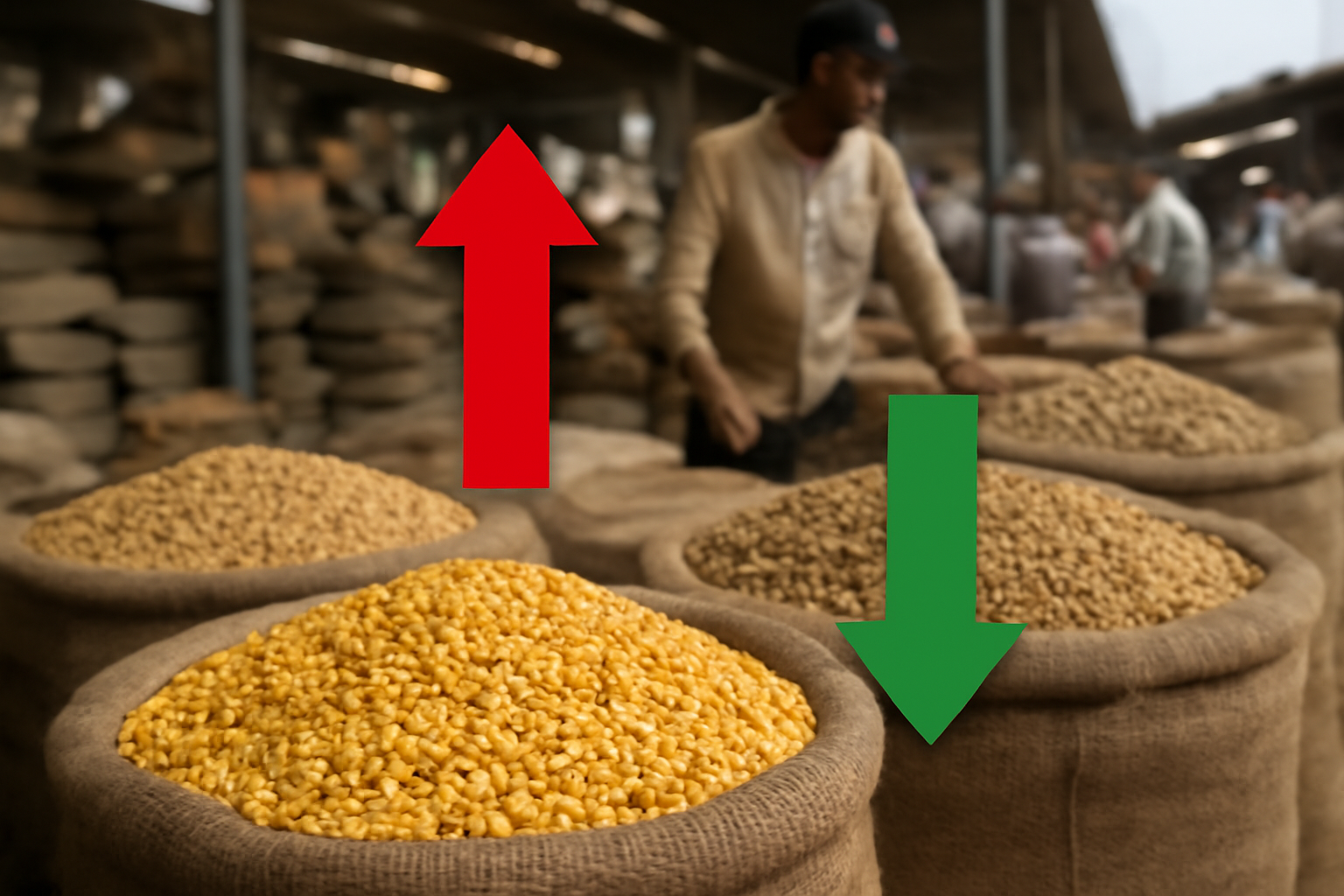
Pulse prices are climbing in India’s wholesale agricultural markets, with mandi data pointing to tighter available supplies. The movement separates pulses from other major Kharif commodity groups and gives producers, processors and traders an early indication that the balance between market arrivals and demand has become less comfortable.
Higher wholesale prices can improve selling conditions for farmers holding marketable pulse stocks, but they raise procurement costs for millers and other processors. Traders must also assess whether the rally reflects a temporary shortage of arrivals or a broader supply constraint. That distinction will determine whether buyers accelerate purchases or wait for additional crop volumes to reach the mandis.
Oilseeds move in the opposite direction
Oilseed prices have weakened even as pulses advance. The divergence shows that India’s Kharif markets are not responding uniformly to monsoon conditions. For oilseed growers, lower mandi prices reduce immediate marketing returns. For crushers and other industrial buyers, the decline may offer more favorable procurement opportunities if supplies remain available.
Cereal prices, by contrast, have remained broadly stable. That stability provides a quieter reference point within an otherwise mixed agricultural market. It also suggests that the price pressure visible in pulses and oilseeds is linked more closely to the supply and demand conditions affecting those commodity groups than to a general rise or fall across all Kharif crops.
Uneven monsoon adds uncertainty
The mixed price pattern is developing against uneven monsoon progress. Rainfall timing and distribution affect planting, crop development, expected yields and the pace at which produce eventually reaches wholesale markets. Until the seasonal picture becomes clearer, mandi participants are likely to place greater weight on local arrivals and regional crop conditions rather than on a single national price direction.
Horticultural commodities have also returned to greater volatility, adding another source of uncertainty for wholesalers and buyers. These products can react quickly to changes in harvest volumes, transport conditions and short-term availability. Together, stronger pulses, weaker oilseeds, stable cereals and volatile horticultural produce describe a segmented market in which each commodity group is trading on its own supply signals.
Implications for agricultural trade
The pulse rally will be closely watched by importers, processors and policymakers because tighter domestic availability can increase attention on external supply options. However, the available mandi data do not establish whether additional imports will be required. That will depend on the duration of the price increase, subsequent market arrivals and the development of the Kharif crop.
For oilseeds, weaker wholesale prices may affect farmers’ selling decisions and processors’ purchasing schedules. Exporters and importers will also compare domestic prices with international alternatives, although the current data provide no evidence of a specific change in trade volumes. The clearest signal is that India’s agricultural markets are diverging: pulses are tightening, oilseeds are softening, cereals are steady and horticultural products remain exposed to renewed volatility.