India hits E20 ethanol-blended petrol five years early, sparking engine and food-supply debate
India reached 20% ethanol blending in petrol (E20) in 2025, five years ahead of its 2030 target and up from about 1.5% in 2014, according to Prabhat Khabar. The push has cut a crude import bill that hit $112.74 billion in 2014 and given sugar mills and distilleries a guaranteed buyer, but has opened a debate over older engines and the diversion of grain and cane to fuel.
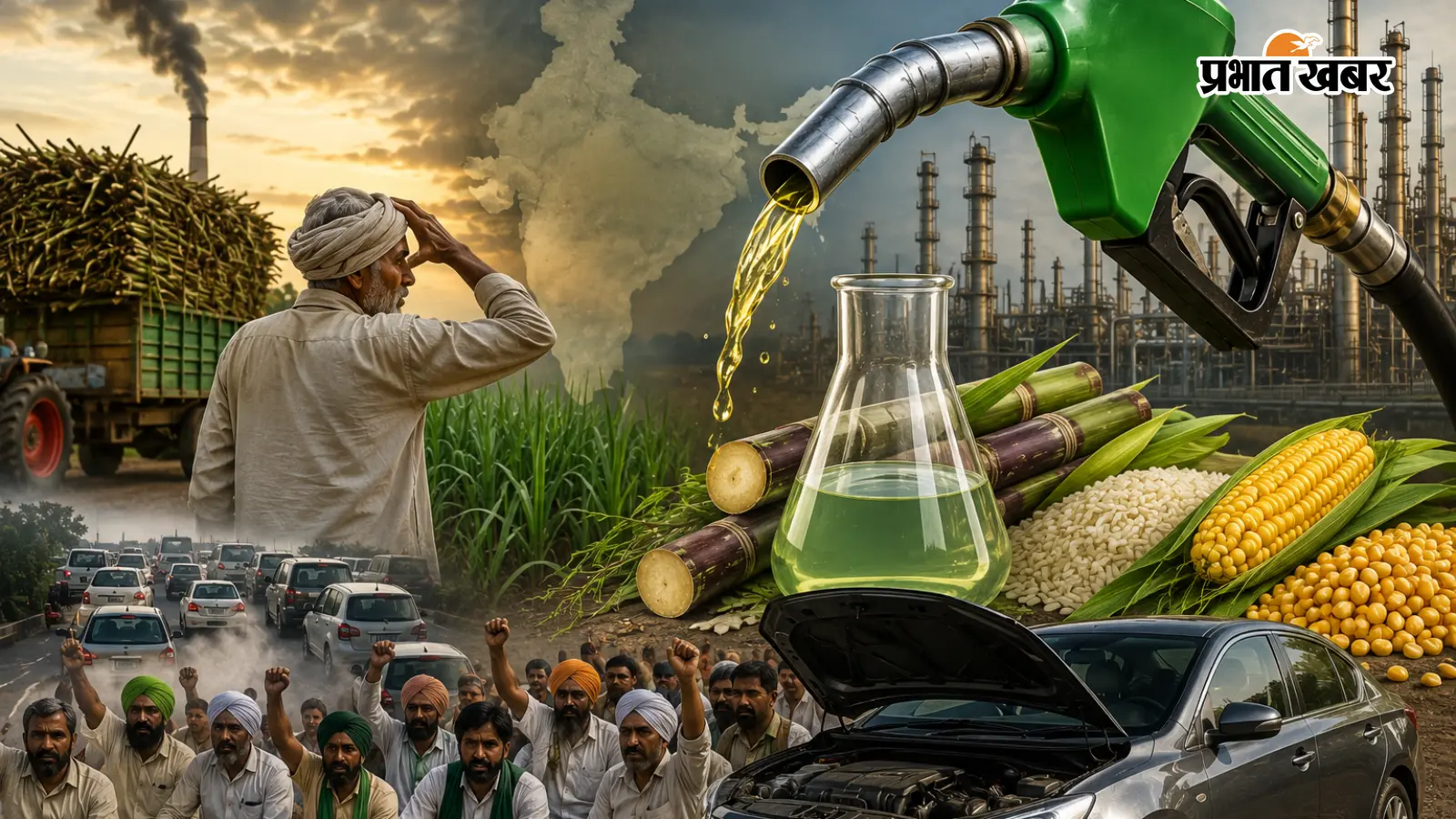
From 1.5% to E20 in about a decade
India has reached a 20% ethanol blend in petrol (E20) in 2025, five years ahead of its original 2030 target and up from roughly 1.5% blending in 2014, according to Prabhat Khabar. The government says the E20 rollout goal was met by 2025, turning a fuel that was stuck at marginal volumes into the standard sold at pumps across the country.
The policy is rooted in India's oil import dependence. Prabhat Khabar reports that in 2014 India was buying around 3.8 million barrels of oil a day, importing 189.43 million metric tonnes of crude that year at a cost of $112.74 billion (about 6,87,369 crore rupees). Rising crude prices and geopolitical instability pushed the search for alternatives, and blending ethanol into petrol became the chosen route.
Policy milestones
India first added ethanol to petrol in 2001 as a small experiment, and formally launched the Ethanol Blended Petrol programme in January 2003, though it made little headway for years. A 2013 notification under the UPA government failed to accelerate uptake, leaving the blend near 1.5% by 2014.
- In December 2014 the government reintroduced an Administered Price Mechanism for ethanol procurement, fixing prices itself. This gave sugar mills and ethanol producers certainty and simplified purchasing for oil companies, and supply rose quickly.
- On 16 May 2018 the National Biofuel Policy 2018 widened feedstock beyond sugarcane to damaged grain, broken rice and maize, and set the 20% blending target for 2030 — later advanced to 2025.
- New distilleries were built and ethanol capacity multiplied, backed by thousands of crores of rupees in investment.
Older engines and the food question
Prabhat Khabar reports that much of the new ethanol capacity is now underused, and discussion has moved to blends beyond E20, such as E85. E85 is currently considered suitable only for flex-fuel vehicles, and no move to make it standard petrol has been announced. The concern is that India still has crores of vehicles designed for E10 or lower. Experts cited by the publication warn that if higher blends are used widely in older vehicles, engines, fuel pipes and other parts could face added stress, leading to corrosion, lower mileage and higher maintenance costs — shifting the nation's savings onto individual owners.
Ethanol demand is also reshaping farming. A large share of sugarcane that once became sugar is now going to ethanol, maize cultivation is expanding and grains such as broken rice are being used. Second-generation (2G) technologies that make ethanol from crop residue like stubble could ease pressure on food grain if they succeed.
How India compares
India is not alone in blending, but it moved far faster than others. Prabhat Khabar notes that Brazil, called the world's ethanol capital, commonly blends about 27% (E27) and is preparing to raise that to 30–35%, with E100 sold at pumps and more than 80% of new cars fitted with flex-fuel technology. The United States, the largest ethanol producer and consumer, blends corn-based ethanol with E10 standard, E15 rising and E85 widely available for flex-fuel vehicles. Paraguay has made E30 mandatory, Thailand runs E20 as normal fuel and promotes E85 through tax relief, while Europe, the UK, Canada and Australia have long used E5 and E10.
The key difference, the report notes, is time: Brazil, the US and others took two to three decades to move from 5% to 20% blending, giving carmakers and fuel systems time to adapt, while India covered the same ground in about a decade. That speed is a clear energy-security gain, but it has raised the question of whether the country's older fleet, its flex-fuel readiness and its distribution are prepared for any further move toward higher blends.