Illegal herbicide-tolerant cotton nears a third of India's acreage as gene-editing rules lag
Unapproved herbicide-tolerant Bt cotton now covers a quarter to nearly a third of India's cotton acreage across seven States, up from about 15 per cent in 2019-20, according to industry figures cited by the USDA and reported by Frontline. Farmers buy the '4G' and '5G' seeds mainly for pest resistance after approved BG-II lost its grip on the pink bollworm. The Rs. 600 crore parallel market grew as India deregulated gene editing in 2022.
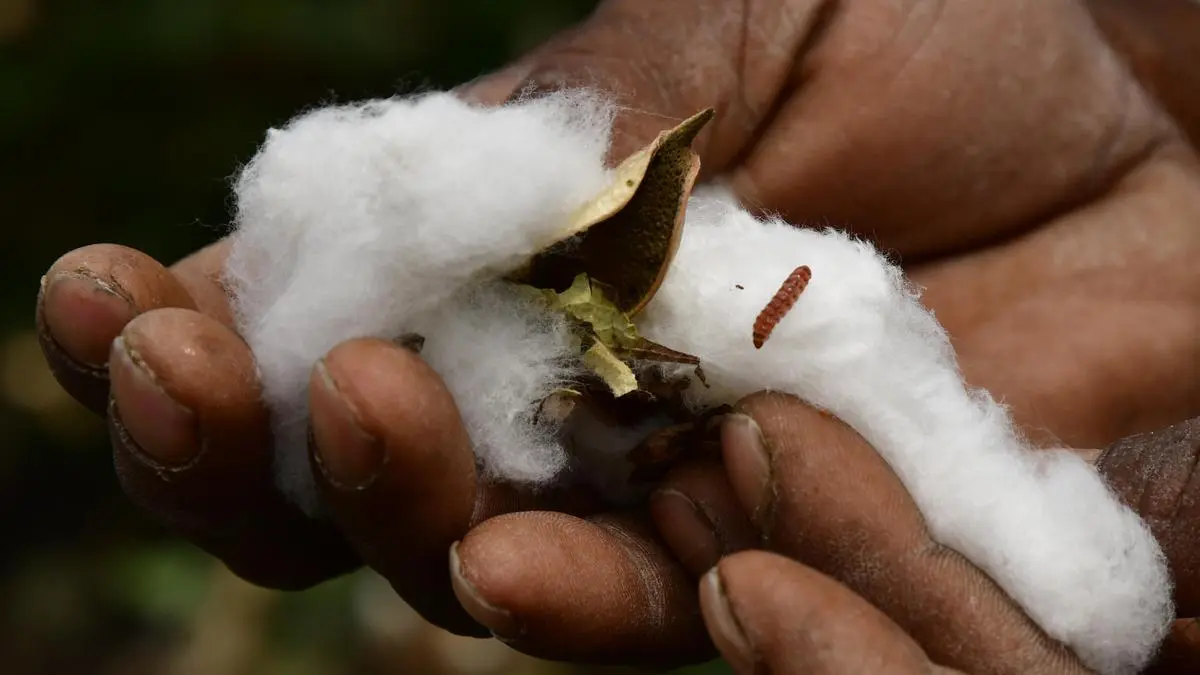
Illegal herbicide-tolerant cotton spreads across India
Unapproved herbicide-tolerant Bt cotton — known to farmers as '4G' and '5G' — now covers between a quarter and nearly a third of India's cotton acreage across seven States in 2024-25, up from about 15 per cent in 2019-20, according to industry figures cited by the US Department of Agriculture and reported by Frontline. The parallel market is valued at some Rs. 600 crore, based on Indian industry estimates.
The seeds are engineered to survive a direct spray of glyphosate. But Frontline reports that most smallholders buy them for a different reason: the approved BG-II Bt cotton has lost its resistance to the pink bollworm across large parts of the cotton belt, and dealers sell 4G and 5G as the pest-resistant replacement. Many growers said they discovered the herbicide-tolerance trait only later, if at all.
Economics push dealers and farmers off the legal market
The commercial logic is direct. In Barwani district of Madhya Pradesh, a dealer told Frontline he had already returned 800 of the 2,000 legal BG-II packets he ordered this season and would start stocking 4G and 5G himself. A legal BG-II packet earns him Rs. 100-150; an unapproved hybrid earns twice that.
Demand splits by farm size. For small and tribal cultivators, the draw is pest resistance and herbicide tolerance is an afterthought. For largeholders, whose weeding bills form a large share of costs, the trait is a countable saving on labour. In Maharashtra, the Shetkari Sanghatana has planted unapproved HTBt cotton before television cameras since 2019, demanding the trait by name.
Unregulated seed, no recourse
Because the hybrids stand outside the law, no authority certifies them and no forum hears farmers when crops fail. In a tribal village in Dhar district, 30 Bhilala farmers pooled orders in 2022 for a variety sold as 'Killer 4G'; the packets arrived by bus after dark and payment was made in secret. The yield fell well short of BG-II, though the lighter, higher-lint cotton fetched a slightly higher market price. Some farmers test the hybrids only on rented land, wary of the effect of heavier glyphosate use on soil health. With no receipt and no company to answer to, the growers had no recourse.
Two gene-editing rulebooks diverge on one trait
On June 17, 2026, the European Parliament gave final approval, by 431 votes to 201 with 29 abstentions, to loosen the EU's rules on gene-edited crops, which a 2018 Court of Justice ruling had placed under the same regime as any GMO. Herbicide-tolerant plants were kept out of the lighter category and held to the full weight of assessment, traceability and labelling. India settled the question earlier, in 2022, through the administrative route, as the US and Japan did. Where an edit leaves no foreign DNA, India exempts the SDN-1 and SDN-2 categories; where foreign DNA remains, the plant is treated as a GMO. Both frameworks paused over the herbicide-tolerance trait, but only Europe wrote that pause into its final rules, while in Indian fields the same trait is already spreading through an unregulated market.