IEU-CEPA Could Widen European Market Access for Indonesian Cocoa Products
Indonesia’s cocoa exports reached $3.60 billion in 2025, three times their 2021 value of $1.2 billion. The IEU-CEPA could improve access to Europe and create additional opportunities for Indonesian cocoa producers, processors and exporters.
Export value triples in four years
Indonesia’s cocoa industry is approaching the European market from a stronger commercial position after a rapid increase in export value. The country exported $3.60 billion of cocoa products in 2025, three times the $1.2 billion recorded in 2021.
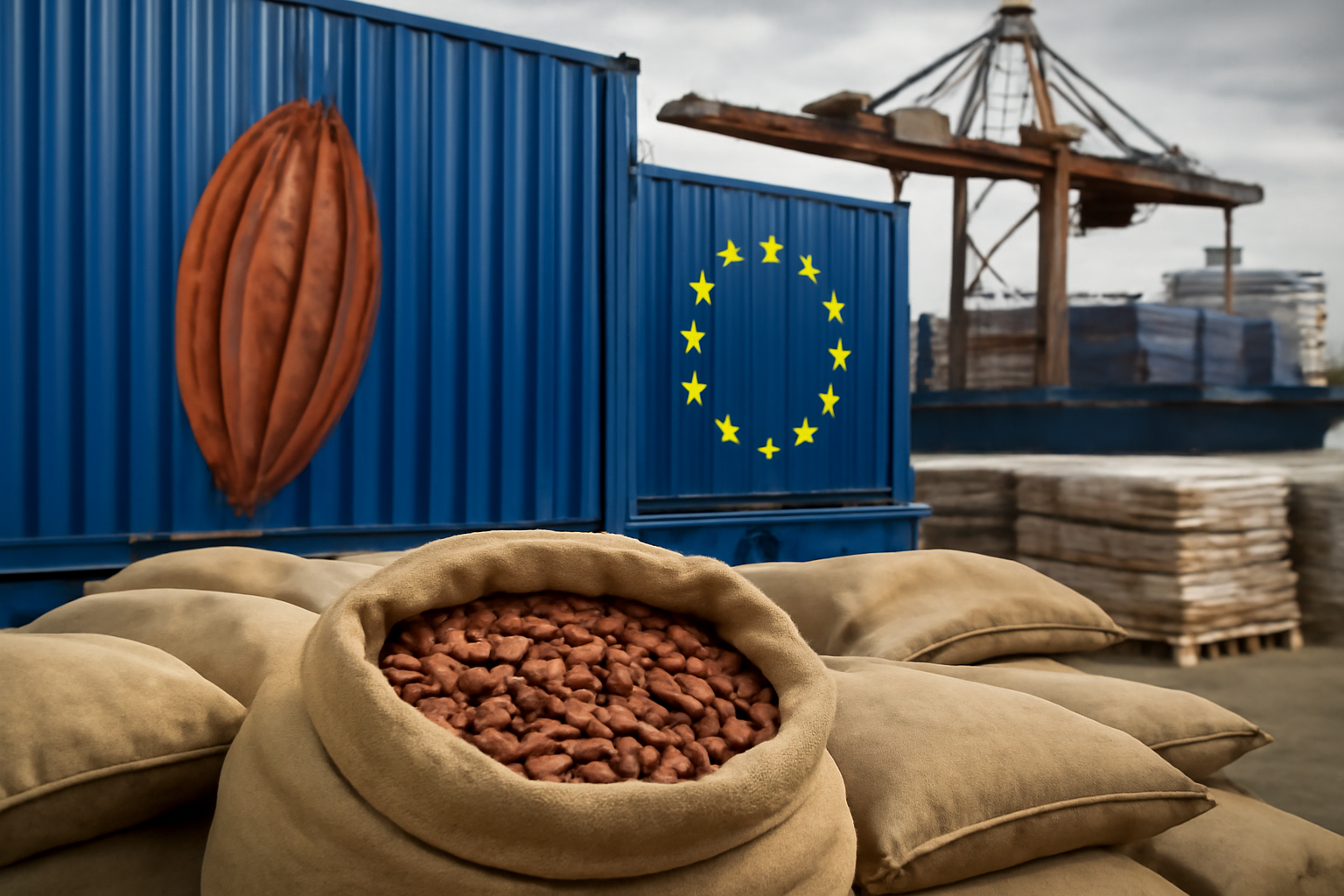
The increase provides an important backdrop for the Indonesia-European Union Comprehensive Economic Partnership Agreement, or IEU-CEPA. The pact is expected to improve access for Indonesian cocoa products in Europe, potentially giving producers, processors and exporters a larger market for their output.
The available figures show the change in export value but do not specify how much resulted from higher shipment volumes, changes in product mix or prices. That distinction matters for companies assessing the durability of the expansion. Growth driven by processed products would have different implications for domestic investment and margins than an increase based mainly on commodity prices.
European access raises the value of processing
Wider access to Europe could be relevant across Indonesia’s cocoa supply chain. Growers depend on sustained demand for beans, while processors need sufficiently large markets to support capacity utilisation and further investment. Exporters must also decide which products and customers offer the best returns.
For processors, the commercial opportunity is not limited to selling more cocoa. Market access can also affect the balance between exports of beans, cocoa paste, cocoa butter, cocoa powder and finished chocolate products. The source material does not provide a product-level breakdown or the agreement’s tariff schedule, so the gains for individual categories cannot yet be quantified.
European buyers could gain access to a broader Indonesian supplier base. For importers, however, the practical value of the pact will depend on the conditions applied to particular cocoa products and on Indonesian companies’ ability to meet buyer requirements. Export value alone does not show how widely the gains are distributed among growers, industrial processors and trading companies.
Companies need the implementation details
The rise from $1.2 billion in 2021 to $3.60 billion in 2025 demonstrates that Indonesia’s cocoa sector already has substantial export momentum. IEU-CEPA could reinforce that trend by reducing market-access obstacles and making European sales more attractive, but the scale of the effect will depend on the agreement’s detailed treatment of cocoa goods.
Producers and investors will need to examine which product lines receive improved access, when the relevant provisions take effect and whether benefits differ between raw and processed cocoa. Those details will influence decisions on procurement, processing capacity and export contracts.
Next phase depends on competitiveness
The agreement creates a route to a wider market, but it does not guarantee that every Indonesian supplier will capture additional business. Companies will still compete for buyers, and processors will have to determine whether European demand supports the cost of serving that market.
For Indonesia, the central question is whether the combination of a $3.60 billion export base and improved European access can support lasting growth across the cocoa industry. For European buyers, the pact could add another channel for sourcing Indonesian cocoa products. The next stage will be defined by implementation and by how effectively companies convert formal access into contracts and sales.