Mercadona's egg supplier Huevos Guillén to invest €200 million to remove cages by 2028
Grupo Huevos Guillén will deploy €200 million over four years to eliminate cages across its entire supply chain, with €116 million concentrated in 2026 and 2027. The Valencia-based group plans to grow its flock from 6.13 million laying hens at the end of 2026 to 10 million by 2030, with 93% of its cage-free output sold through Mercadona.
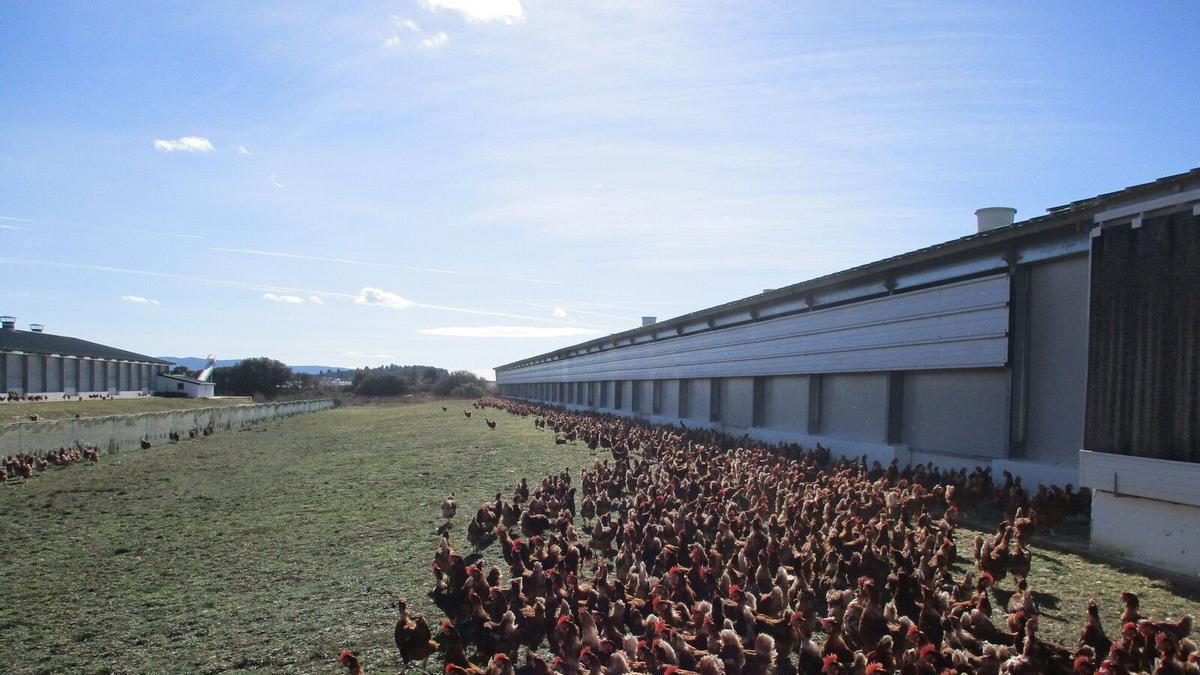
Grupo Huevos Guillén will invest €200 million over the next four years to eliminate cages from its entire supply chain, according to Levante-EMV. The spending accelerates the group's existing strategic plan and is tied to an expansion that would lift its flock to a census of 10 million laying hens by 2030.
The company, headquartered in Valencia and owned by the Guillén family, is Spain's leading egg producer. It frames the removal of cages as a response to growing public sensitivity around animal welfare and to the requirements of the market and its main customers, among them Mercadona, for which it operates as an interproveedor.
Investment phasing and flock targets
The €200 million will be committed progressively, on a schedule set out by Levante-EMV:
- €116 million between 2026 and 2027;
- the remaining €84 million split in equal parts across the two following financial years;
- a laying flock of 6.13 million hens at the close of 2026, 675,000 birds more than in the previous financial year;
- a target census of 10 million hens by 2030.
The new commitment follows projects worth almost €216 million already executed by the group over the past decade. Moving from 6.13 million to 10 million birds implies an increase of roughly 63% in the flock, carried out at the same time as the housing systems themselves are being rebuilt.
Cage-free share and the Mercadona channel
At the close of 2026, 80% of the group's hens will already be housed in alternative cage-free systems, up from 73% in 2025 and 60% in 2024. The company has set 2028 as its horizon date for 100% of its fresh eggs to be sold cage-free, conditional on administrative permits being granted within the expected timeframes — a dependency the group states explicitly.
The investment is intended to keep Huevos Guillén at the head of Spain's cage-free egg market, a business directed almost exclusively to Mercadona's shelves, which account for 93% of that volume. Company sources cited by Levante-EMV said consumption of alternative eggs will continue to grow until cages disappear, with cage eggs increasingly channelled towards the industrial market rather than fresh retail.
EU rules and the End the Cage Age campaign
The European Commission confirmed in July its plans to ban cages for laying hens and broiler chickens in 2026, and for sows in 2027, Levante-EMV reported. According to the member organisations of the Spanish End The Cage Age coalition — AnimaNaturalis, CIWF, Observatorio de Bienestar Animal and INTERCIDS — the decision follows years of pressure and unfulfilled promises.
The confirmation comes five years after Brussels committed to banning cages for all farmed animals, a demand backed by 1.4 million European citizens and 170 organisations through the European Citizens' Initiative End the Cage Age, led by Compassion in World Farming. Annamaria Pisapia, spokesperson for the citizens' committee behind the initiative, said that freeing hens, chickens and sows from cages will be a major advance for animal welfare in Europe, that it will transform the lives of more than 160 million animals and that it will finally respond to the will of the public.
Revenue trajectory
Huevos Guillén has set a turnover target of €385 million for 2026, against €326 million recorded the previous year, an increase of 18%. Measured against the €262 million booked in 2024, the target represents growth of almost 47% in two financial years. The group is pointing to another record year, with historic sales accompanied by further investment in extending its cage-free production model.