High Paddy Costs Squeeze Indonesia’s Small and Midsized Rice Mills
Indonesia’s smaller rice mills face narrowing margins as paddy costs rise while government retail ceilings limit finished-rice prices. Bulog’s procurement supports farmers and public stocks but intensifies competition for raw material, strengthening calls for regulatory relief and transparent milling-yield data.
Paddy prices outpace mills’ selling room
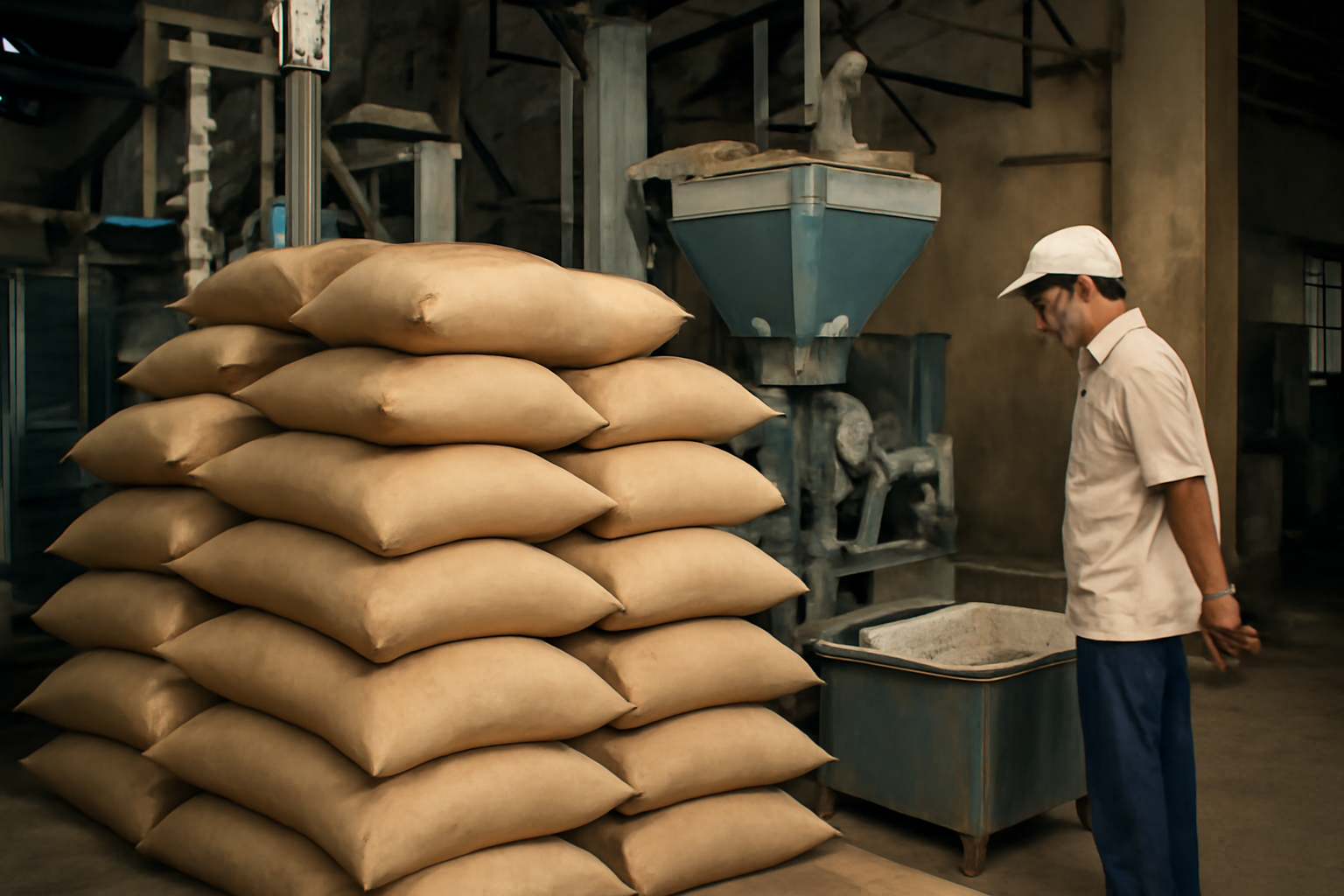
Indonesia’s small and midsized rice mills are coming under pressure from high paddy prices, regulated retail prices and competition from state food agency Bulog. Koran Pikiran Rakyat reports that these conditions are weakening the economics of smaller processors, prompting calls for a relaxation of the maximum retail price, known as HET, and greater transparency over milling yields.
The cost imbalance is particularly severe because paddy dominates a mill’s expenses. Burhanuddin, secretary-general of the Indonesian Association of Rice Mills and Rice Entrepreneurs, told Tirto that purchases of paddy account for about 90% of rice-milling operating costs. The government purchasing price for harvested dry paddy is Rp6,500 per kilogram, but paddy delivered to mills has traded at Rp8,500 and even close to Rp9,000 per kilogram, according to the publication. Burhanuddin estimated that Rp6,700-Rp6,800 per kilogram, or at most about Rp7,000, would be a more workable delivered cost.
When the raw material exceeds that level, mills cannot automatically pass the increase through to buyers because rice remains subject to HET limits. The result is a margin squeeze between a market-priced input and a regulated finished product. Smaller operators are more exposed because they generally have less working capital, weaker procurement networks and older equipment than large processors.
Bulog procurement intensifies competition
Bulog’s purchases add another source of demand in a market where paddy availability changes with the harvest cycle. The procurement policy serves two objectives: protecting farmgate prices and building government rice reserves. For private mills, however, continued state buying after the main harvest means stronger competition for a shrinking daily supply of paddy.
The effects were visible in Ciamis, West Java, after the harvest ended in June 2025. Pikiran Rakyat reported that milled dry paddy cost Rp7,800-Rp8,000 per kilogram, while medium rice was offered at Rp12,500 and premium rice at Rp13,500 per kilogram. Some small mills stopped operating because they could not obtain paddy. Others sourced grain from Pangandaran and Cilacap or cooperated with larger mills, adding transport and coordination costs.
The National Food Agency set several procurement benchmarks in January 2025: Rp6,500 per kilogram for harvested dry paddy from farmers, Rp6,700 at mills, Rp8,000 for milled dry paddy at mills and Rp12,000 for rice delivered to Bulog warehouses. Each category originally carried quality requirements covering moisture, empty grains, milling degree and broken-rice content. These specifications show why the conversion rate from paddy to saleable rice is central to profitability rather than a secondary technical detail.
Yield transparency becomes a regulatory issue
A mill paying the same paddy price as a competitor can still face a higher rice cost if its recovery rate is lower. Grain quality, post-harvest handling, drying and milling technology all affect the amount and grade of rice produced. Transparent, independently understood yield assumptions would allow regulators, Bulog and processors to assess whether procurement and retail prices are economically compatible.
Relaxing HET could give mills room to recover unusually high raw-material costs, but it would also shift part of the burden to consumers. An alternative is to align Bulog’s purchasing timetable and stock releases more closely with seasonal supply, while directing support toward equipment upgrades and working capital for smaller mills. The immediate risk is that continued margin compression forces more small processors to suspend production, reducing local milling capacity and leaving farmers and rice distributors more dependent on larger operators.