High costs weaken Pakistan’s rice, sugar, cotton and vegetable exports
Pakistan’s exports of rice, sugar, cotton, onions, sesame and potatoes have declined because of elevated costs, according to a parliamentary committee discussion reported by Express.pk. The meeting also highlighted seafood opportunities and the monthly movement of 300–400 donkeys to Gwadar.
Cost pressure reaches several export sectors
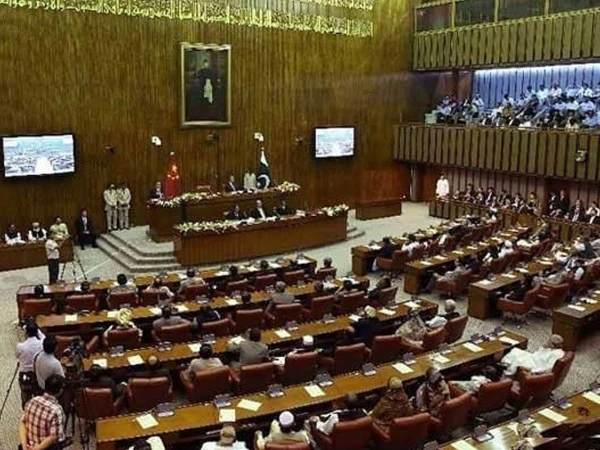
Pakistan’s exports of rice, sugar, cotton, onions, sesame and potatoes have declined under pressure from elevated costs, according to a report by Express.pk on a meeting of the parliamentary standing committee on commerce. The range of affected products indicates that the problem is not confined to one harvest or processing industry. It extends across grains, cash crops, vegetables and other agricultural commodities that depend on competitive production, handling and logistics.
The report did not provide export volumes, values, destination markets or a comparison period for the declines. It also did not break down the individual costs affecting each commodity. The committee’s assessment nevertheless points to a broad loss of competitiveness: when domestic cultivation, processing, storage or transport costs rise faster than achievable export prices, Pakistani suppliers have less room to compete for price-sensitive orders.
Different commodities face different constraints
Rice, sugar and cotton sit in distinct supply chains, while onions and potatoes are perishable products requiring timely movement and careful storage. Sesame serves another set of buyers and quality requirements. A simultaneous decline across these categories therefore matters to a wide group of businesses, including farmers, mills, ginners, packers, warehouses, transport operators and exporters.
For commodity traders, the absence of product-level figures limits any assessment of which sector is carrying the largest loss. It is also unclear whether the declines reflect lower production, weaker foreign demand, reduced margins or orders shifting to competing origins. The committee attributed the overall weakness to excessive costs, making cost control the central issue identified in the available account. Buyers can readily change suppliers when comparable agricultural products are available elsewhere, particularly if freight, processing or domestic handling erodes an exporter’s price advantage.
Gwadar and seafood enter the discussion
The committee meeting also discussed donkey exports. National Assembly member Asad Alam Niazi said that 300–400 donkeys were being sent to Gwadar each month. Express.pk did not specify their final destination, export value or the commercial arrangements involved. The reference nonetheless shows that policymakers are examining smaller and unconventional trade flows alongside Pakistan’s established crop exports.
Niazi also said that seafood offered extensive export opportunities. That observation broadens the discussion from reversing agricultural declines to identifying sectors with room for expansion. Seafood, however, has its own requirements for cold-chain handling, processing, quality control and access to buyers. The meeting report announced no specific investment, policy measure or timetable for developing those opportunities.
Exporters need clearer product-level evidence
The committee discussion establishes the direction of concern but leaves important commercial questions unanswered. Producers and exporters need commodity-specific data on volumes, values, costs and destination markets to determine whether the weakness is temporary or more persistent. Without that detail, companies cannot distinguish a broad competitiveness problem from separate disruptions affecting individual products.
For Pakistan’s agricultural trade, the immediate signal is that high costs are affecting multiple export lines at once. Restoring competitiveness would depend on where those costs arise and whether suppliers can reduce them without compromising quality or delivery. Until fuller data or policy measures are disclosed, exporters, processors and investors will have to assess each commodity separately rather than treat the reported decline as a uniform market movement.