Heat-driven poultry deaths push Indian egg, chicken and mutton prices sharply higher
Mass poultry deaths during India’s May-June heatwave have disrupted protein supplies and lifted prices across the country. Eggs reached ₹11, chicken ₹280 and mutton ₹900, increasing costs for consumers and food businesses.
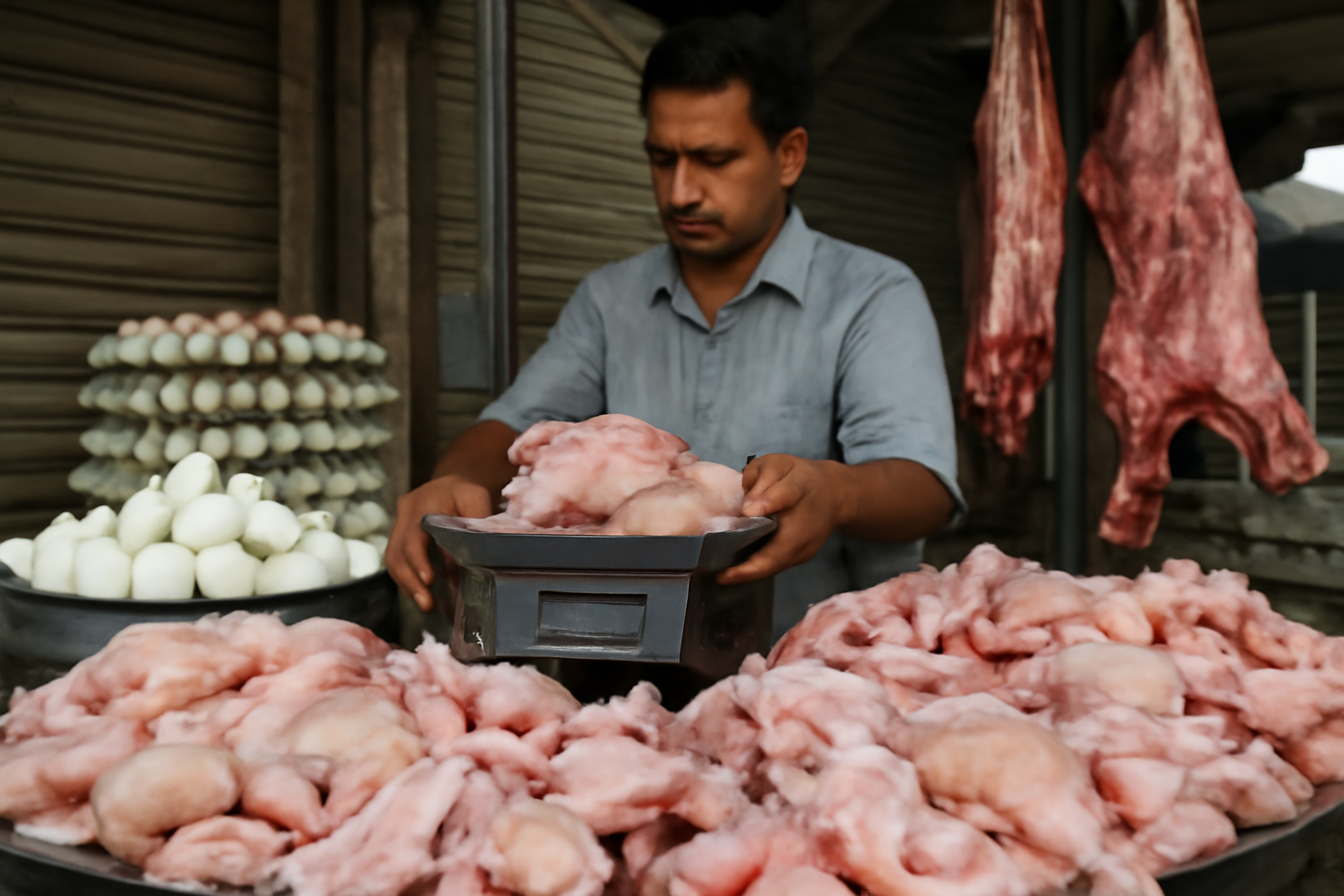
Heatwave cuts poultry availability
Record heat and intense sunshine have disrupted India’s animal-protein market after large numbers of birds died at poultry farms during the May-June heatwave. The mortality reduced the number of laying hens and meat birds available to the supply chain, tightening the immediate balance between production and demand.
The disruption has pushed the quoted price of an egg to ₹11, while chicken has reached ₹280. Mutton, which is produced through a separate livestock chain, has climbed to ₹900 as consumers and food businesses face higher prices across several non-vegetarian protein categories.
The simultaneous increase matters because eggs and chicken usually serve different parts of the market from mutton. Eggs are a widely used household and food-service ingredient, chicken is a major fresh-meat product, and mutton occupies a higher-priced segment. When all three become more expensive, buyers have fewer lower-cost alternatives within the animal-protein market.
Losses move through the supply chain
Poultry deaths create an immediate volume loss for farmers, but the effects extend beyond the farm gate. Hatcheries, feed suppliers, processors, wholesalers, transport operators and retailers depend on regular bird and egg volumes. Lower farm output can reduce throughput for these businesses even as the value of available products rises.
The effect on eggs may persist beyond the first loss of stock because dead laying birds cannot immediately be replaced in production. Chicken supplies also depend on the availability and survival of birds through the growing cycle. The supplied material does not state the number of birds lost, the affected states or the time required to restore capacity, making the duration of the shortage uncertain.
Higher prices do not automatically translate into better margins for poultry producers. Farms hit by mortality lose saleable birds and may also face greater pressure to protect surviving stock from heat. Producers that avoided severe losses can benefit from stronger market prices, while affected farms may have insufficient volume to capture that upside.
Consumers and food businesses face broader pressure
For restaurants, caterers, processors and retailers, the increase raises ingredient and procurement costs. Businesses must either absorb part of the rise, pass it on through menu and retail prices, reduce portions or shift purchasing between protein categories. The rise in mutton to ₹900 indicates that substitution away from chicken is not necessarily a cheap option.
The episode highlights the poultry sector’s exposure to extreme heat. India’s immediate market direction will depend on how quickly farms rebuild bird numbers and egg output after the May-June losses. Until supply normalises, producers with surviving capacity may retain pricing power, while buyers remain exposed to constrained availability and elevated costs.