Heat and Erratic Rain Shorten Crop Development Cycles in Europe and India
Rising temperatures and unseasonal rainfall are accelerating crop maturation in Europe and India, increasing concern among farmers. The available report provides no crop-specific yield estimates, but shorter development periods could affect output and supply quality.
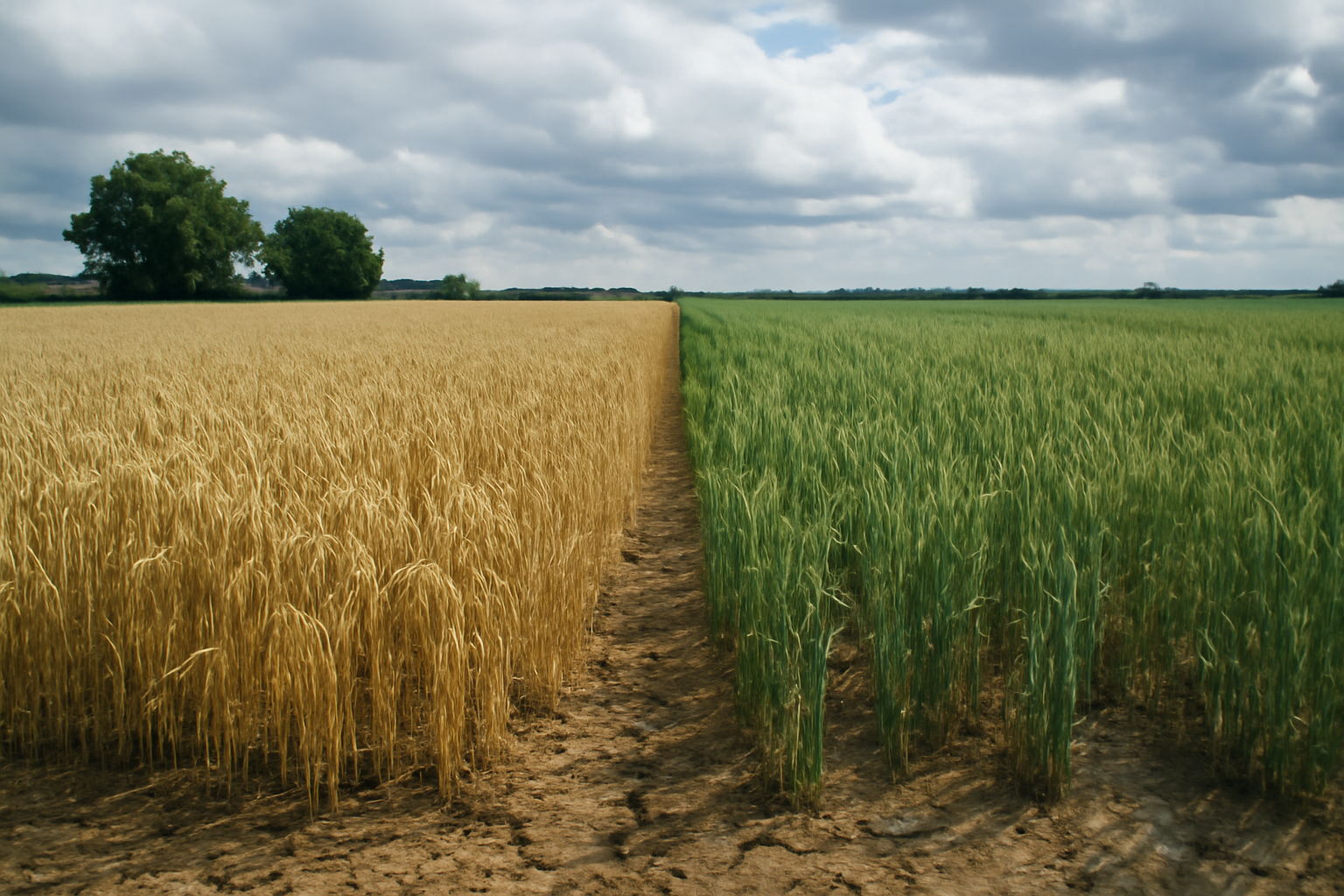
Crops reach maturity sooner
Rising temperatures and unseasonal rainfall are disrupting crop development in Europe and India. Heat is shortening the time crops need to reach maturity, leaving farmers concerned about the effect on production. The available report describes grain ripening earlier than usual in Europe and says similar weather instability is having a substantial impact on crop growth in India.
Accelerated maturation does not automatically determine the size of a harvest. Its effect depends on the crop, the stage at which heat occurs and the availability of water. However, a shorter development period gives plants less time to build grain or other marketable output. For producers, that creates a risk that crops may be ready sooner without delivering the yield or quality normally expected at harvest.
Rainfall adds a second source of uncertainty
Unseasonal rain complicates the impact of higher temperatures. Rain can support crops when soil moisture is limited, but poorly timed rainfall may also interrupt normal development and field operations. The combination of heat and erratic precipitation makes production planning more difficult because farmers must respond to faster crop growth while managing weather conditions that do not follow established seasonal patterns.
The consequences may extend beyond the farm. Processors depend on predictable harvest timing and crop quality, while traders need reliable estimates of available supply. If maturation dates move forward or become less consistent across producing areas, procurement, storage and transport schedules may also need to change. Importers and exporters could face greater uncertainty over volumes and specifications even when the total harvested area remains unchanged.
No quantitative loss estimate yet
The report provides no figures for affected acreage, expected yield losses, crop volumes or price movements. It also does not identify individual crops beyond referring to grain ripening early in Europe. That limits any assessment of the likely effect on national or international balances. A faster crop cycle is a warning signal, but it is not by itself evidence of a specific production shortfall.
Market participants will therefore need crop-level and regional data before changing supply forecasts. The main indicators will be the timing of harvest, yields, grain quality and the extent to which rainfall helps or damages crops at critical stages. For farmers, the immediate issue is operational: fieldwork and harvesting may have to follow crop conditions rather than traditional calendars. For buyers, the priority is determining whether earlier maturity changes only delivery timing or also reduces usable supply.
Europe and India are experiencing the same broad pressure—higher heat combined with irregular rain—but the market outcome may differ by location and crop. Until production estimates become available, the clearest conclusion is that weather is compressing development cycles and making harvest planning less predictable. The eventual supply impact will depend on whether crops retain sufficient time and moisture to reach normal yield and quality levels.