Guinea turns to China and Brazil to accelerate rice self-sufficiency
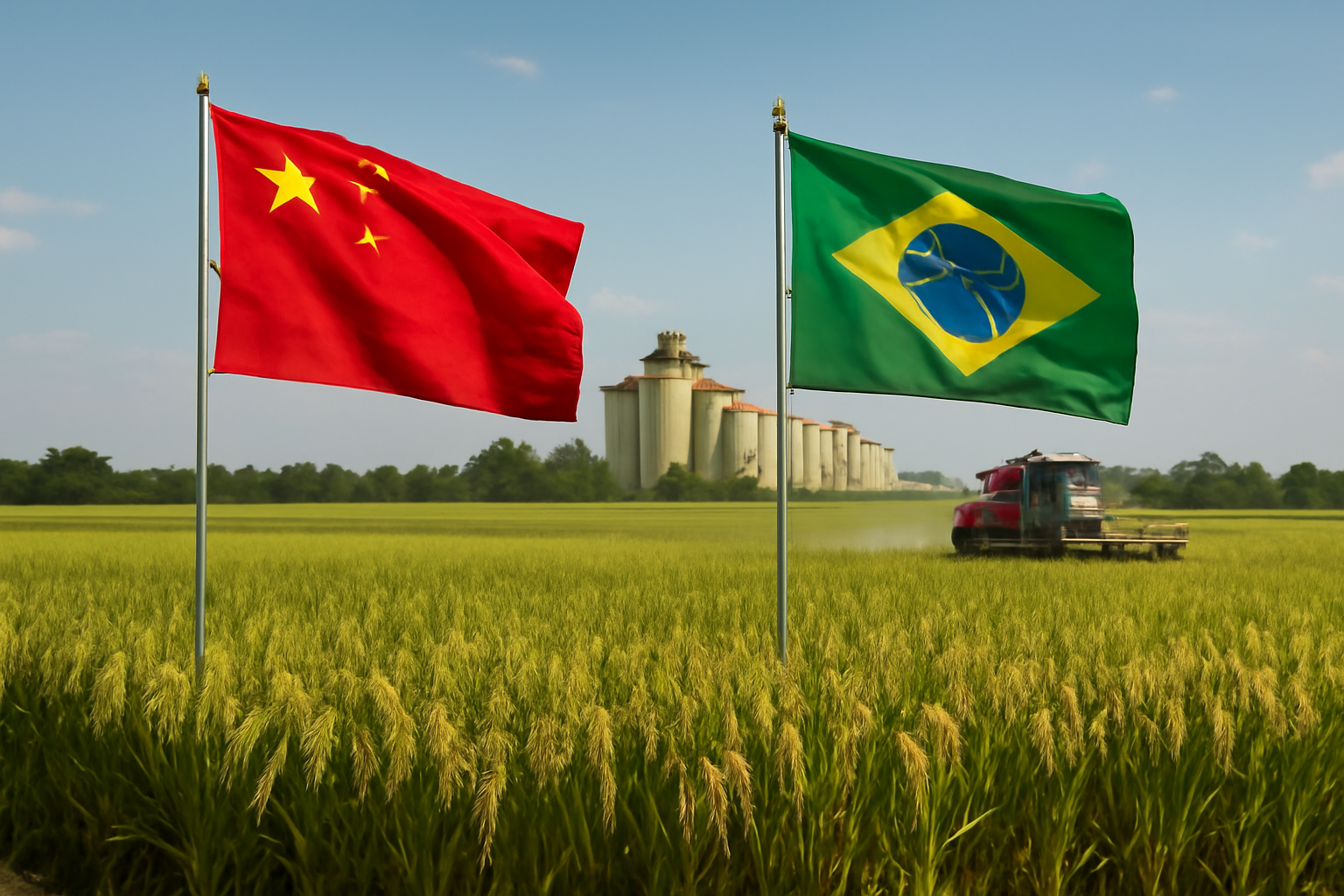
Guinea is expanding agricultural cooperation with China and Brazil to raise domestic rice output and reduce dependence on imports. The initiatives combine Brazilian productivity expertise with Chinese hybrid seed trials, mechanization and technical training.
Brazilian agreement adds a second agricultural partner
Guinea is drawing on agricultural expertise from China and Brazil as it seeks to increase domestic rice production and move closer to self-sufficiency. Rice is among the country’s main cultivated and consumed cereals, but local supply remains insufficient and Guinea continues to rely on imported Asian rice.
According to the African Press Agency, Guinea’s Agriculture Ministry signed a memorandum of understanding with Brazil’s Daniel Franco Institute in Conakry on September 4. Agriculture Minister Félix Lamah signed the agreement, which is intended to support food sovereignty and accelerate rice self-sufficiency. The partnership is expected to give Guinea access to Brazilian expertise in agricultural productivity, with a particular focus on rice farming. No investment value, production target or implementation timetable was disclosed.
Chinese project focuses on hybrid rice
The Brazilian agreement complements a longer-running program with China. China.org.cn reported that China and Guinea launched a hybrid-rice pilot project in 2019 in the Koba sub-prefecture. Chinese agricultural experts and Guinea’s Agriculture Ministry have since conducted variety trials and promoted cultivation techniques adapted to local conditions.
In July 2026, Guinea’s government said YILONGHE Plantation et Développement Agricole Guinée SARL had presented a plan for an agricultural system based on hybrid-rice production. Studies conducted on Guinean soils since 2019 showed that the system was feasible, according to the company. The proposed demonstration and seed-development phase would require approximately 1,000 hectares. It also provides for transferring hybrid-rice seed production techniques and skills to local farmers.
The project followed discussions between Guinea’s prime minister and Chinese Premier Li Qiang during the 17th Annual Meeting of the New Champions of the World Economic Forum. Guinea’s government said it would help mobilize the land needed for the experimental phase. Separately, China provided Guinea with 2,450 tonnes of rice in July 2026 as food assistance, according to Guinea’s Ministry of Planning, International Cooperation and Development.
Production goals face execution risks
Guinea has already set ambitious rice goals. At the launch of the 2025 agricultural campaign, the government outlined an objective of increasing rice production from 1,444,670 tonnes to 2,572,961 tonnes. The same official account said floods, pests and climatic disruption during the previous campaign had caused the loss of more than 38,000 hectares of crops, illustrating the operational and weather risks facing any expansion plan.
For producers, the partnerships could improve access to seed technology, machinery and agronomic knowledge. For traders and importers, the effect will depend on whether pilot projects can be extended into commercially viable production. The agreements do not yet establish how quickly additional domestic rice will reach the market or how much import demand could be displaced.
The World Bank said Guinea’s AgriConnect Compact, launched in 2026, aims by 2030 to improve food security, create agricultural and agrifood jobs, and reduce dependence on imports of staples including rice. Cooperation with China and Brazil therefore forms part of a broader production policy. Its trade impact will ultimately be measured through yields, harvested area, processing capacity and the consistency of local supply rather than the number of agreements signed.