Greece's €600 Million Packaged Cheese Market: 565 Brands Compete for Shelf Space
Packaged cheese in Greece is a market of roughly €600 million a year, according to euro2day.gr, contested by 565 separate brands. The Greek financial outlet maps the companies and strong names leading the category and sets national consumption against other countries on a per-capita basis.
A €600 million category
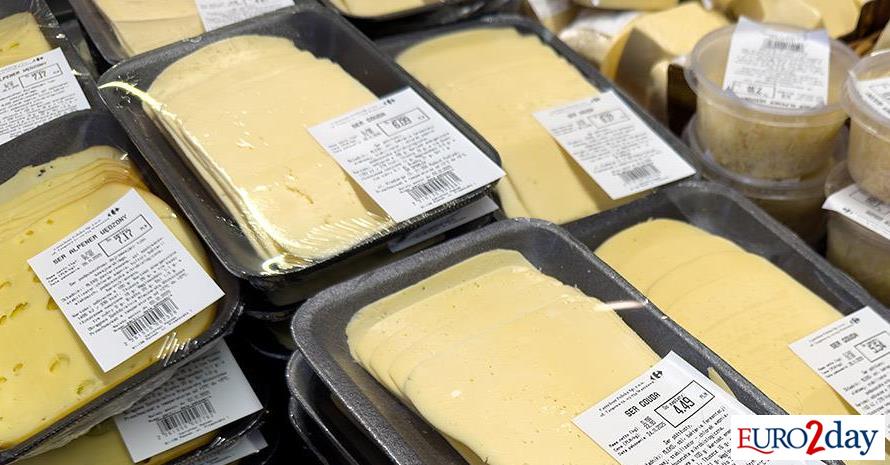
Packaged cheese in Greece is a market of roughly €600 million a year, according to euro2day.gr. The Greek financial outlet describes the contest for space on the cheese shelf as a battle of millions, maps the companies and brands competing for that value, and singles out the strong names that lead the segment.
The figure refers to cheese sold pre-packaged and branded through retail. Cheese cut to order at the deli counter is a parallel route to the consumer and sits outside this number, which matters when comparing the branded battle with total national cheese consumption.
565 brands on the same shelf
The structural number in the report is 565 — the count of separate cheese brands present in the Greek packaged segment, according to euro2day.gr. Spread evenly across €600 million, that would leave a little over €1 million in annual retail sales per brand, a level that funds neither national distribution nor sustained advertising.
Sales are not spread evenly. euro2day.gr points to a group of strong names at the top of the category, with the remainder of the field made up of far smaller labels: regional dairies, speciality producers and retailer own-brand lines. For a supplier, the operative question is not how large the category is but whether a brand clears the rate of sale at which a chain keeps listing it. Below that threshold, labels rotate off the shelf when ranges are reviewed, and a count of 565 measures churn as much as choice.
Per-capita consumption and where growth comes from
euro2day.gr also sets Greece against other countries on cheese consumption per head. That comparison carries direct commercial consequences:
- It defines the volume ceiling. Where consumption per person is already high, additional volume has to be taken from a competitor rather than created from new demand.
- It moves growth to price and mix — premium, protected designation of origin and speciality lines rather than standard blocks and slices.
- It raises the weight of exports, because a producer that has saturated the domestic base has to look abroad for scale.
Consolidation pressure
A category of this size carrying this many participants tends to consolidate. The mechanics are familiar across European dairy: retailers cut the slow-moving tail to free space and lift margin per metre of shelf, private label absorbs part of the volume at the value end, and mid-sized producers either merge, become contract manufacturers for the chains, or retreat into regional and speciality niches. Each of those routes reduces the brand count without reducing the size of the pie.
Raw material costs sit underneath all of it. Cheese economics are set by the milk price and by the yield of milk into finished product, so any movement in farmgate milk reaches shelf prices with a lag. Brands with strong consumer recognition can pass more of that through; most of the several hundred smaller labels counted by euro2day.gr cannot. Export demand is the other release valve, and feta, Greece's protected designation of origin cheese, remains the most obvious vehicle for producers looking for volume beyond the domestic shelf.