Granvinhos’ €27 Million Automated Douro Winery Starts First Harvest
Adega do Cedro has begun its first production-scale harvest after a €27 million investment in automation, sensors and resource-saving systems. The Portuguese facility can process 8,000 tonnes of grapes and store eight million litres of Port and Douro wine.
Technology enters full-scale production
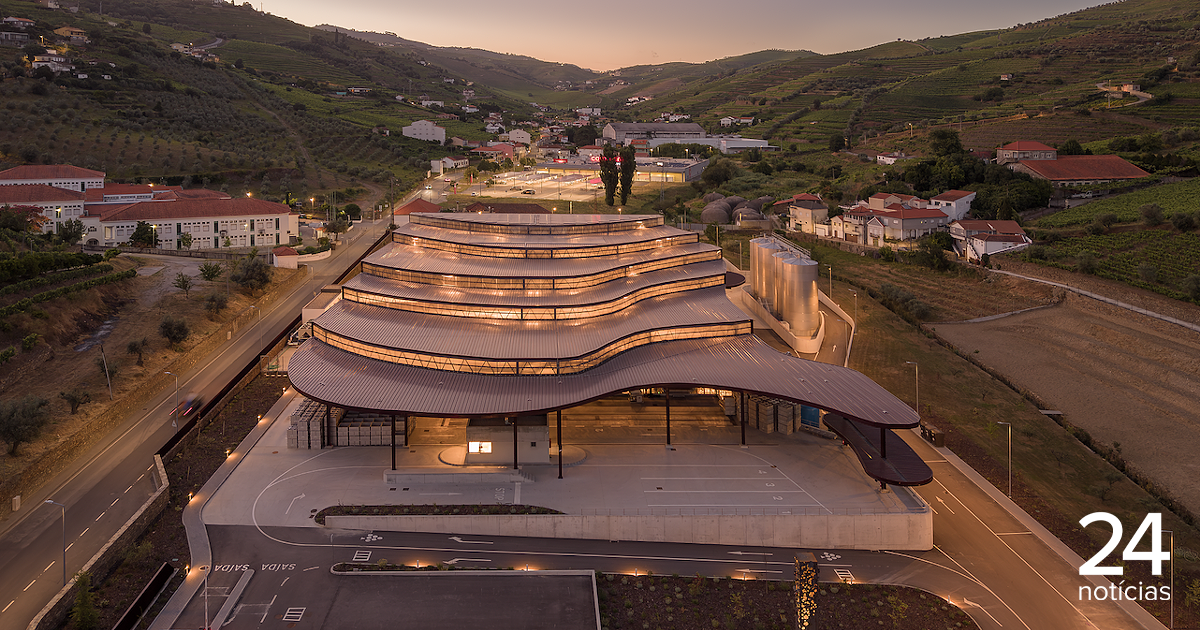
Granvinhos’ Adega do Cedro has started its first harvest in full production, putting a €27 million investment in winery automation and digital control to its first operational test. The facility was inaugurated on June 26 at Quinta do Cedro in Peso da Régua, within Portugal’s Douro Demarcated Region. According to 24 Notícias, it is the largest investment undertaken by the group.
The winery has installed capacity to process 8,000 tonnes of grapes and storage for eight million litres. It handles fruit supplied by around 800 winegrowers across eight municipalities in the Douro region and produces both Port and Douro wines. The first vintage simultaneously activates its grape reception, processing, storage and resource-management systems at industrial scale.
Granvinhos managing director Jorge Dias said the facility was designed to maximize the quality potential of grapes delivered by growers. That objective depends on integrating technology throughout production, giving winemakers closer control over individual stages and allowing operations to be adjusted as the harvest develops.
Thousands of sensors support tighter control
The 25,000-square-metre complex includes 7,000 square metres of winery space, approximately 3,500 sensors, 20 kilometres of piping and 40 kilometres of electrical cabling. Its systems are designed to operate as an integrated network, monitoring production and supporting more precise and consistent winemaking.
High levels of automation are intended to reduce manual intervention in selected operations, improve worker safety and strengthen control over production. For growers, the commercial test will be whether that precision can preserve differences in grape quality while fruit from hundreds of suppliers moves through a large facility. For Granvinhos, consistent processing is particularly relevant because more than 75% of its consolidated revenue currently comes from exports, based on company data cited by 24 Notícias.
Water and energy use move into focus
The environmental systems are expected to reuse 50% of wastewater, reducing total water consumption by 40%, according to the project’s technical data. Installed equipment is also designed to cut energy requirements by 40%, while an on-site photovoltaic plant supplies renewable electricity. The first harvest will show how these projected savings perform under the demands of daily production.
The project was developed by Granvinhos subsidiary Vale de S. Martinho under the Vine & Wine Portugal Mobilizing Agenda, established in 2022 through Portugal’s Recovery and Resilience Plan. Of the winery’s €27 million investment, €17.7 million was deemed eligible under the plan and €5.3 million was provided in support, equivalent to about 19% of the total investment.
Industrial capacity within a protected landscape
The facility was designed by architect Alexandre Burmester for the cultural landscape of the Alto Douro Wine Region, a UNESCO World Heritage site. The project sought to combine the requirements of a high-capacity winery with the surrounding vineyard terrain rather than treat the industrial building as an isolated element.
The operational challenge now is to convert infrastructure into measurable productivity and quality gains. The combination of 8,000 tonnes of processing capacity, eight million litres of storage and data from 3,500 sensors gives Granvinhos greater control over a dispersed grape supply. Its first vintage will indicate whether that scale can improve consistency, reduce resource use and support premium Port and Douro wine production without weakening the connection between growers, grapes and place.