Rabobank lifts global poultry production forecast to 3-3.5% growth this year
Global poultry production is set to expand by roughly 3-3.5% this year, according to a Rabobank forecast issued at the end of June and reported by the Vietnamese livestock publication nhachannuoi.vn. The figure sits above earlier projections for the sector. Faster output growth feeds directly into demand for corn and soybean meal and into the supply available to importing markets.
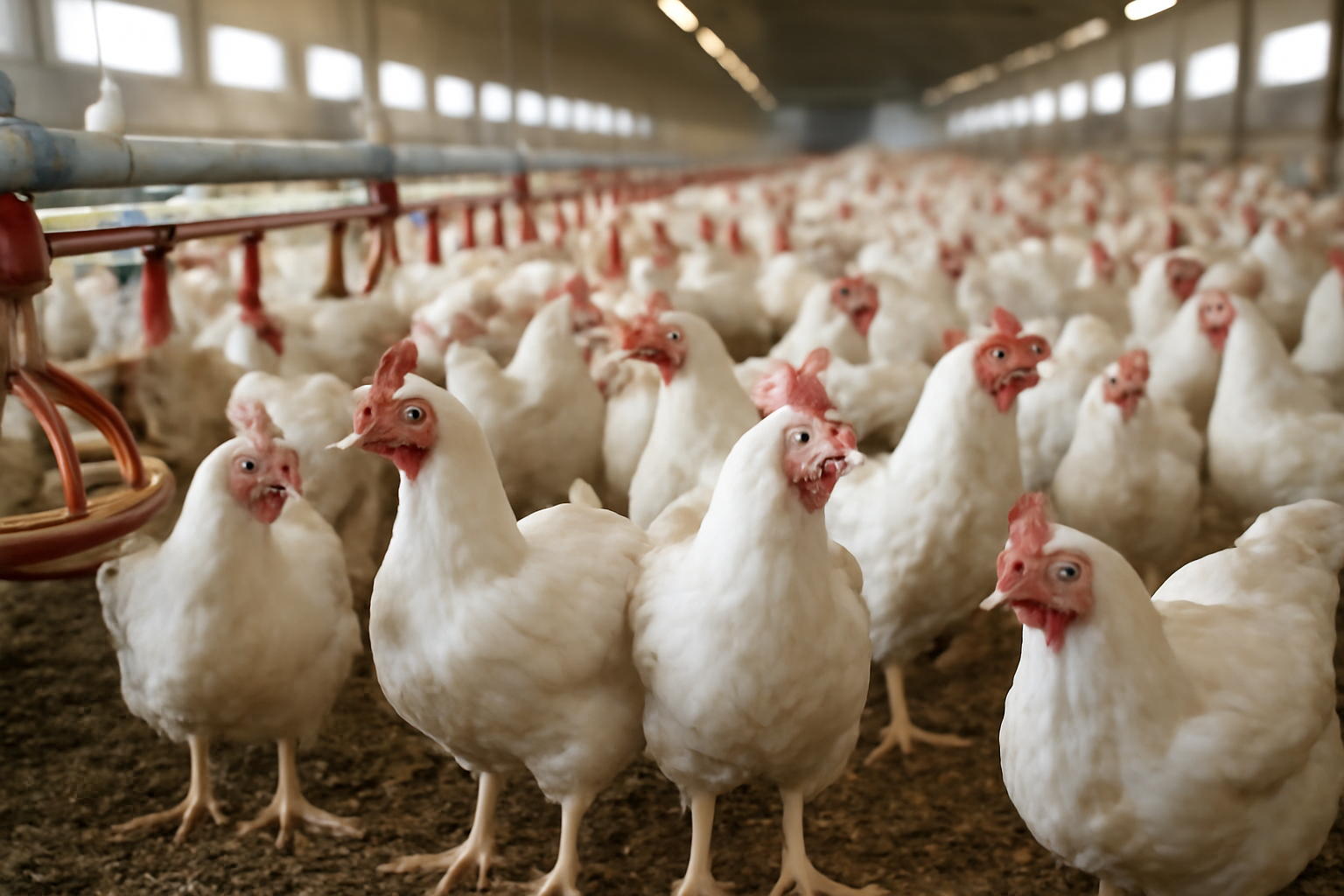
Global poultry production is on course to grow by roughly 3-3.5% this year, a pace above earlier projections, according to a Rabobank forecast issued at the end of June and reported by the Vietnamese livestock publication nhachannuoi.vn.
An upgraded outlook
The revision matters less for its absolute size than for its direction. Rabobank's range is higher than the forecasts that circulated before it, which points to output running ahead of what analysts had penciled in for the first part of the year. For a sector where annual global growth is normally measured in low single digits, an upgrade of that kind implies additional volume spread across several large producing regions rather than a one-off surge confined to a single country.
The summary of the forecast reported by nhachannuoi.vn does not break the 3-3.5% range down by region, by bird type or by quarter, and it does not attach a tonnage figure to the projected increase. Producers, traders and processors should read the headline number as a directional signal on supply rather than as a settled volume balance for the year.
Feed demand follows the flock
Faster expansion in poultry output translates almost immediately into feed consumption. Feed is the largest single cost item in broiler production, and the ration is dominated by corn and soybean meal, with wheat substituting where price and availability allow. Growth of 3-3.5% in bird numbers and liveweight therefore converts into incremental demand for feed grains and protein meals, the tightest link between a poultry forecast and the wider agricultural complex.
Three channels deserve attention from buyers and processors:
- Feed grain and oilseed meal demand, where poultry bids against pig and cattle sectors for the same corn and soybean meal supply.
- Day-old chick and breeding stock availability, which caps how quickly output can expand regardless of how attractive margins look.
- Slaughter, processing and cold chain capacity, which determines whether extra live production reaches export markets as chilled or frozen product or stays domestic.
Because the poultry cycle is short compared with pigs or cattle, producers can respond to margin signals within months. That speed is what makes upward revisions plausible mid-year, and it is also what makes supply overshoots possible when feed costs fall and processors compete for placements.
Trade and price implications
Poultry is the most widely traded and lowest-cost mainstream animal protein, so supply growth at the upper end of the forecast range tends to weigh on prices rather than support them. Importing markets in Africa, the Middle East and Asia stand to benefit most directly: chicken is the cheapest route to adding animal protein to a diet, and additional exportable supply caps the price they pay. For the main exporters, including Brazil, the United States, the European Union and Thailand, the same dynamic delivers volume without guaranteeing margin, particularly if feed costs do not fall in step with output.
The forecast also carries an implicit assumption of relative disease stability. Highly pathogenic avian influenza remains the principal downside risk to any global poultry projection: an outbreak in a major exporting country can remove supply and trigger import bans within weeks, turning a supply-led price story into a trade-access story. Regionalisation agreements have softened that effect in some corridors, but the risk has not been eliminated.
What the industry will want next is the detail the published summary omits. Regional splits, the balance between broiler meat and eggs, and the assumed path of feed costs would all determine whether 3-3.5% growth arrives as a margin-neutral expansion or as a supply overhang. Until Rabobank's fuller regional breakdowns are available, the range is best used as a planning input for feed procurement and processing capacity rather than as a price forecast.