Global Orange Market Shifts Hemispheres as Spain Forecasts 2.8 Million Tonnes
Southern Hemisphere orange campaigns are winding down while Mediterranean and other Northern Hemisphere origins prepare to start, FreshPlaza reports. Spain expects a 2026/27 crop of 2.8 million tonnes, down 4.6% year on year, while Dutch importers describe the South African season as the most difficult on record and German wholesale prices slip to 1.10-1.30 euros per kilogram.
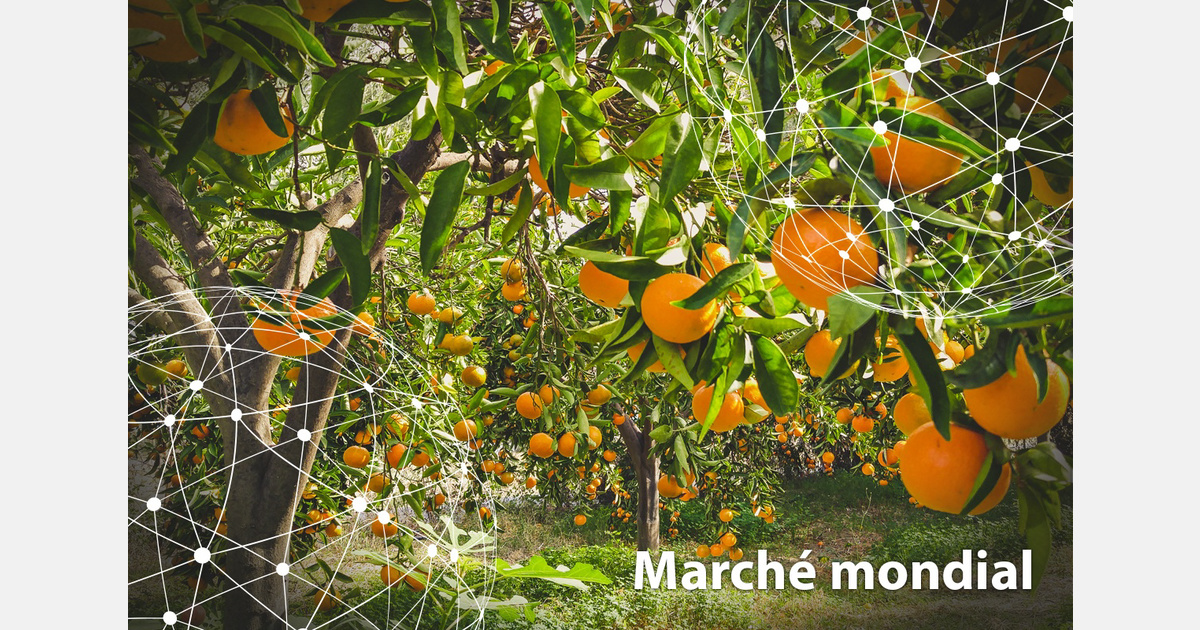
The global orange market has entered its annual changeover between hemispheres. Southern Hemisphere campaigns are winding down while Mediterranean origins and other Northern Hemisphere suppliers prepare to open new seasons, FreshPlaza reports. South African fruit still dominates several European markets, but logistical disruption, shifting trade flows and uneven size curves have shaped availability and prices in the closing weeks of the campaign. Demand across Europe is uneven: table orange sales have firmed in France, consumption has been slow in the Netherlands and wholesale prices have fallen in Germany.
Spain forecasts 2.8 million tonnes as Italy prepares to start
Spain's orange crop for the 2026/27 campaign is estimated at 2.8 million tonnes, down 4.6%, or 134,300 tonnes, from the previous season and 7.4%, or 224,600 tonnes, below the five-year average, according to the Ministry of Agriculture, Fisheries and Food. Oranges are expected to account for 49% of the country's total citrus volume.
In Italy prices are stable ahead of the seasonal switch, with supply still largely made up of overseas fruit. A wholesaler in southern Italy said the extended availability of Egyptian Valencia oranges into August at competitive prices supported consumption and tempered expectations for South African supply. South Africa is currently the leading origin on the Italian market despite irregular quality, while volumes from South America are more limited. The persistent presence of large overseas volumes could slow exports of the first Italian and Spanish oranges, which would initially be directed mainly at their respective domestic markets. Later Southern Hemisphere varieties are showing signs of improving quality.
A Sicilian grower described orchards as being in a normal young-fruit growth phase and in average condition, having withstood high summer temperatures thanks to careful irrigation, adding that it is too early to draw firm conclusions about the 2026/27 campaign. In western Sicily, the harvest of the early Navelina variety is expected to begin around 20 November and continue into December, with Washington Navel taking over from late December to March.
Italian consumer data
YouGov survey data cited by FreshPlaza put orange penetration at a broadly stable 71% of Italian households for the year to July 2026. Spend per purchase occasion held stable at just over 3 euros, while average spend per act eased to around 1.85 euros. Organic oranges reach a penetration rate of only 20%, stable over time, despite a large overlap between organic and conventional buyers. Supermarkets remain the dominant channel, followed by discounters and hypermarkets, while greengrocers hold a penetration rate of 10%, close to the 13% recorded by hypermarkets.
Northern Europe: slow Dutch sales, softer German prices, firmer French demand
A Dutch importer said even experienced suppliers describe this South African citrus season as the worst they have known, the result of several adverse factors combining. Heavy spring rainfall was followed by strong wind gusts that caused significant rind damage. Fruit struggled to reach the desired Brix level and eating quality was highly variable. Logistics compounded the problem: ports, particularly in the north, were heavily congested, and at times several million cartons were stuck waiting to be shipped. For fruit of already lower quality, a delay of one to two weeks is extremely damaging, and bad weather again held up operations last week.
Retail data cited by the importer show Dutch orange consumption running 10-15% below last year, with high temperatures pushing consumers towards other products such as melons. Grapefruit and, to a lesser extent, oranges are bought mainly by older consumers, a trend visible in retail data for several years. The final orange volumes are already on the water, and the importer expects the market to have no choice but to move large juice-grade oranges through the fresh channel, making the start of the juice orange season more difficult given the volumes still available.
In Germany, South African Valencia Late blondes moved too slowly on wholesale markets and prices declined as a result. Wholesale prices for South African Valencia Late and Navel oranges were recently between 1.10 and 1.30 euros per kilogram, slightly below the level recorded at the same time last year. According to the latest market report from the BLE, Egyptian oranges had all but disappeared from the market between weeks 36 and 37.
France is the counterpoint. Demand has strengthened over the past two weeks, supported by relatively limited volumes on the market and close attention to fruit quality. South African oranges are the best represented origin, with particularly positive momentum for table varieties, and prices remain at satisfactory levels on the back of good demand, controlled availability and high-quality fruit.
Egypt, North America and India approach their own transitions
In Egypt an exceptionally long season is continuing, sustained by late demand for sizes that were previously less sought after. In North America, small sizes are becoming harder to find as the Californian Valencia season draws to a close, while Florida is preparing to begin its harvests. India is also approaching the switch from imported oranges to domestic production.