Global Milk Output Growth to Slow to About 1% in 2026 as Farm Margins Tighten
Rabobank's second-quarter outlook, analysed by AHDB, projects world milk supply growth easing to around 1% in 2026 from 3.1% in 2025. Falling farmgate prices and rising energy, fertiliser and interest costs are squeezing dairy margins across the main exporting regions.
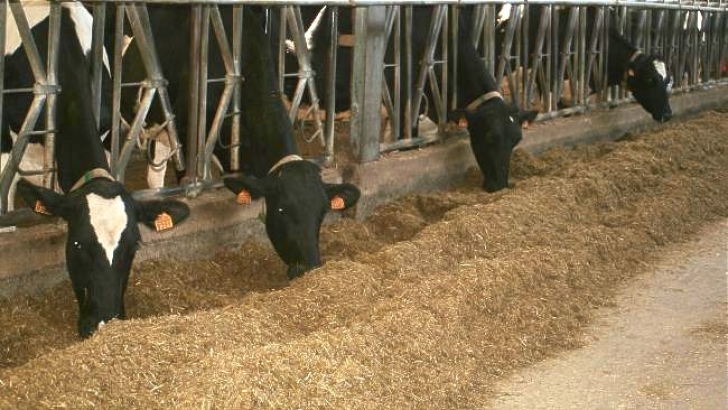
World milk production growth is set to slow sharply in 2026 as lower farmgate prices and higher energy and fertiliser costs squeeze dairy farm margins, according to Rabobank's second-quarter outlook analysed by AHDB. The analysis puts milk supply growth at around 1% in 2026, well below the 3.1% recorded in 2025.
A market moving from expansion to rebalancing
The slowdown marks a shift from a phase of strong volume growth to one where profitability and costs again drive investment decisions. RaboResearch places the peak of combined output growth at 5.2% year on year in the fourth quarter of 2025, with expansion moderating through 2026. The forecast points to a growth peak in the second quarter of 2026, stabilisation in the third and contraction in the fourth. RaboResearch estimates supply rising 1.5% year on year in the second quarter, holding steady in the third and falling 1.6% in the fourth.
Seven major producing regions are covered: the European Union, the United States, New Zealand, Australia, Brazil, Argentina and Uruguay. Supply remains abundant despite the slowdown, and demand is still shaped by inflation, geopolitics and the risk of El Niño. Energy, fertilisers and interest rates are among the factors pressing hardest on returns.
Divergence between proteins and fats
The global dairy market is splitting by product. Skimmed milk powder and whey are benefiting from growing interest in protein-rich products, supporting parts of the industrial and food sectors even amid fragile overall demand. Butter and cheese face the opposite pressure: the heavy milk volumes generated during the expansion have lifted the quantities sent for processing, increasing availability. AHDB notes there is no single trend across all dairy commodities in 2026.
Regional picture
- EU-27 and UK: output stays elevated in the second quarter, with growth near 0.2%, but could fall close to 1% in the second half of 2026. Milk prices have dropped about 17% since September while energy and fertiliser costs have risen.
- United States: one of the strongest expansions, with production expected up around 2% in 2026, backed by a record herd of 9.7 million head and improved yields. Cheese and butter output is near highs and prices are seen close to long-term averages.
- New Zealand: growth easing to around 1% in 2026/27 after a season up about 3.5% year on year. Farmgate prices remain high at around NZ$9.7-9.75 per kilogram of milk solids, with strong whole milk powder exports; rising energy costs are the main risk.
- Australia: a further 0.3% decline is expected in 2026/27, with output to April already 0.3% below the previous year. Higher costs and flat prices keep many producers near breakeven.
- Brazil: a move from 8% growth in 2025 to roughly stable output in 2026, with declines expected in the second half. Imports are likely to stay high while domestic demand remains weak.
- Argentina: production growth of about 1-2% in 2026 before a possible drop at year-end, with margins still under pressure.
Demand has improved slightly on lower prices but is not yet enough to fully absorb the surplus. Exports offer some support, though geopolitical instability keeps risks elevated.