GAPKI warns planned Indonesian commodity exchange could weaken palm oil competitiveness
GAPKI says Indonesia’s planned Minerals and Strategic Commodities Exchange must account for the distinct characteristics of palm oil. The producer association is concerned that unsuitable exchange rules could reduce the sector’s competitiveness.
Industry seeks commodity-specific rules
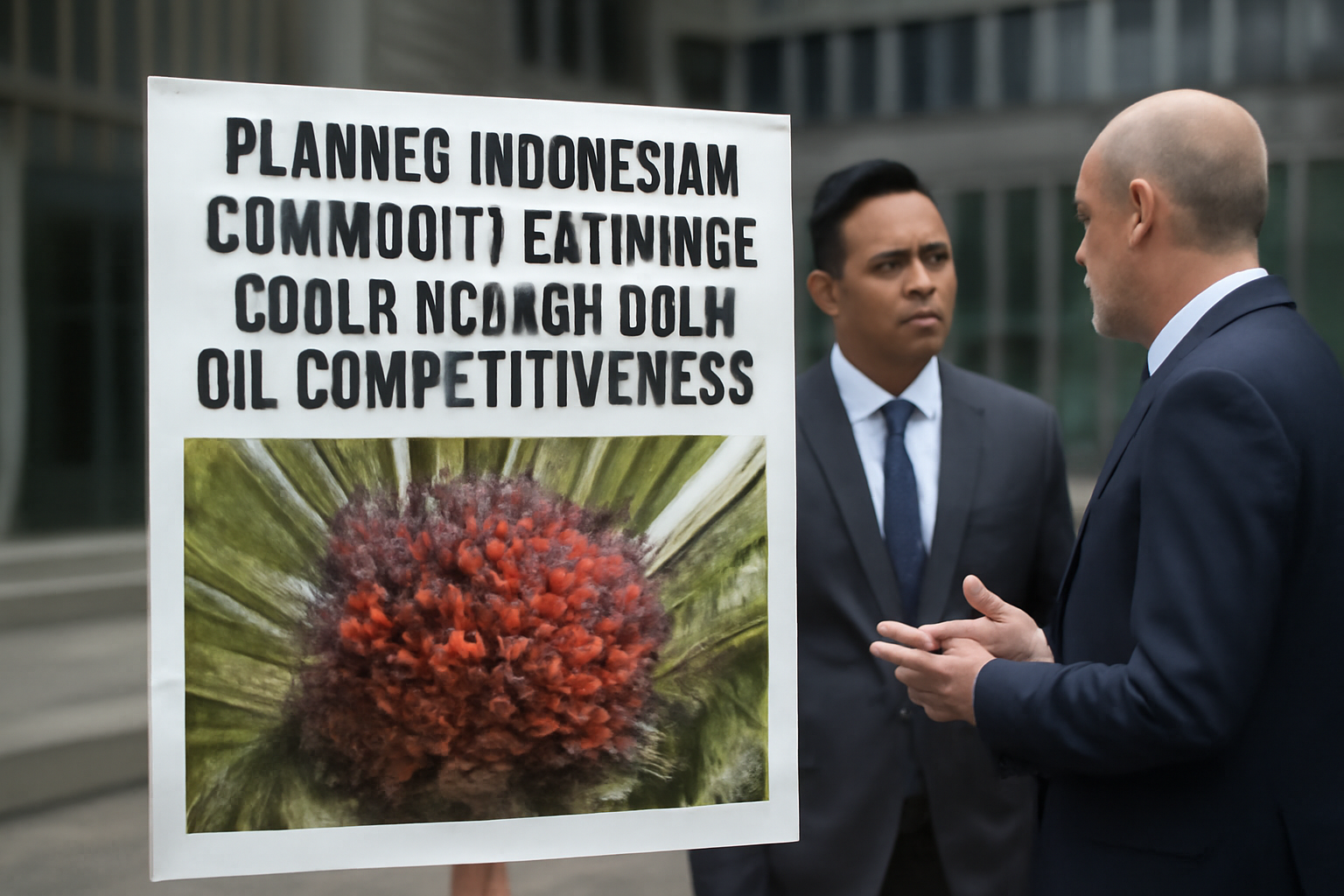
Indonesia’s palm oil industry has warned the government that its planned Minerals and Strategic Commodities Exchange could weaken the sector’s competitiveness if palm oil is placed under rules that do not reflect how the commodity is produced and traded. Elshinta reported that the Indonesian Palm Oil Association, known as GAPKI, wants the government to consider the characteristics of each commodity included in the proposed exchange.
The association’s position does not reject the exchange itself. Instead, it focuses on whether a common framework designed for minerals and other strategic commodities would be suitable for palm oil. GAPKI argues that the government must avoid arrangements that place additional pressure on the competitiveness of Indonesia’s palm oil sector.
Palm oil differs from mineral commodities
The concern centers on the breadth of the proposed platform. Its planned coverage of both minerals and strategic commodities brings products with different supply chains, commercial practices and market structures into the same policy initiative. GAPKI’s warning indicates that palm oil should not automatically be governed by mechanisms developed for other commodity groups.
Palm oil is an agricultural product, and its position within the planned exchange therefore requires rules suited to an agricultural supply chain. The available report does not specify the proposed trading requirements, implementation schedule or commodities that would be subject to mandatory exchange transactions. It also does not identify particular fees, pricing mechanisms or reporting obligations opposed by GAPKI.
Those details will determine the practical effect on producers, processors and traders. Requirements affecting how transactions are recorded or executed could change commercial procedures across the sector. The industry’s central request is that such measures reflect the operating characteristics of palm oil rather than apply a uniform model across unrelated commodities.
Competitiveness becomes the central test
Indonesia’s government is presenting the initiative as a Minerals and Strategic Commodities Exchange, while GAPKI is assessing it from the perspective of palm oil’s market position. The difference in emphasis matters: a policy intended to organize strategic commodity trading could create costs or constraints if its rules are poorly matched to an agricultural market.
For producers and processors, the key issue is whether participation would alter sales practices or add administrative requirements. Traders will focus on how the exchange could affect transaction flexibility and the way contracts are handled. Market participants will also need clarity on whether the new institution would supplement existing trading channels or become compulsory for specified transactions.
Policy design remains decisive
The warning places responsibility on policymakers to distinguish among the commodities covered by the initiative. A framework may pursue common objectives while still using separate procedures for products with different physical, financial and logistical characteristics. GAPKI’s intervention suggests that the palm oil industry wants that distinction established before the exchange’s operating rules are finalized.
The available information does not state that the exchange has already imposed obligations on palm oil companies, nor does it quantify any expected effect on production, prices or trade. The immediate development is therefore a policy dispute over design rather than evidence of a measurable market disruption.
Further details on participation, trading procedures and commodity coverage will show whether the government addresses GAPKI’s concern. For Indonesia’s palm oil companies, the benchmark will be straightforward: the exchange must not make their commercial operations less competitive.