French pump prices hit records: drivers turn to E85, LPG and rapeseed oil
Diesel averaged 2.41 euros per litre in France on Monday and SP95-E10 reached 2.18 euros, above its 2022 peak, according to Le Journal de Saône-et-Loire. Motorists are shifting to Superethanol-E85 at about 0.85 euros per litre and LPG at 1.06 euros, while some are pouring retail rapeseed oil into diesel tanks despite customs rules and engine damage warnings.
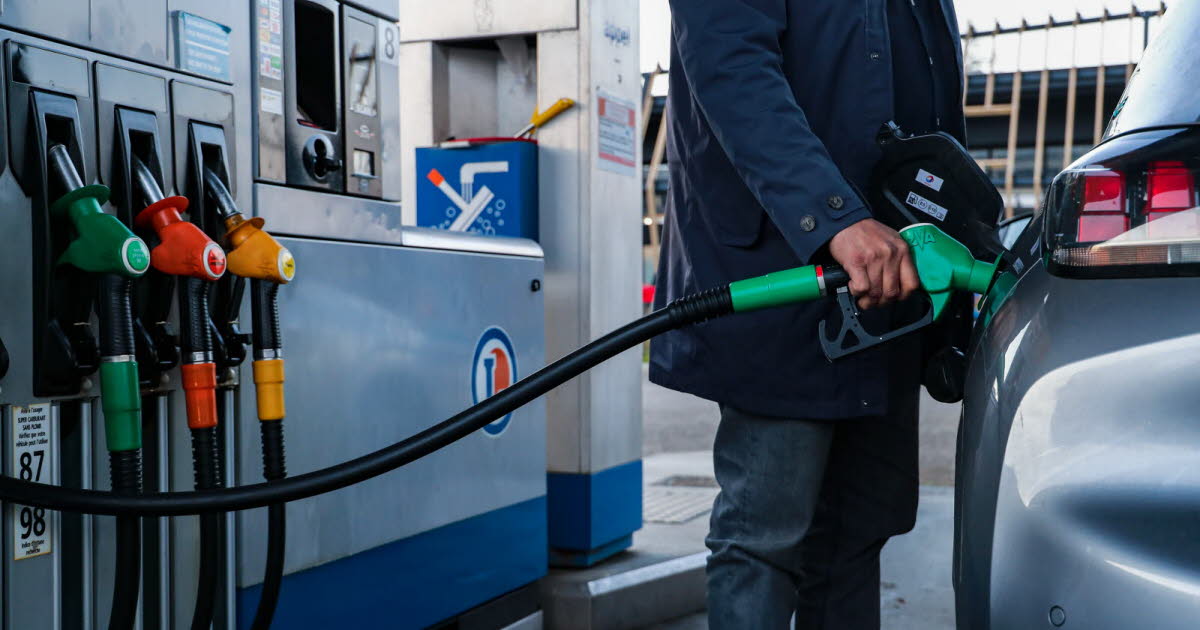
French motorists are moving toward alternative fuels after pump prices set new records on Monday, the regional daily Le Journal de Saône-et-Loire reported. Interest is rising in Superethanol-E85, liquefied petroleum gas and — in breach of customs rules — retail rapeseed oil used as a diesel substitute.
Pump prices above the 2022 peak
Diesel averaged 2.41 euros per litre, SP95-E10 2.18 euros and SP98 2.28 euros. The SP95-E10 figure sits above its previous record, set in 2022 after the start of the war in Ukraine. Alternative fuels remain far below those levels.
- Diesel: 2.41 euros per litre
- SP95-E10: 2.18 euros per litre
- SP98: 2.28 euros per litre
- Superethanol-E85: around 0.85 euros per litre
- LPG: around 1.06 euros per litre
On a 40-litre fill the arithmetic is blunt: 34 euros with E85 against roughly 87 euros for SP95 and 91 euros for SP98. Retail rapeseed oil, at about 1.47 euros per litre, undercuts diesel by almost a euro.
Rapeseed oil: cheap on the shelf, costly at the injector
The price gap has revived a practice circulating widely on social media — blending cooking oil with diesel, or running on the oil alone. Some diesel engines will tolerate the mix, but the newspaper notes that rapeseed oil can foul injectors and the injection pump, causing power loss and poor acceleration.
Pierre Chasseray, general delegate of the motorists' association 40 millions d'automobilistes, was blunt: “I don't give it 10,000 km before the injectors are dead.” Two tankfuls should pass without damage, he said, but the temptation to keep going is where the real cost begins.
There is also a legal barrier. Vegetable oils are not listed among the fuels authorised by the French customs code. A carve-out exists for some professional users in agriculture, construction and transport that operate captive vehicle fleets. The same logic applies to GNR, the red-dyed non-road diesel taxed at a lower rate than road diesel. A private driver caught using it in a car faces a fine of up to 135 euros and seizure of the vehicle.
E85: a 55-centime tax gap
The legal route gaining ground is Superethanol-E85, made mostly of bioethanol produced from sugar beet, wheat or maize, blended with a share of petrol. It is restricted to petrol vehicles fitted with an approved conversion box, Chasseray stressed, as videos of drivers mixing petrol and ethanol themselves spread online. Without a box, he said, ethanol's very high octane rating strips years of accumulated deposits from the tank, which lodge against the fuel filter until the fuel pump stops and the car breaks down.
An approved conversion box costs between 500 and 1,000 euros. “Once you have that, it's 50% savings. It's a hugely profitable investment, the box pays for itself in a year,” Chasseray said. Much of the advantage is fiscal: the TICPE energy consumption tax applied to bioethanol is 12 centimes, against 67 centimes for petrol.
LPG and hydrogen constrained by the network
LPG, a mix of propane and butane, lets a converted vehicle run on two tanks, one for petrol and one for gas. At around 1.06 euros per litre it remains attractive, but converting a petrol car costs an average of 3,000 euros. “That's more expensive than ethanol, so inevitably far less profitable,” Chasseray said. Distribution is the other limit: of roughly 10,000 service stations in France, only about 1,500 offer LPG, according to France Gaz Liquides.
Hydrogen requires changing vehicle altogether and remains marginal for private drivers. Its advantages are range comparable to combustion cars, fast refuelling and no tailpipe CO2, with the vehicle emitting mainly water vapour. The network, however, is minimal: France currently has 66 hydrogen refuelling stations for about 1,155 vehicles on the road. Before chasing savings of a few dozen euros per fill, the paper cautions, drivers should confirm that the option is compatible with their vehicle, compliant with regulation and genuinely profitable over time.