France's 2026 wine harvest seen at 33.9 million hectolitres, the lowest since 1957
First estimates from the French Ministry of Agriculture put 2026 wine production at 33.9 million hectolitres, 6% below last year and 17% under the 2021-2025 average. Drought, extreme heat and a shrinking vineyard area are behind the drop, with fires in the south adding a smoke taint risk. The shortfall lands on a market already dealing with falling consumption and a state-funded vine-grubbing plan.
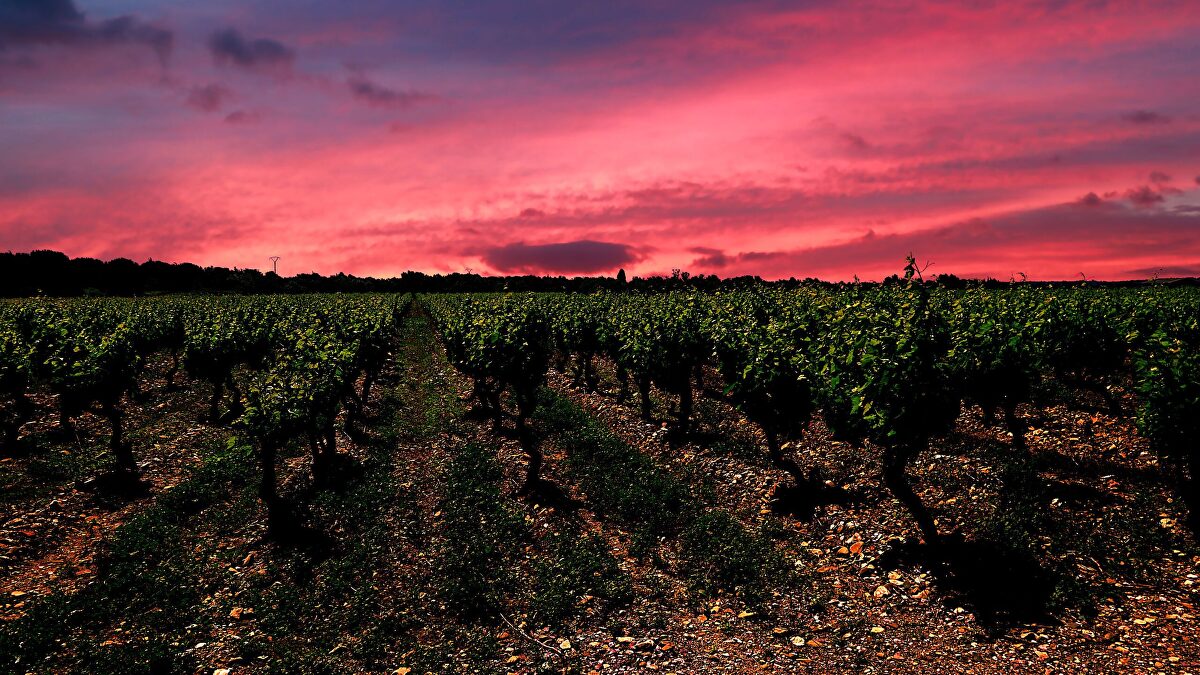
France is heading for one of its smallest wine harvests in modern history. First estimates from the French Ministry of Agriculture put 2026 production at 33.9 million hectolitres, 6% below last year and 17% below the average recorded between 2021 and 2025, according to Libertad Digital. If the forecast holds, it would be the lowest French output since 1957.
The shortfall is not the result of a single weather event. Libertad Digital attributes it to a combination of drought, extreme temperatures and a vineyard area that keeps shrinking, the last of which is partly a matter of policy, since the French state is paying growers to pull out vines.
Heat pulled the harvest forward
Summer heat accelerated ripening while the lack of rain reduced both the size of the bunches and the volume of juice they yielded. With yields down, picking started early: in some areas, plots traditionally harvested in mid-September were brought in during the middle of August.
Temperature also changes what ends up in the tank. High heat raises the sugar concentration in the grape and lowers its acidity, which points to wines with more alcohol and less balance. Producers quoted by Le Monde said temperatures above 40 degrees close to the harvest can degrade acidity and alter the character of the wine.
Fires add a second quality risk
The large fires that hit southern France put some estates at risk and raised the prospect of smoke taint, a fault that appears when grapes absorb chemical compounds from burnt wood and the flavour of the finished wine is altered. The estimates published so far do not quantify the volume of fruit exposed or the vineyard area affected.
A demand problem that a small crop does not solve
The production drop lands on a sector already under commercial pressure. Le Monde reported in July that wine consumption fell 3.2% by volume in France during 2025 and 2.7% worldwide. French producers are also absorbing the effect of US tariffs and an overproduction crisis that pushed the government to fund a new vine-grubbing plan worth 130 million euros.
- 2026 production estimate: 33.9 million hectolitres, down 6% year on year
- 17% below the 2021-2025 average, and the lowest level since 1957
- Consumption in 2025: down 3.2% in France, down 2.7% globally
- Public funding for the latest vine removal plan: 130 million euros
Spain's opening is real but conditional
A smaller crop can partly relieve the market's excess supply, but it does not automatically improve growers' economics: Libertad Digital notes that some could still lose up to 30% of their income. For Spanish producers, the French decline may open space in international markets, though the effect will not be immediate. France carries a surplus concentrated in reds and roses, so the first part of the missing volume will go to drawing down stocks that have been pushing prices lower.
If the smaller harvest does eventually reduce French stocks held in export markets, Spanish and Italian producers would be positioned to approach distributors and importers looking for a more competitive quality-price ratio. Substitution has limits: in wine, origin, appellation, grape variety and brand loyalty weigh heavily, particularly in higher-value ranges, and a buyer of Champagne, Bordeaux or Burgundy will not necessarily switch to a Spanish wine simply because French volumes are down. The open question is whether the 2026 shortfall is large enough to absorb the existing surplus and translate into genuinely lower availability for international buyers.