Expired poultry dispute exposes gaps in Iran’s food reserve management
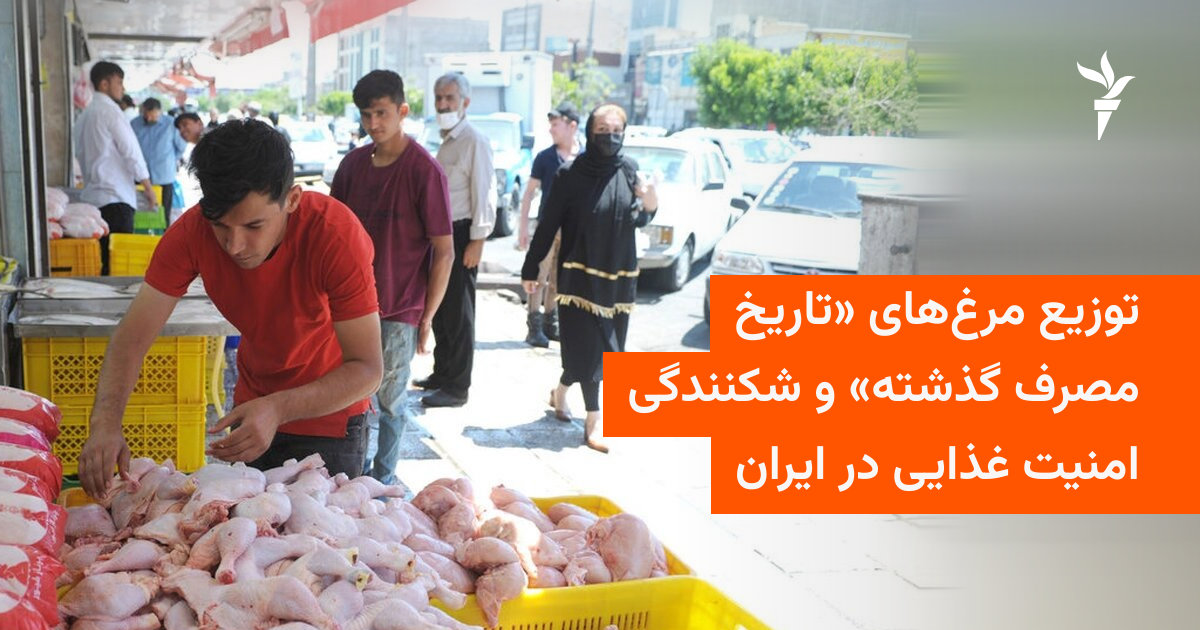
Conflicting official accounts over frozen chicken in Tehran cold stores have raised questions about Iran’s food reserve controls. Reported volumes range from about 3,000 tonnes to 20,500 tonnes, while officials disagree over whether expired products reached consumers.
Officials give conflicting accounts of frozen stocks
A dispute over frozen chicken held in Iranian cold stores has exposed sharp differences between official accounts of the volume involved, its safety status and whether any expired product reached consumers. Radio Farda reported that Ahmad Shariati, director-general of the Tehran Province Veterinary Organization, confirmed that about 3,000 tonnes of chicken nearing the end of its shelf life had been stored in the province this year. About 2,000 tonnes were not consumed within the permitted period.
Shariati said most of the stored chicken presented no particular sanitary problem, but its expired shelf life prevented its sale for household consumption. It was instead designated for industrial use. He maintained that none of this chicken entered the consumer market and that no complaints about expired poultry being sold in Tehran Province stores had been registered.
Parliamentary claims point to a much larger stockpile
Mohammad Javad Askari, chairman of parliament’s Agriculture Committee, presented a different account. He said 20,500 tonnes of frozen chicken remained in cold storage and alleged that pressure had been applied to change its expiry dates and extend them by three months. Askari also claimed that Masoud Mohammadian, a deputy at the national veterinary organization, was removed from his position after opposing the alleged violation. According to Askari, no tests had been performed on the products and some expired chicken was released onto the market.
The gap between the 20,500 tonnes cited by Askari and the approximately 3,000 tonnes identified by Tehran’s veterinary chief has not been reconciled. The competing claims also leave unresolved whether the figures cover different geographical areas or batches. Radio Farda noted that, if the parliamentary allegations are substantiated, the case would raise questions not only about storage practices but also about the independence of Iran’s food-safety oversight system.
Higher prices collide with weak stock rotation
The controversy comes as Iranian households face rapidly rising protein prices and weaker purchasing power. ISNA reported on 2 Shahrivar that field checks showed substantial monthly increases for some chicken cuts: skinless drumsticks rose by about 28%, while skinless thighs increased by 43% to 54%. Lower affordability can slow sales and leave frozen reserves in storage for longer, increasing the importance of matching procurement volumes with consumption and replacement schedules.
A separate enforcement case has added to scrutiny of cold-storage controls. Police announced on 2 Shahrivar that they had found 116 tonnes of smuggled Brazilian frozen chicken in eastern Tehran. Mehdi Afshari, head of Tehran’s Economic Security Police, estimated the shipment’s value at more than 20 billion tomans. Agriculture Minister Gholamreza Nouri Ghezeljeh has acknowledged higher prices but said Iran has no food-security problem. The poultry dispute nevertheless shows that holding reserves alone is insufficient: frozen products require timely rotation, reliable inspection and distribution before their shelf life ends, particularly when disruption to southern ports complicates trade and replacement cargoes.