European wine sector faces excess supply, weaker demand and longer winery sales
Falling Bordeaux exports to China, crisis distillation in Germany and slower winery sales point to broad pressure across the European wine industry. Bulk-wine producers face the greatest difficulties, while differentiated bottled-wine businesses remain more attractive to buyers.
Bordeaux loses a major export market
Europe’s wine industry is confronting a combination of excess production, declining demand and a more difficult market for winery ownership. FOOD AND WINE CULTURE Consulting, a Heidelberg consultancy that has advised food and beverage companies for more than 30 years, says developments in Bordeaux, Rheinhessen and the winery sales market reflect industry-wide pressure rather than isolated regional or seasonal problems.
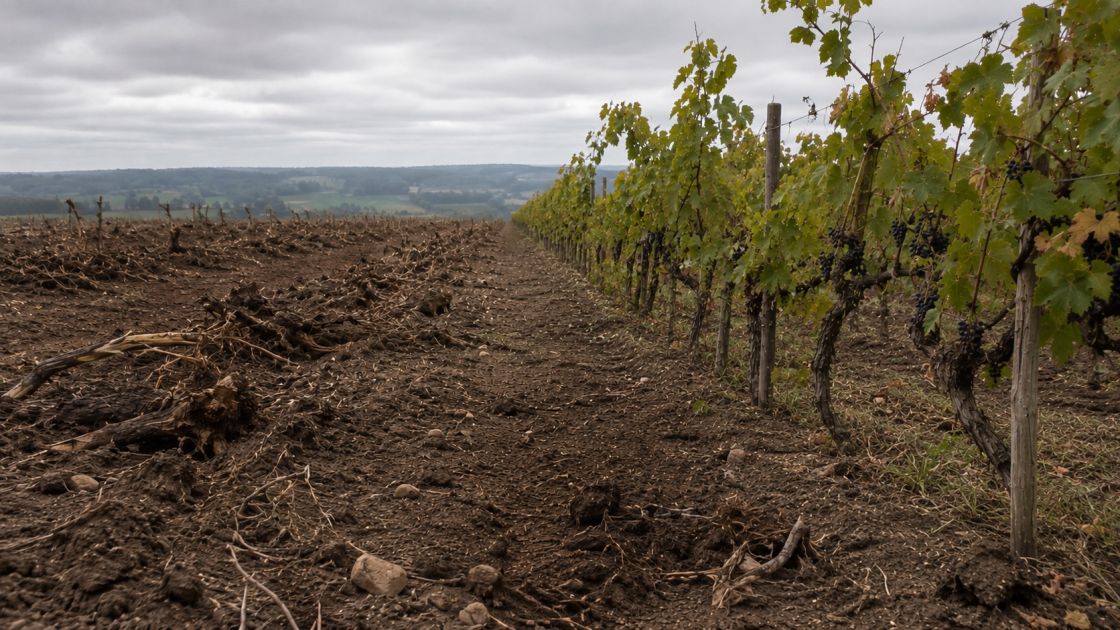
Bordeaux illustrates the scale of the demand shock. Citing reporting by Frankfurter Allgemeine Zeitung, the consultancy said Bordeaux wine exports to China fell from about 550,000 hectolitres to 120,000 hectolitres within ten years. The contraction has hit a region already struggling with weaker consumption and has compounded the damage caused by recent wildfires. Traditional tannic red wines are losing demand across the sector, while white, rosé and sparkling wines are proving more stable.
Germany turns surplus wine into industrial alcohol
Production capacity is being reduced in response. Around 30,000 hectares of vineyards in Bordeaux have been cleared with state support over three years. The removals may help curb supply, but they also demonstrate the depth of the imbalance between vineyard capacity and current demand. Producers must decide whether to reduce output, change their product mix or find customers through different sales channels.
Germany is addressing its own surplus through crisis distillation. At the federal government’s request, the European Union approved the measure for winegrowers in Rheinhessen and Württemberg. Surplus red and rosé wine from the 2025 vintage or earlier can be distilled into high-strength industrial alcohol, including alcohol used in disinfectants. The EU agricultural reserve will provide 43 euro cents per litre, with another 16 euro cents per litre allocated for logistics and distillation costs.
Industry associations and regional ministries describe the programme as a short-term exceptional measure. It can remove inventories and ease immediate pressure on storage and prices, but it does not resolve the underlying gap between production and consumption. The distinction matters for growers, cooperatives and processors making planting, investment and purchasing decisions beyond the current vintage.
Winery buyers become more selective
The market for wineries is also dividing along commercial lines. Winery broker Erhard Heitlinger told Frankfurter Allgemeine Zeitung that businesses focused solely on bulk wine now find almost no buyers. Well-positioned bottled-wine producers with a distinct profile and stable customer base remain in demand. That difference places brand strength, route-to-market and direct customer relationships alongside vineyard assets as central factors in business valuations.
Sales processes now take an average of five years, compared with three years previously, according to Heitlinger. He also observes that many owners begin succession planning too late. For family wineries and investors, the longer timetable increases the need to prepare ownership transfers before financial or operational pressure forces a sale. FOOD AND WINE CULTURE consultant Cyriacus Schultze argues that producers still have room to act if they align their ranges, pricing structures and distribution channels with changing demand. The evidence from France and Germany nevertheless suggests that adjustment will involve both commercial repositioning and reductions in surplus capacity.