EU perfume exports to Russia fall 37% in July, cosmetics down 16%
Eurostat data show European Union perfume shipments to Russia fell 37% year-on-year in July to €26.4 million, while cosmetics exports dropped 16% to €34.5 million. France remained the largest supplier in both categories as Russian domestic production continues to expand.
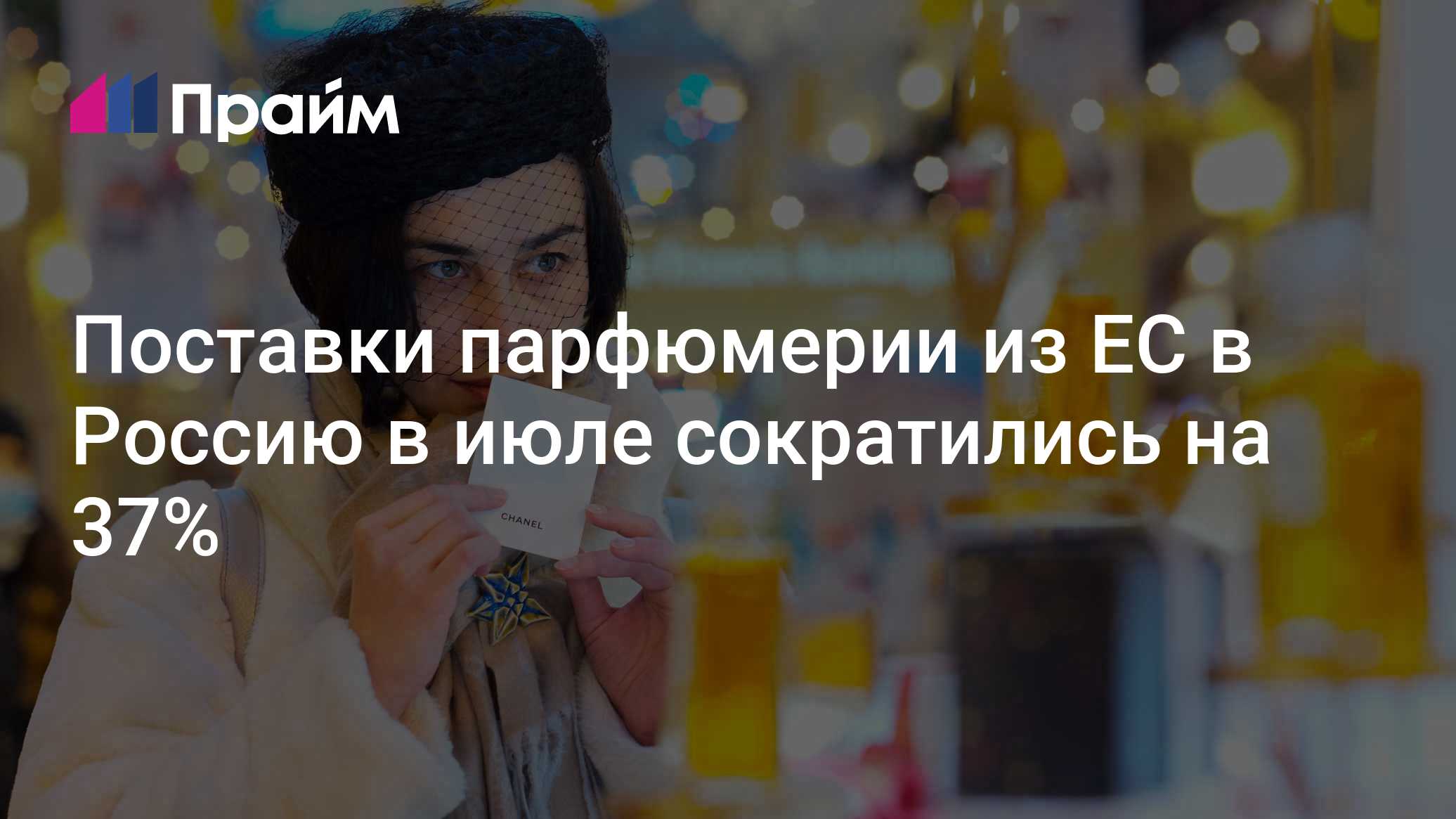
European Union exports of perfume to Russia fell 37% year-on-year in July to €26.4 million, while shipments of cosmetics declined 16% to €34.5 million, according to Eurostat figures cited by RIA Novosti.
The decline extends a contraction that has run through the year, but the monthly comparison points the other way, indicating that demand in the market has not disappeared even as the annual totals keep shrinking.
A monthly gain inside an annual decline
Against June, EU exports of perfume and eau de toilette rose 7% and reached their highest level since February. Cosmetics shipments added 4% over the same month.
The seven-month totals confirm the longer trend. Between January and July the EU supplied Russia with €190.2 million of perfume, 22% less than in the same period a year earlier. Cosmetics exports over those seven months fell 17% to €236.8 million.
Skin care dominates the cosmetics mix
Skin care preparations remain the core of the European cosmetics trade with Russia, Profile reports. In July they were valued at €27.1 million, the bulk of the monthly total. The remainder was spread across narrower segments:
- eye make-up — €2.7 million
- powders — €2.2 million
- lip cosmetics — €2.1 million
- manicure and pedicure preparations — €488,000
The composition matters for European manufacturers because skin care carries the volume, while the smaller decorative categories are the ones most exposed to brand withdrawal and to competition from local labels.
France leads both categories
France was the largest EU supplier of perfume and eau de toilette in July with €8.8 million, followed by Spain with €6.2 million and Italy with €5.3 million. Together the three countries accounted for more than three-quarters of the monthly perfume total.
France also led in cosmetics with almost €12 million. Germany exported close to €7 million and Poland €5.5 million. The ranking of suppliers has changed little through the downturn: what has shrunk is the volume of trade rather than the list of countries conducting it.
Russian output expands as imports shrink
The fall in European shipments is taking place against rising Russian production and a reshaped market structure. According to BusinesStat, Russian perfume output increased 2% in 2025 to 94 million units, while the number of new perfumery enterprises rose 77% over the year.
The shift is more pronounced in cosmetics. Tebiz Group estimates that domestic cosmetics production in Russia exceeded imports by a factor of 1.4 in 2025. Over five years the market has grown by roughly a quarter in volume terms, while its value nearly doubled to 993 billion rubles — a gap that points to price growth and a move to higher-priced products rather than to a comparable rise in consumption.
Part of the space vacated by European brands is being taken by Russian manufacturers, while foreign products continue to enter the country through altered channels and from a wider range of origin countries. That redistribution of supply is one reason the Eurostat series understates the volume of European-origin goods actually reaching Russian shelves.
Russia's Ministry of Industry and Trade has pointed to the same trend. Deputy Minister Mikhail Yurin said Russian consumers have become more interested in domestic perfumery, including brands that draw on Russian cultural themes, using images from Russian fairy tales, nature, literature and traditional culture in their names and compositions.
For European producers, the July figures describe a market that is still commercially meaningful in absolute terms — nearly €61 million in combined monthly perfume and cosmetics shipments — but one where each month of reduced presence transfers shelf space and consumer habit to local competitors.