EU auditors: fruit and vegetable producer organisations lose ground to retailers despite €1.06bn a year
A new European Court of Auditors special report finds that fruit and vegetable producer organisations remain weak in negotiations with large retail chains despite around €1 billion a year in EU support. Membership fell 39% between 2012 and 2023, and the share of output marketed through these structures ranges from 0.8% in Slovenia to 86% in Denmark.
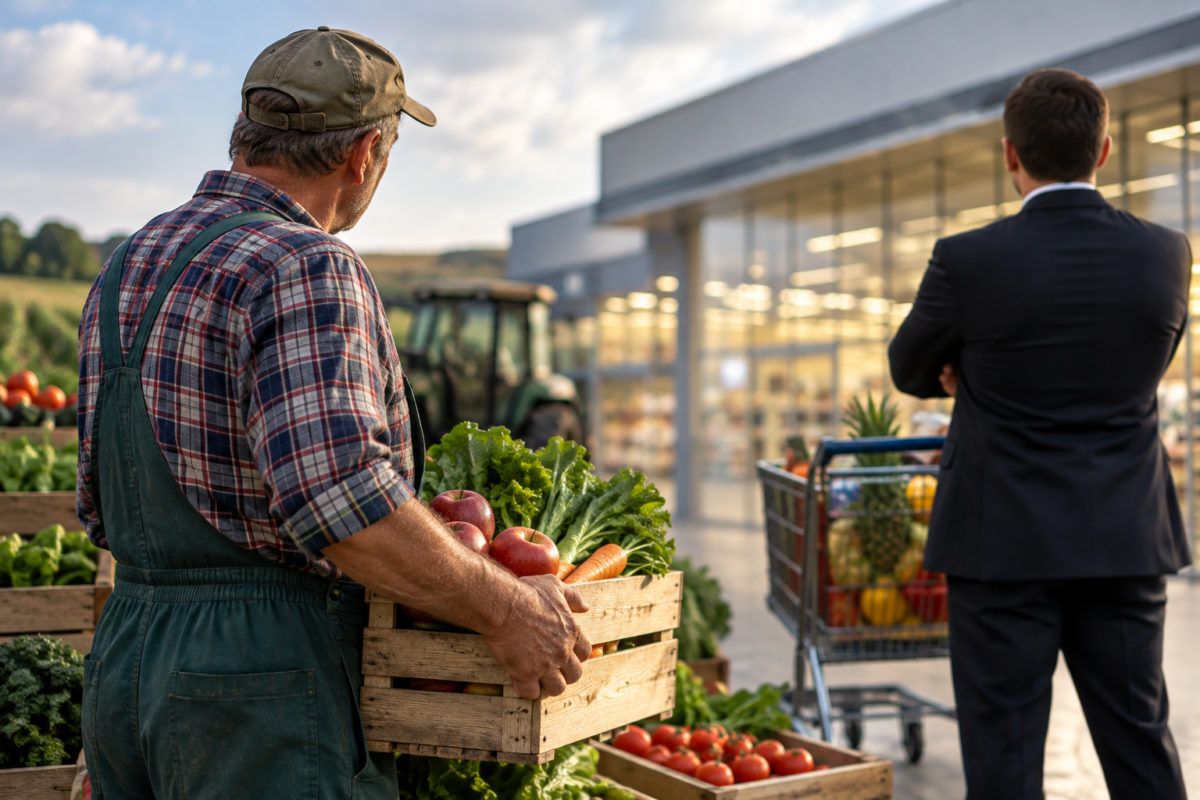
Producer organisations in the European Union's fruit and vegetable sector remain in a weak position when negotiating with large retail chains, even though they receive around €1 billion a year in EU funding, according to a new special report by the European Court of Auditors reported by Evenimentul Zilei. The auditors found that these structures are losing their appeal and that the number of farmers belonging to them is falling.
Support paid to fruit and vegetable producer organisations amounted to €1.06 billion in 2023. European Commission data show that in 2024 the sector counted 1,488 recognised producer organisations across the EU with 187,372 members between them, along with 69 recognised associations grouping those organisations.
Funding rises while membership falls
Between 2012 and 2023 the number of farmer members of fruit and vegetable producer organisations fell by 39%, and the organisations lost market share over the same period. Funding is calculated on the value of marketed production, which gives organisations an incentive to raise turnover and adapt output to market demand.
The 2023 money was used for:
- modernising equipment and automating production;
- cutting energy and water consumption;
- obtaining quality certification;
- developing packaging and logistics;
- creating quality labels recognised by consumers.
The European Court of Auditors says EU financing does improve the competitiveness of producer organisations, but the effects are limited by differences between the forms of support granted at national level, by the complexity of European rules and by an insufficient response from the European Commission to the sector's problems.
From 0.8% in Slovenia to 86% in Denmark
Larger structures can supply significant volumes and offer a more diverse range, which puts them in a better negotiating position. In most member states, producer organisations do not have the size or influence needed to negotiate from a position of strength. Belgium and the Netherlands are the only countries where these organisations have acquired significant economic weight.
The gaps between countries are wide. In some member states there is no recognised fruit or vegetable producer organisation at all. Where they operate, the share of production sold through them ranges from 0.8% in Slovenia to 86% in Denmark. The auditors attribute part of the difference to historical and cultural factors, but also to policies adopted at national level: some authorities provide advice and allow a broader set of measures and investments to be financed, while others apply stricter eligibility rules or grant less support.
Unequal conditions inside the single market
According to the Court, those national differences create unequal competitive conditions within the single market and can deter farmers from joining a producer organisation or from submitting the operational programmes through which EU funding is obtained. The auditors say the European Commission has identified some of these difficulties but has not taken sufficient action to resolve them, nor to help member states compare and align the way they apply the rules.
The sector sits inside a wider farm economy that feeds around 450 million Europeans and provides jobs for about 30 million people. Agriculture generated €532 billion in 2024, equivalent to 1.2% of EU gross domestic product, with fresh fruit and vegetables — produced on roughly 2 million farms — accounting for around €80 billion of total agricultural output.
“For producer organisations to help farmers stand up to large buyers and to offer consumers a varied range of European fruit and vegetables, the rules must be simplified, national support must be more coherent, and joining these organisations must become more attractive,” said Keit Pentus-Rosimannus, the Court member responsible for the audit. The audit examined the operational programmes of 57 producer organisations and five associations, with visits to 19 organisations in Spain, France, Italy and Poland, alongside a review of the European framework, the national systems in those four countries and evaluation reports from Belgium, Czechia, Germany and the Netherlands. The conclusions appear in Special Report No 22/2026, “Producer organisations in the fruit and vegetable sector – A fertile ground for competitiveness, if cultivated with care”.