EU Alerts Flag GMO Material in at Least Five Chinese Rice Product Consignments
The EU's Rapid Alert System for Food and Feed has logged genetically modified material in at least five consignments of Chinese rice sticks, crackers, noodles and hydrolysed rice flour so far this year. The findings land while Beijing is rejecting imported rice on GMO grounds, including a record 146 consignments between January and June.
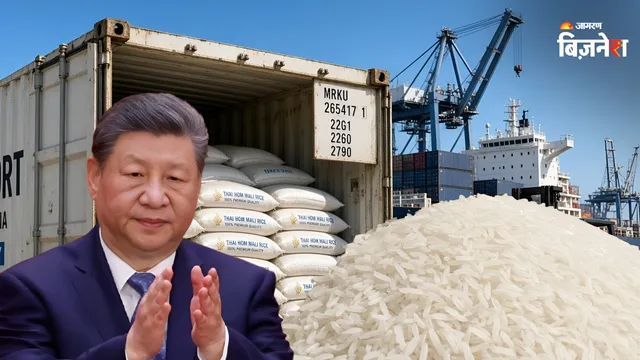
The European Union's Rapid Alert System for Food and Feed (RASFF) has recorded genetically modified material in at least five consignments of rice-based products shipped from China so far this year, according to notifications reported by Dainik Jagran. The findings cover rice sticks, rice crackers, rice noodles and hydrolysed rice flour, and they surface at a moment when Beijing itself is rejecting imported rice cargoes on GMO grounds.
Five alerts between March and September
The notifications were issued on 12 March, 6 and 12 July, 3 August and 8 September. Two national authorities account for all of them.
- 12 March — the Netherlands reported Cry1Ab/Ac in rice noodles.
- 6 July — the Netherlands reported GM material in consignments of hydrolysed rice flour.
- 12 July — the Netherlands reported Cry1Ab/Ac in miso paste of Chinese origin, a traditional Japanese seasoning made from fermented soybeans, salt and the koji fungus.
- 3 August — Italy reported the presence of GMOs in rice crackers.
- 8 September — Italy reported an unauthorised GMO 35 S terminator in rice sticks.
The 35 S terminator is a DNA sequence derived from the soil bacterium Agrobacterium tumefaciens that signals the end of gene transcription in genetically modified organisms. Scientists use it when developing transgenic plants, paired with a promoter so that plant cells express inserted genes correctly. Cry1Ab/Ac is a fused Bt gene first deployed in cotton and now used in crops including rice and jute. RASFF alerts on Chinese rice goods have centred on unauthorised GM rice lines such as Bt-63, KeMingDao and Cry1Ab/Ac, detected in rice noodles, vermicelli and rice flour.
More than 275 notifications since 2002
Between 2002 and 2025 the EU issued more than 275 GMO-related notifications against Chinese food exports. Rice-based products alone accounted for over 125 alert notifications between 2006 and 2025. By comparison, only one notification has been recorded for the presence of GMOs in food exports from India. The unauthorised GM material found in Chinese rice products is understood to be leakage from varieties that were undergoing testing rather than from approved commercial cultivation.
Beijing's own rejections at record levels
China suspended several Indian rice exporters this year, citing GMO presence, and has been rejecting Indian rice consignments since March. It has also turned back cargoes from Kazakhstan, Russia, Ukraine, Belarus and Japan — countries where the cultivation of GM crops is prohibited. Between January and June, China rejected a record 146 consignments, close to four times the 38 rejected in 2025.
Verification costs move to the front line
Fred Gale, a retired economist at the US Department of Agriculture, wrote on his blog Dim Sums that China denies growing GM rice, but that past scandals have seen GM rice grown in scientific trials reach the Chinese market. That history is what gives the RASFF record its weight: the same unauthorised lines keep reappearing in processed goods rather than in paddy shipments.
For European importers the practical consequence is testing. EU rules do not permit unauthorised GM events in food, so a positive result removes the lot from the market rather than repricing it. For Chinese processors of rice flour, noodles and snack products, each new notification raises the probability of sampling at entry and lengthens clearance times for shipments that are compliant. For Indian exporters, the asymmetry between one EU notification and more than 275 against Chinese goods becomes a documentary argument in the dispute over China's March suspensions.
