European Commission defends absence of Mercosur safeguards for Valencia orange juice
The European Commission told MEP Vicent Marza it saw no reason to classify Brazilian orange juice as a sensitive product under the EU-Mercosur deal. Agriculture Commissioner Christophe Hansen argued that EU juice imports fell from about 1.3 million tonnes in 2020 to 600,000 tonnes in 2025. The interim deal has been phasing out the 12.2% tariff on Brazilian juice since May without quotas or specific safeguards.
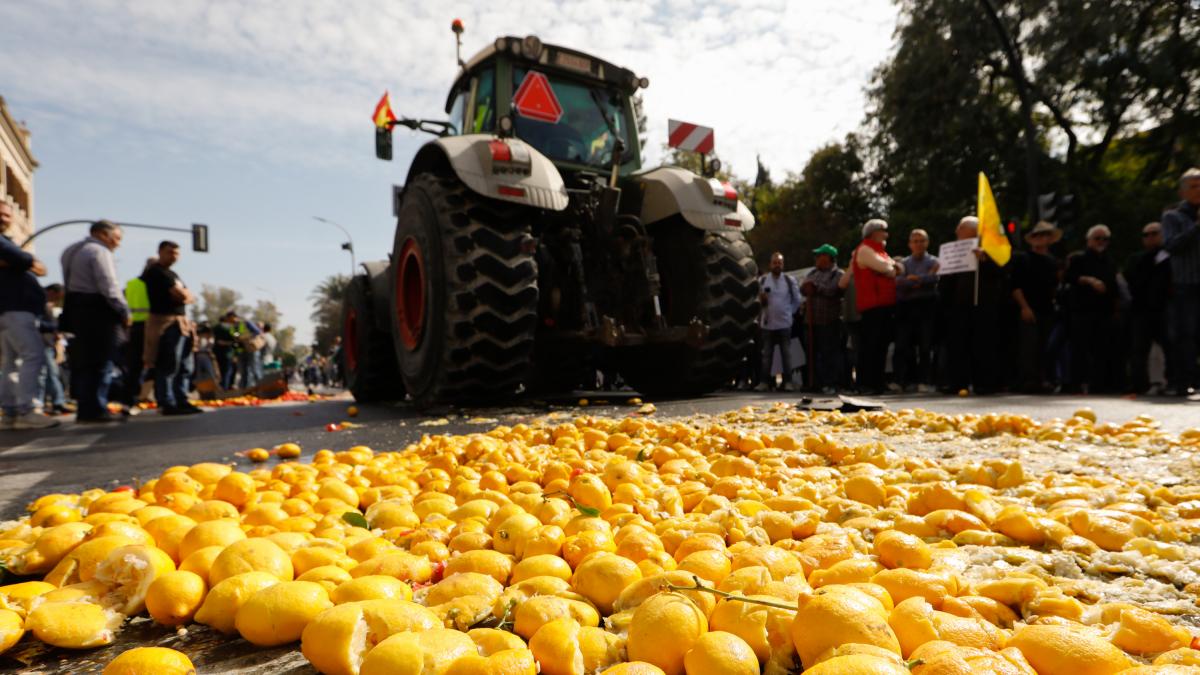
The European Commission has said it saw no reason to activate protective mechanisms for European citrus growers in its trade agreement with Mercosur, despite Brazil's dominance of the European Union juice market. The position was set out in a written reply to Valencian MEP Vicent Marza of Compromis, who sits with the Greens/EFA group, and reported by HuffPost Spain.
What Marza asked
In a written question filed last month, Marza noted that Brazil "structurally dominates the European juice market" with average imports of close to 900,000 tonnes a year and peaks that, in years such as 2023, exceeded one million tonnes. He warned that since May the interim EU-Mercosur agreement has been progressively removing the 12.2% tariff on Brazilian juice "without quotas or specific safeguards".
The MEP argued that the European processing industry absorbs only 20% of citrus production, acting as a regulator for the fresh market. Downward pressure on juice prices from cheaper Brazilian supply, he said, "could leave hundreds of thousands of tonnes of Mediterranean citrus without a destination each season". He asked why Brazilian orange juice had not been classified as a sensitive product, given that Brazil concentrates 80% of world production, and whether Brussels planned automatic safeguard mechanisms in case of market disruption.
The Commission's answer
Agriculture Commissioner Christophe Hansen, a member of the European People's Party, replied that Brazil's position "as the main global juice supplier" was "taken into account", but that "this alone did not justify treating juice as a product subject to other specific measures".
Hansen noted that during the EU-Mercosur negotiations, which concluded earlier this year, products including beef, poultry, rice, sugar, ethanol and honey were treated as "sensitive". For those goods, a sudden surge of Mercosur exports would trigger automatic clauses raising new trade barriers. Citrus juice was not on that list.
- Under the agreement, EU imports of citrus juices are generally subject to staggered tariff reductions phased over seven to ten years.
- For "certain products", the tariff cut is limited to a maximum of 50%.
- Sensitive-product classification, Hansen said, rests on "a balanced assessment" of overall economic impact and reciprocal market-access objectives.
The core argument: falling imports
The central figure in the Commission's defence is volume. "European Union juice imports have fallen from around 1.3 million tonnes in 2020 to 600,000 tonnes in 2025," Hansen wrote, using the decline to counter the case for pre-emptive protection.
On whether Brussels would activate any safeguard for Mediterranean citrus, the Commissioner said it would continue "constant and proactive monitoring" of the sensitive products listed in the regulation that sets out the agreement's clauses. He added that, upon a "duly justified request" from the affected EU industry, the Commission could extend the scope of monitoring to any other product.
Why it matters for the trade
For importers, the phase-out of the 12.2% duty gradually lowers the landed cost of Brazilian juice into the EU over the seven-to-ten-year window. For Mediterranean growers and exporters, the absence of a specific safeguard or quota removes an automatic brake on volumes, leaving the door to protection dependent on a formal, evidence-backed industry request rather than a pre-set trigger.