El Nino Threatens South African Crops After Record Maize Harvest
South Africa's record maize harvest and improved water reserves have reduced the near-term risk of food shortages. A returning El Nino cycle, however, threatens agricultural output and could push food prices higher. The buffer is real but works for a single season.
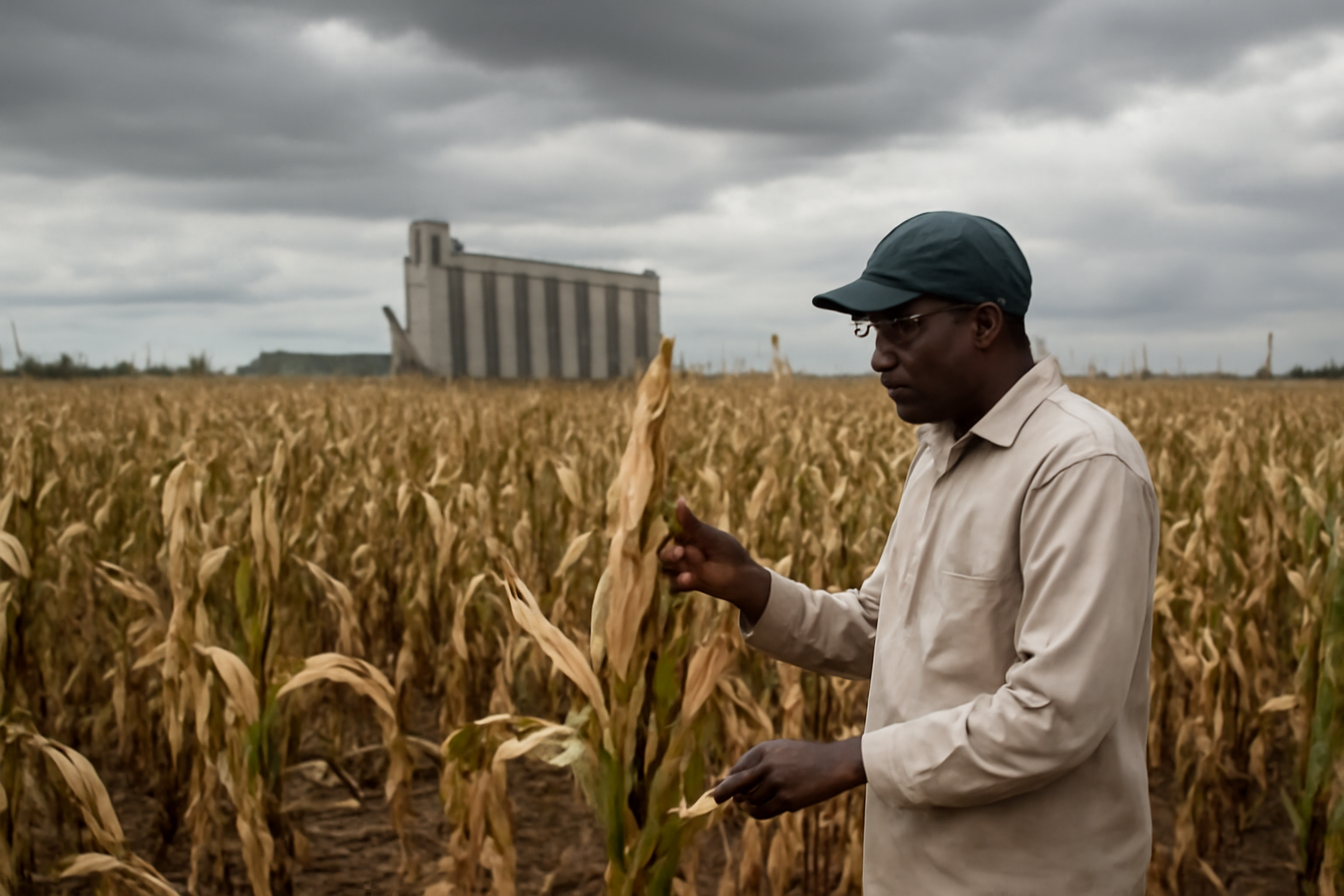
South Africa enters the next weather cycle with an unusual cushion. A record maize harvest and improved water reserves have lowered the near-term risk of food shortages. The looming threat of El Nino, however, keeps the outlook for agricultural output and food prices under pressure.
A record maize crop sets the baseline
Maize is the anchor of South African agriculture. It is the country's staple grain, the base of maize meal for households and the main input for poultry, pork and dairy feed rations. A record harvest does more than cover one season of consumption: it lifts carry-in stocks into the following year, and stock levels determine how large a production shortfall a market can absorb before prices react.
The pricing mechanism is straightforward. South African maize normally trades inside a band bounded by export parity at the bottom and import parity at the top. A surplus pushes the price toward the export-parity floor, because the marginal tonne has to leave the country. A deficit pushes it up to import parity, where the marginal tonne must be shipped in, with freight and currency added on top. The distance between those two levels is the range through which drought translates into food inflation.
Water reserves provide a second buffer
Improved water reserves are the other reason the immediate food-supply risk is limited. Higher dam levels support irrigated production, sustain municipal and industrial allocations, and reduce the probability of restrictions being imposed at the start of the season.
The protection is uneven, though. Stored water covers irrigated horticulture, sugar cane and a limited share of field crops. The summer grain belt that produces the bulk of the maize crop is overwhelmingly rainfed. No reservoir level substitutes for rainfall during the December-to-February pollination and grain-filling window, which is when a maize crop is made or lost.
Where the El Nino risk enters
El Nino is associated with below-normal rainfall and higher temperatures over southern Africa during the summer growing season. For the agricultural complex the transmission runs through several channels at once:
- planted area, if dry conditions at the start of the window delay or deter planting;
- yields, if heat and moisture stress hit during flowering and grain fill;
- feed costs, which pass through to poultry, pork and dairy within months;
- regional supply, because neighbouring markets in southern Africa lean on South African maize.
The damage function is not linear. A moderate rainfall deficit against full silos is a price event of limited scale. A severe deficit against drawn-down stocks turns a domestic surplus into an import requirement, and the switch from export parity to import parity happens quickly once the balance sheet tips.
What the market will be watching
The sequence for the coming season is well defined: rainfall through the planting window, then planting intentions and area data, then successive crop estimates. Each step narrows the range of outcomes, and the maize price will track them far more closely than it tracks the current record harvest, which is already in the balance sheet.
The wider point is that the cushion works once. Stocks accumulated in a good year are consumed in the bad year that follows; they are not replenished by the same event. A single El Nino season against a record harvest is manageable. A second consecutive poor summer against depleted stocks is the scenario that moves food prices, lifts feed costs and shifts the country's position from net exporter toward net importer.