El Niño Risk Puts Indonesia’s Rice Supply and Paddy Prices Under Scrutiny
Potentially stronger El Niño conditions could reduce Indonesian agricultural productivity, tighten rice availability and raise farmgate paddy prices. Lampung’s annual inflation reached 3.51% in September 2026, slightly above the region’s 3.5% target ceiling.
Weather risk returns to the food market
The prospect of stronger El Niño conditions is increasing concern over Indonesia’s food production, rice availability and farmgate paddy prices. Lampung Post reported that changing weather patterns could weaken agricultural productivity, disrupt rice supplies and increase production costs, ultimately adding to the burden on consumers.
The immediate risk is a simultaneous squeeze on farms and households. Lower yields would leave farmers with less volume to sell, while higher input and operating costs could further restrict production. If market supply declines, paddy prices may rise at the farmgate and feed through to rice prices paid by processors, distributors, retailers and consumers. The source did not provide a production-loss estimate, harvest forecast or projected price increase, leaving the scale of the potential impact uncertain.
Lampung inflation is already above its target ceiling
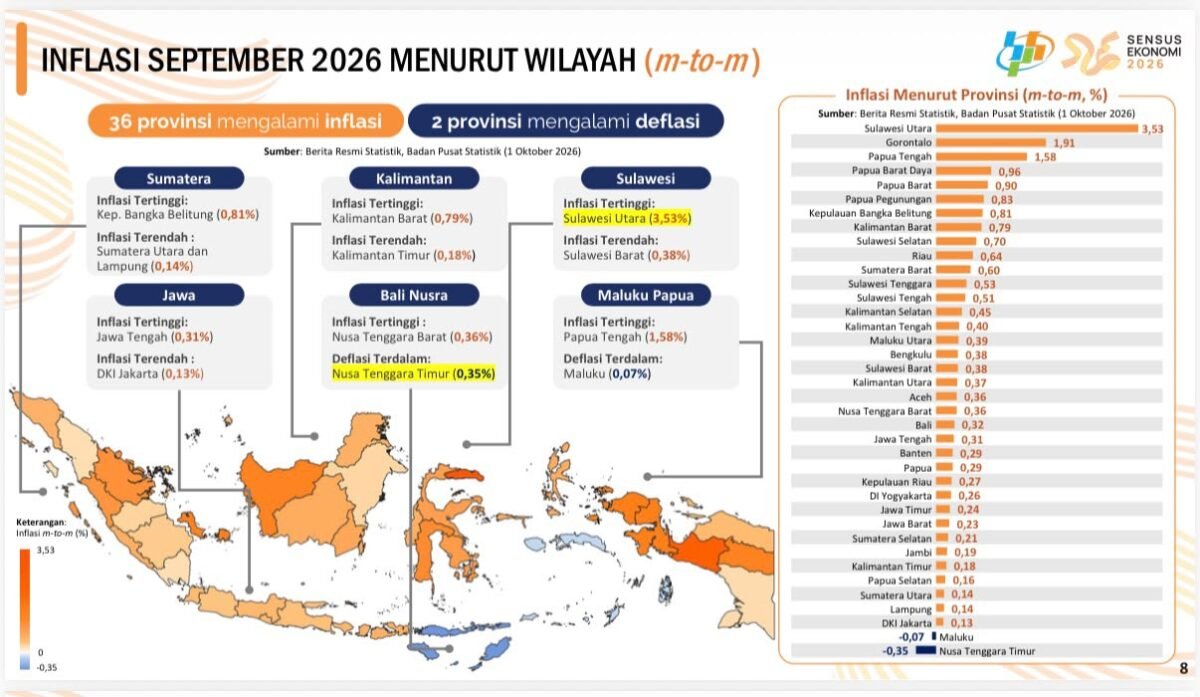
The weather threat comes as food prices are already creating inflationary pressure in Lampung. Bank Indonesia recorded annual inflation in the province at 3.51% in September 2026. That was marginally above the 3.5% upper limit of the inflation target and higher than national inflation of about 3.28%, according to Lampung Post.
Price movements were mixed during the month. Onions and chicken meat became cheaper, but pressure persisted in several staples, particularly red chili, rice, bird’s eye chili and tomatoes. This divergence shows that lower prices for some products have not removed the broader risk to household purchasing power. Rice is especially important because a weather-related supply disruption could affect a staple consumed across the country, while volatility in vegetables can add further short-term pressure.
Distribution and coordination become central
Lampung Post said regional authorities and other stakeholders need to prepare for extreme weather alongside volatility in global food prices. Proposed measures include maintaining smooth distribution, monitoring prices regularly and ensuring that food stocks remain sufficient. Coordination is expected to involve regional government, Bank Indonesia, farmers, distributors and other businesses.
For farmers, the priority is preserving output and controlling production costs under less predictable weather. Millers and traders must watch both paddy availability and procurement prices, while distributors face the task of preventing localized shortages from becoming wider retail-price increases. Bank Indonesia has emphasized consistent mitigation of global climate risks, using studies and assessments to strengthen vigilance over threats to regional economic stability. The effectiveness of these measures will depend on whether authorities can identify supply problems early and keep products moving between producing and consuming areas.