Sharqia plants 9,089 feddans of peanuts against a 24,000-feddan summer target
Officials at Egypt's Sharqia agriculture directorate told Youm7 that the governorate's summer programme targets 24,000 feddans of peanuts, while the area actually planted stands at about 9,089 feddans. Average yields are put at 20 to 25 ardebs per feddan, with harvest in September and only two varieties, Giza 6 and Ismailia 2, approved for export to European and Arab markets.
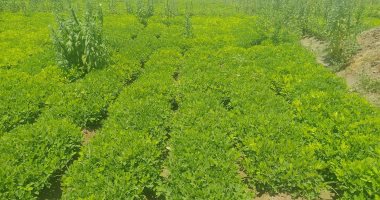
Egypt's Sharqia governorate is one of the country's main peanut-growing areas, and officials at the provincial agriculture directorate say this season's summer crop is again being channelled toward buyers in European and Arab markets, the newspaper Youm7 reported.
Peanuts are one of Egypt's leading summer oilseed crops and among the larger contributors to agricultural export earnings, according to Youm7, which described the Sharqia crop as high quality and specified to compete in European and Arab markets while generating hard currency for the country.
Planted area falls short of the summer target
Ashraf Taha Nassir, director general of the Sharqia agriculture directorate, told Youm7 that the area targeted for peanuts within the governorate's summer crop programme is estimated at 24,000 feddans. He said peanuts are an important oilseed that farmers in Sharqia are keen to plant, with cultivation concentrated in the districts of Bilbeis, Abu Hammad, El-Qurein and New Salhia. Nassir also cited the crop's nutritional profile: a high content of vitamins and nutrients, a role in lowering harmful cholesterol, plus folic acid, protein and antioxidants.
A second official quoted in the same report, Ashraf El-Damardash, director general of agriculture in Sharqia, put the area actually planted with peanuts inside the governorate at about 9,089 feddans, concentrated in the same four districts. The report does not reconcile the two figures. At the average yield of 20 to 25 ardebs per feddan cited by El-Damardash, the planted area is what sets the ceiling on the volume Sharqia can offer graders and exporters this season.
Varieties, calendar and soils
El-Damardash set out the agronomic parameters behind the crop, as reported by Youm7:
- Planting window: mid-April to the end of May, using selected seed described as high-yielding and disease-resistant.
- Approved export varieties: Giza 6 and Ismailia 2.
- Time in the ground: about four months, with harvest during September.
- Average yield: 20 to 25 ardebs per feddan.
- Soils: best results on sandy and loamy land; unsuitable on heavy clay or saline soils.
He said timing is decisive, because sowing either earlier or later than the window reduces the harvest. Growers are also advised to keep peanuts in a two- or three-year rotation, returning the crop to the same field only after two or three years, which limits disease build-up and protects soil and crop quality. Irrigation must be moderate: excess water raises the risk of fungal infection and lowers the quality of the output.
Sorting, packing and export specifications
After harvest the crop passes through sorting, cleaning and packing at modern plants, where it is tested to confirm it is free of disease and meets standard specifications for size, colour and quality before shipment, Youm7 reported. Those specifications are the gate to the European and Arab markets the governorate supplies.
For processors and traders the practical implication is that the exportable share of the Sharqia crop is largely determined before harvest, through variety choice, sowing date and irrigation discipline, while the grading line decides how much of the delivered volume actually reaches export grade. With harvest due in September, a firm view of the governorate's marketable volume will not be available until the end of the third quarter.