Egyptian rice prices fall by EGP 1,500 per tonne as industry cites self-sufficiency
Egyptian rice prices have declined by about EGP 1,500 per tonne, according to the head of the country’s Rice Division. The industry representative said domestic supply is sufficient to cover consumption, reducing the immediate need for imports.
Domestic rice market records price decline
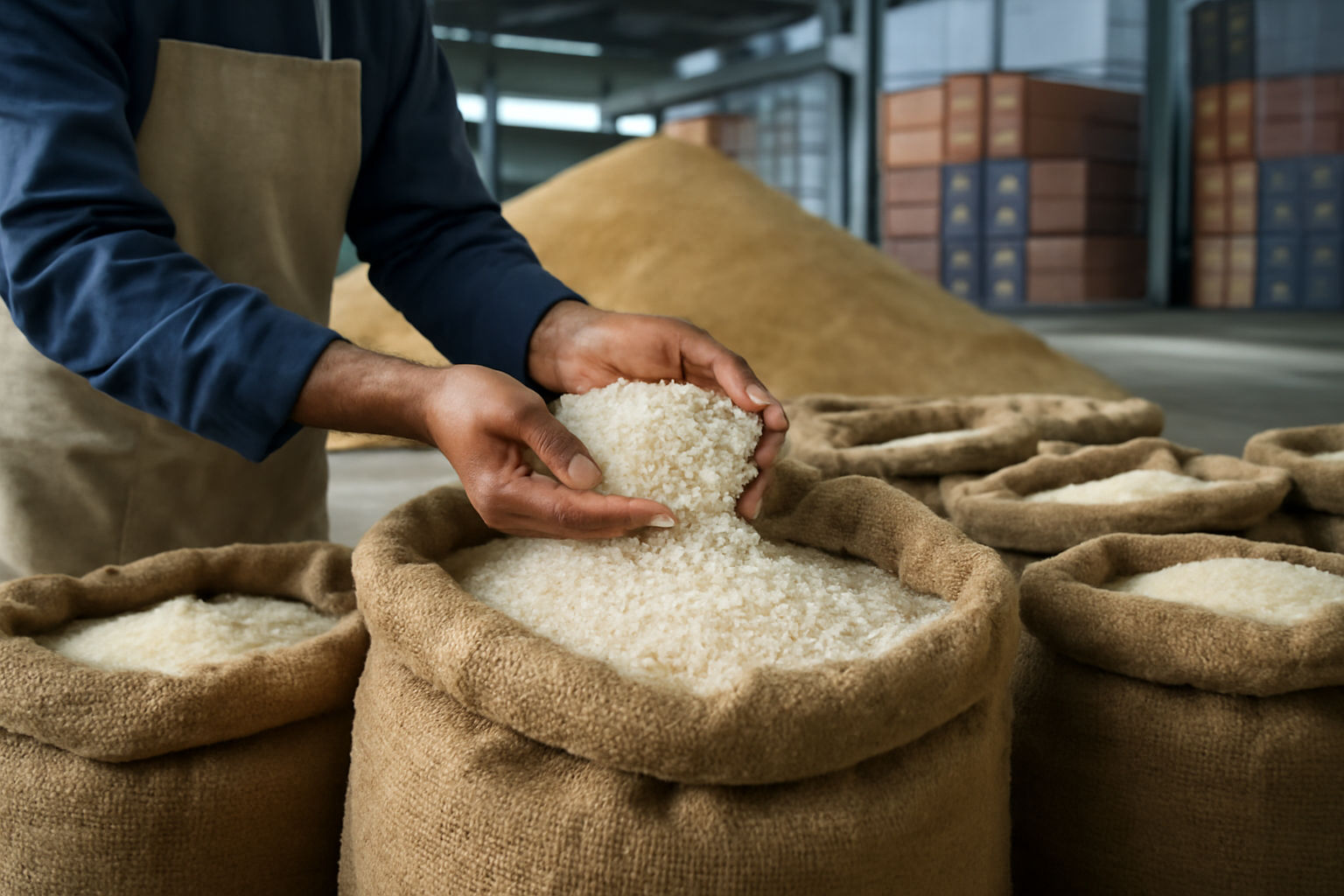
Rice prices in Egypt have fallen by approximately EGP 1,500 per tonne during the current period, Cairo 24 reported, citing Ragab Shehata, head of the Rice Division. The reported movement represents a national market assessment from the industry body rather than a quotation for a specified rice grade, production region or stage of processing.
No current price per tonne, percentage change or comparison period was included in the report. It therefore remains unclear whether the decline applies equally to paddy rice and milled white rice, or whether prices vary by grain type, quality and location. For producers, mills and traders, those distinctions determine how much of the EGP 1,500 reduction is transmitted through the supply chain and ultimately reaches wholesale and retail buyers.
Industry says Egypt is self-sufficient
Shehata also said Egypt has achieved self-sufficiency in rice. The statement indicates that domestic production and available inventories are considered adequate to meet national requirements. Cairo 24 did not provide production, consumption or stock volumes alongside the claim, and it did not specify the period covered by the available supply.
If the assessment is sustained, Egypt would not face an immediate requirement to use imports to close a domestic supply deficit. That matters for importers because purchasing decisions can remain focused on specific commercial needs, varieties or price opportunities rather than an industry-reported shortage. The available information, however, does not establish that imports will stop, nor does it quantify any potential surplus for export.
Lower prices shift attention to inventories
The combination of lower prices and claimed self-sufficiency points to adequate availability in the domestic market. For processors, a decline in raw-material prices may reduce procurement costs, depending on the form and quality of rice covered by the reported movement. Distributors and retailers will watch whether the reduction passes into their purchase prices, while farmers face the opposite exposure because weaker tonne values can reduce revenue from unsold output.
Inventory management is consequently central to the next phase of the market. Holders of rice may accelerate sales if they expect further declines, while buyers may delay purchases in anticipation of cheaper offers. Import requirements will depend on whether domestic output and stocks continue to cover consumption, but the source provided no forecast for future prices, planting, harvesting or trade. The EGP 1,500 decline and the self-sufficiency statement therefore describe current market conditions without establishing how long either will persist.