Egypt Poultry Industry Proposes Replacing Live-Bird Sales with Frozen Domestic Chicken
An Egyptian poultry industry representative is seeking to phase out live-bird trading and replace it with frozen chicken produced by Egyptian companies. Sameh El-Sayed said poultry would be added to ration cards from January 1, 2027.
Industry seeks an end to live-bird trading
Egypt’s poultry industry is pursuing a proposal to phase out the sale of live birds in markets and replace them with frozen chicken, according to Cairo 24. Sameh El-Sayed, head of the Poultry Division at the Giza Chamber of Commerce, presented the initiative as a change in how domestically produced poultry reaches Egyptian consumers.
The available announcement does not specify a timetable for ending live-bird trading, nor does it provide details on the regulatory measures that would be required. It nevertheless identifies the intended direction: poultry would move through slaughtering, freezing and formal retail channels instead of being sold alive in markets.
Ration-card distribution targeted for 2027
El-Sayed said poultry would be included on Egypt’s ration cards from January 1, 2027. He added that the chicken supplied through the system would come from domestic production and Egyptian companies. The report did not state expected volumes, prices, eligible suppliers or the quantity available to each ration-card holder.
Adding chicken to ration cards would create a state-linked distribution channel for Egyptian poultry companies. Its commercial effect will depend on procurement terms, payment arrangements and the number of birds required, none of which were disclosed. For producers and processors, the measure could connect local output with a defined consumer network, while requiring consistent slaughtering, freezing, storage and delivery.
Processing and cold-chain capacity become central
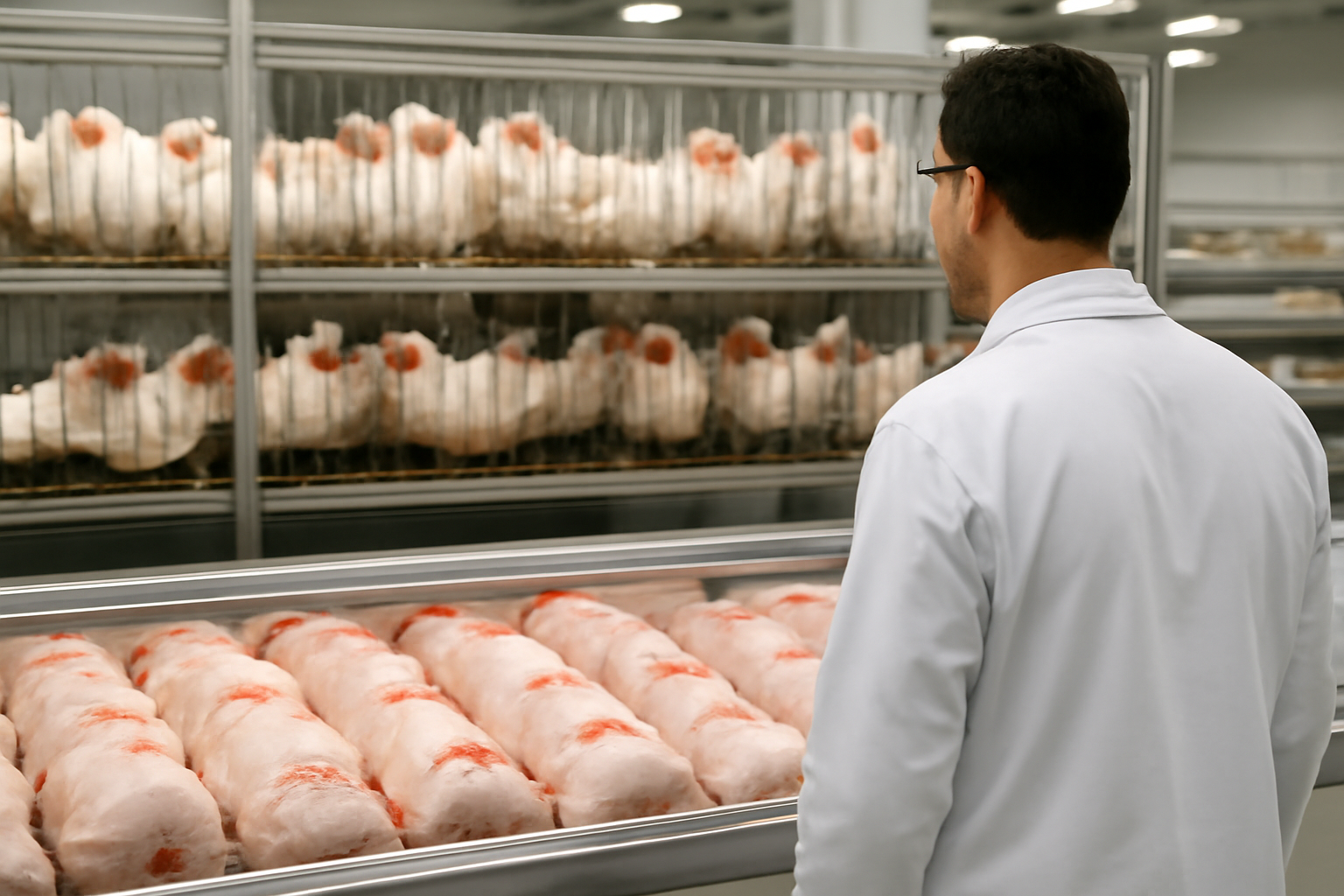
A shift away from live sales would transfer more activity from bird traders and market vendors to slaughterhouses, processors, refrigerated warehouses and frozen-food distributors. Egyptian companies participating in the ration-card programme would need to supply a standardized frozen product through a chain capable of maintaining temperature controls until final distribution.
The proposal also raises practical questions for businesses currently dependent on live-bird trading. The report does not explain how those operators would be incorporated into the frozen supply chain or whether the transition would apply nationwide at once. The January 1, 2027 ration-card date provides a specific milestone, but the industry still needs operational rules covering procurement, processing, product standards and distribution. Until those details are published, companies can identify the likely direction of policy but cannot calculate its effect on capacity requirements, costs or margins.