Egypt’s poultry surplus exceeds 25% as chicken and chick prices fall
Egypt’s poultry market is experiencing sharp declines in chicken and chick prices as supply outpaces demand. Sameh El-Sayed of the Giza Chamber of Commerce said the production surplus exceeds 25%, with poultry also offered through state consumer outlets.
Excess supply weighs on Egypt’s poultry market
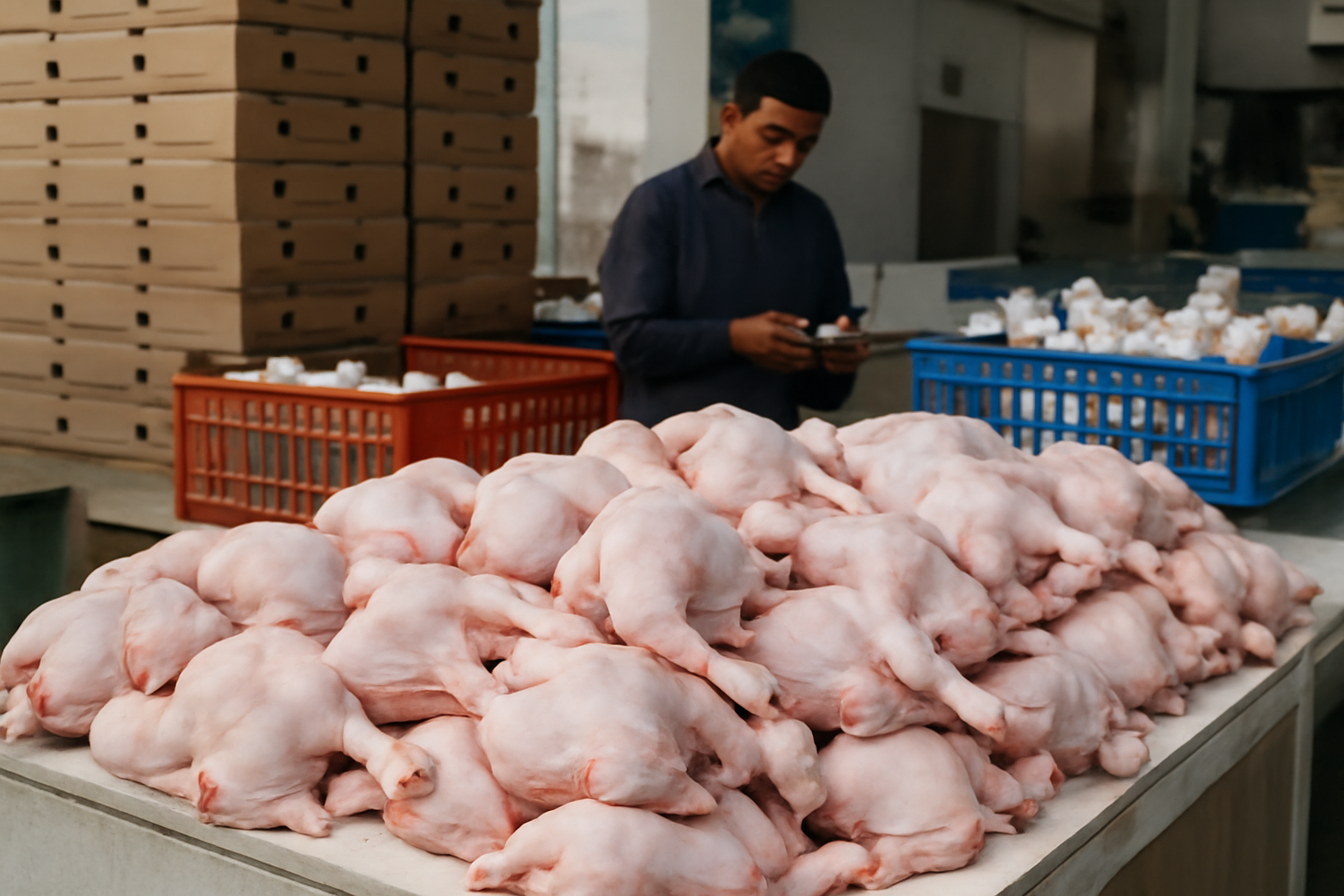
Chicken and chick prices have fallen sharply in Egypt as higher market availability creates a production surplus exceeding 25%. Sameh El-Sayed, head of the poultry division at the Giza Chamber of Commerce, attributed the decline to the increased volume of birds available in the market.
The reported surplus indicates that current poultry production is running substantially ahead of the volume absorbed by buyers. That imbalance affects both finished chickens sold for consumption and chicks purchased by farms for subsequent production cycles. Falling prices across both categories suggest that pressure is present at more than one stage of the poultry supply chain.
For consumers, the immediate effect is cheaper poultry. For producers, however, a steep decline in selling prices can narrow margins, particularly when birds must be marketed within a limited period. Poultry cannot be stored on farms indefinitely, making the sector sensitive to short-term changes in supply and demand.
Chick prices signal pressure on future production
The decline in chick prices is an important indicator for poultry farms and hatcheries. Chicks are a core production input, and their price reflects demand from growers preparing to place new flocks. A sharp fall can indicate that farms are reducing purchases or that hatchery output exceeds the number of birds producers currently want to raise.
Lower chick prices may reduce the initial cost of a new production cycle, but they also signal weaker conditions for suppliers of breeding stock and day-old birds. If farms respond to poor finished-bird prices by placing fewer chicks, the present surplus could eventually lead to lower poultry output. The available information does not specify how long the imbalance has lasted or whether producers have already changed their production plans.
The effects will differ across the industry. Integrated producers may have more options for managing birds through processing and their own sales networks. Independent farms and chick suppliers are more directly exposed to prevailing spot-market prices. Traders and retailers can benefit from cheaper procurement, although competition may require them to pass part of that reduction to consumers.
State outlets expand access to lower-priced chicken
Poultry is also being sold through state consumer outlets, extending the effect of lower prices to shoppers using those channels. These outlets give the authorities a direct route for making food available to households and can provide an additional destination for production when commercial markets are oversupplied.
The combination of abundant market supply and sales through consumer outlets increases downward pressure on retail prices. It may also help move surplus birds more quickly. The information provided does not include a specific outlet price, a comparison with private retailers or the volume distributed through the state network.
Producers face a supply adjustment
The central question for the Egyptian poultry sector is how quickly production responds to the surplus. A level exceeding 25% is large enough to influence decisions by farms, hatcheries, processors and traders. Producers may become more cautious about starting new cycles if finished-chicken prices remain depressed, while hatcheries must balance chick output against weaker demand from growers.
Consumers are currently the clearest beneficiaries because poultry is available at lower prices. The commercial impact is less favorable for producers holding birds or chicks during the decline. Without further data on production costs, farm-gate prices and the duration of the surplus, the scale of margin pressure cannot be calculated. Still, simultaneous declines in poultry and chick prices show that excess supply is affecting the wider production chain rather than a single point in the market.