Egypt’s agricultural exports rise 9.5% as tighter inspections support market access
Egypt’s agricultural exports reached 7.5 million tonnes, up 9.5% from the comparable period, according to Erem Business. Quarantine controls, laboratory upgrades, pesticide-residue monitoring and work to open new markets are strengthening foreign demand.
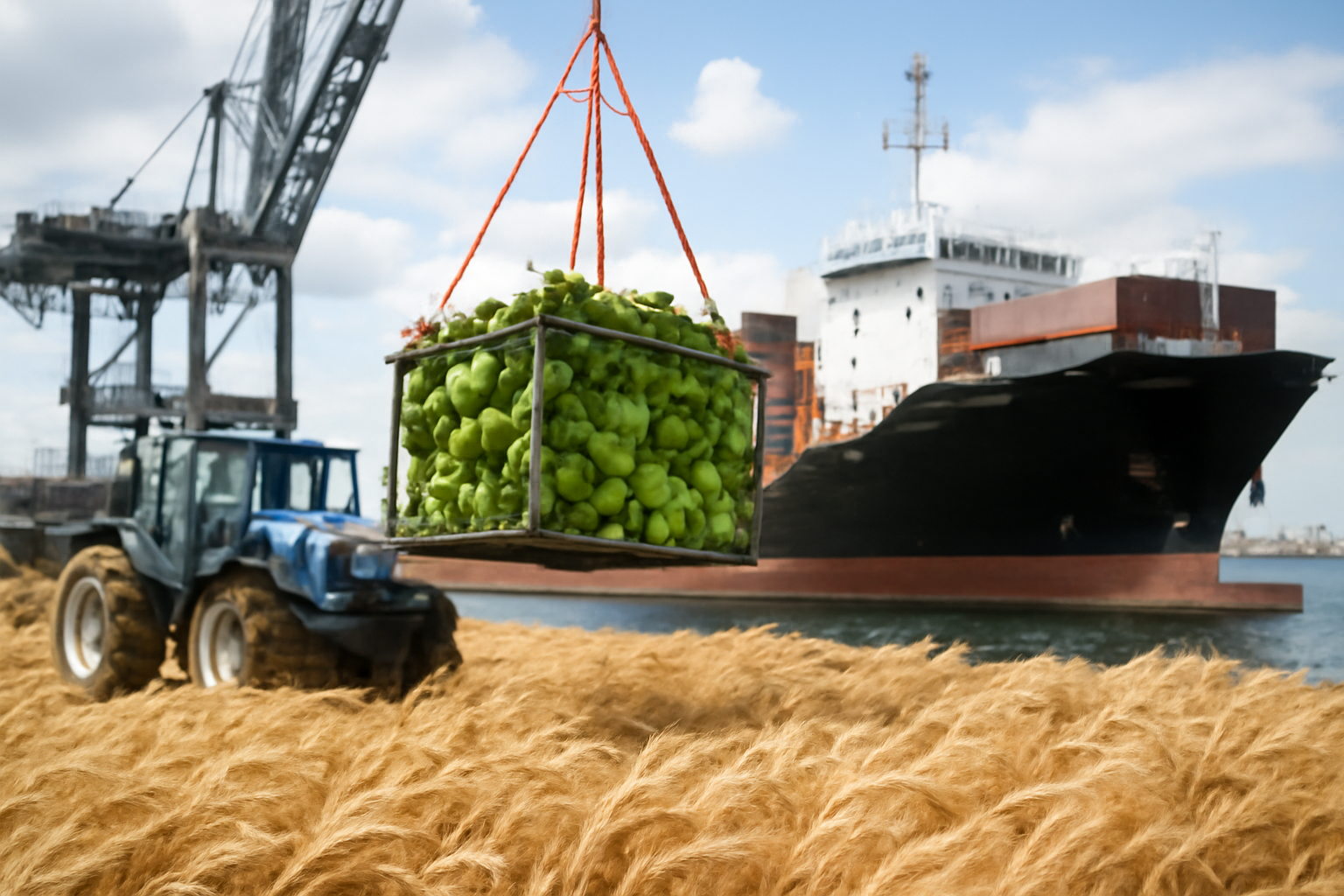
Export volume reaches 7.5 million tonnes
Egypt’s agricultural exports increased 9.5% to 7.5 million tonnes from the beginning of the reporting year, a gain of 650,000 tonnes over the comparable period, Erem Business reported, citing Agriculture and Land Reclamation Minister Alaa Farouk. The expansion reflects both rising shipments of major crops and government efforts to make Egyptian produce acceptable in markets with demanding plant-health and food-safety requirements.
An official report from the Central Administration of Plant Quarantine placed citrus fruit first among agricultural exports, at more than 1.9 million tonnes. Fresh potatoes followed with over 1.3 million tonnes, while fresh onions reached 258,000 tonnes. Fresh and dry beans accounted for about 245,000 tonnes, and sweet potatoes exceeded 212,000 tonnes.
Farouk said Egypt currently exports more than 405 agricultural products to 167 countries. The breadth of that portfolio matters for growers and traders because it reduces dependence on a single crop or destination, while creating more outlets for seasonal production.
Quarantine and pesticide controls underpin access
Egyptian officials identify the plant-quarantine system as a central factor behind the increase. According to Erem Business, inspection and analysis facilities have been upgraded to improve product quality and demonstrate compliance with international standards. The authorities have also introduced newer inspection technologies and strengthened checks on the safety of agricultural consignments before export.
Pesticide-residue monitoring forms another part of the system. Farm coding and digital traceability allow an export shipment to be followed from its farm of origin to the port, while residue levels can be checked against international requirements. For importers, that provides more precise information about the source of a consignment. For Egyptian exporters, it reduces the risk that non-compliant produce from one farm will compromise access for a wider product category.
The commercial effect extends beyond border clearance. Officials told Erem Business that stronger inspection procedures have improved the reputation of Egyptian agricultural products and helped stimulate demand in foreign markets. International accreditation obtained from European bodies has also increased confidence among overseas buyers, particularly in the European Union, which the publication describes as the largest importer of Egyptian agricultural products.
New destinations reshape the export map
Market-access work has accompanied the tighter controls. Erem Business reported that Egypt opened more than 98 new markets for agricultural exports over six years. More recent openings include destinations with strict quarantine conditions in Asia, such as Japan, the Philippines, Vietnam and Uzbekistan, as well as markets in Latin America and the Caribbean, including Mexico, Peru, Uruguay, Panama and El Salvador.
That geographical spread gives exporters alternatives when demand weakens or regulatory conditions change in established destinations. It also raises the operational burden: access gained through government negotiations must be maintained through consistent farm practices, laboratory testing, documentation and shipment-level compliance.
Compliance remains a commercial requirement
The export figures show that quality control is functioning as market infrastructure rather than merely as an administrative check. Producers must manage pesticide use and maintain traceable records; packers and exporters must preserve product integrity and documentation; laboratories and quarantine authorities must deliver reliable testing without creating unnecessary delays.
The next constraint is consistency across a fragmented production base. Erem Business reported that a significant share of exporters still operates opportunistically or on commission, prompting calls for more training and export-awareness programmes. Continued growth will therefore depend not only on opening destinations, but also on ensuring that farms and exporters can repeatedly meet the conditions that made those markets accessible.