Egypt ranks 14th among the world's largest sugar exporters, Cabinet data centre says
An infographic from the Information and Decision Support Center of the Egyptian Cabinet places Egypt 14th worldwide among sugar-exporting countries, based on Food Export Council data for 2025. The published material does not disclose export tonnage, value or destination markets.
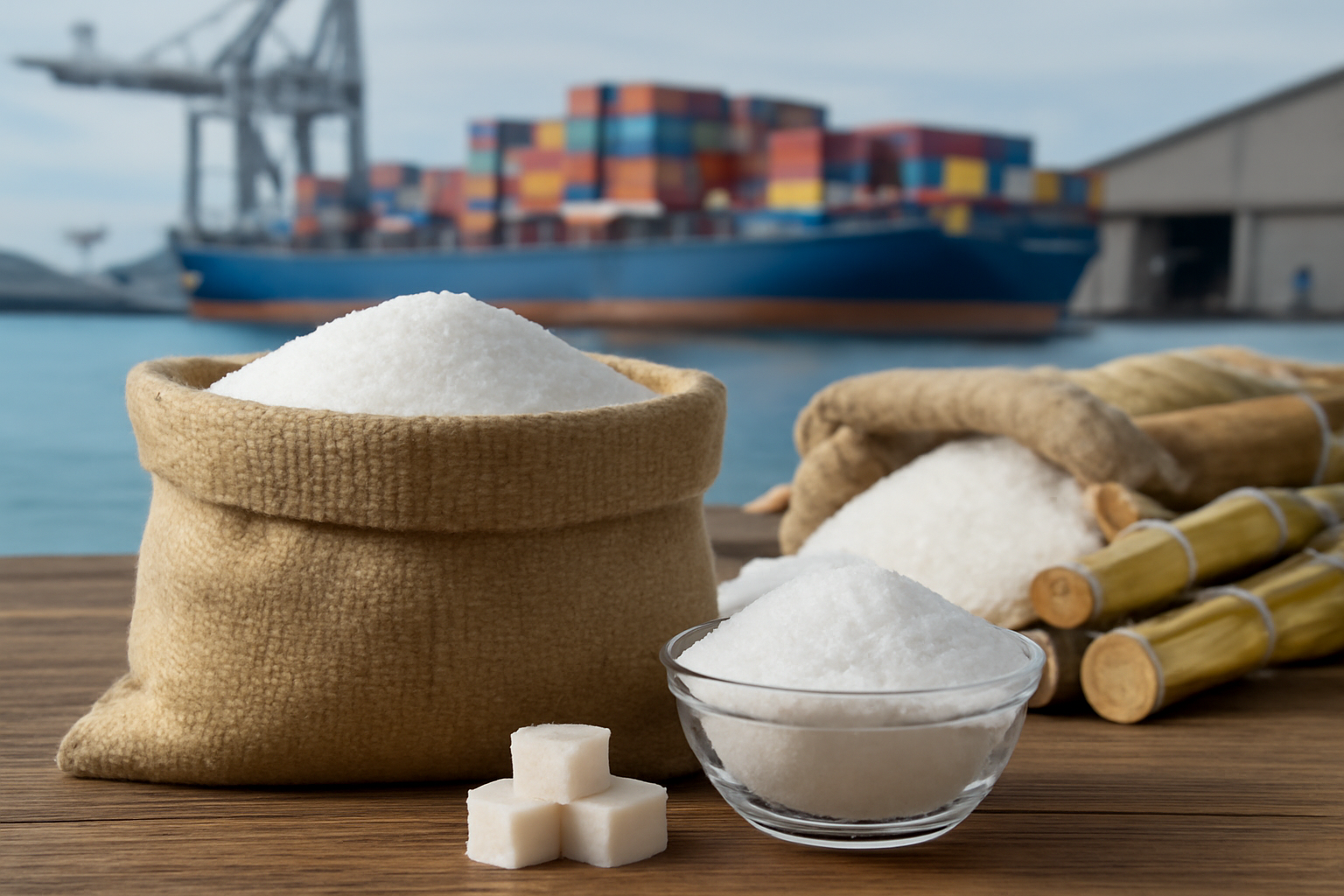
Egypt has entered the list of the world's largest sugar exporters, taking 14th place globally, according to an infographic published by the Information and Decision Support Center (IDSC) of the Egyptian Cabinet. The centre attributed the underlying figures to the Food Export Council (FEC) and presented them as export indicators for Egypt's sugar sector during 2025. The publication was reported by Cairo 24.
The placement matters for a country that has long featured in global sugar statistics mainly as a buyer. A seat in the top 15 exporters implies that domestic output has reached a level where surplus volume is consistently available for foreign sales instead of being fully absorbed by local demand.
What the official data states
The IDSC infographic is a summary product, and the detail behind the ranking is thin. Three elements are established:
- Egypt's position among sugar-exporting countries in 2025: 14th worldwide, according to the IDSC.
- The source of the trade data: the Food Export Council, the body that tracks exports of Egypt's food industry.
- The reference period: the 2025 calendar year.
As reported by Cairo 24, the summary does not break out export tonnage, export value, the split between raw and refined sugar, or the destination markets. It also does not state whether the ranking rests on value or on physical quantity. The distinction is not academic: the same country can sit several positions apart on the two measures, depending on product mix and average unit prices.
Why the ranking matters to the trade
For buyers in Egypt's natural catchment area — North Africa, the Levant, East Africa and the Gulf — an Egyptian name in the top 15 changes the shortlist of origins worth asking for a quote. Sailing times and freight costs from Egyptian ports to those destinations are lower than from Brazil, India or Thailand, and a regional supplier with volume available tends to compete on landed cost even when its ex-works price is not the lowest on the table.
For domestic industrial users — beverage bottlers, confectionery, biscuit and dairy plants — the same trend runs the other way. Exportable surplus and local demand draw on one pool of crystal sugar, and the more of it that clears at export parity, the more closely domestic prices track world levels rather than local cost. Egyptian processors that have built their margin structure on cheap local sweetener are the group most exposed to that shift.
What to watch next
The open question is durability. A single-year ranking can reflect either structural growth in capacity — new refining lines, additional beet-processing throughput, expanded planted area — or a one-off surplus created by a strong harvest and soft domestic offtake. Nothing in the published material distinguishes between the two, and until the FEC releases volume and value series, traders have no basis to model Egyptian supply as a recurring feature of the market.
Policy is the second variable. Export licensing, administrative volume limits and any decision to prioritise the domestic market can remove a mid-table exporter from the global balance within a single season, and sugar remains a politically sensitive staple for importers and exporters alike. The next FEC and IDSC releases, with tonnage attached, will show whether 14th place is a floor or a peak.