Egypt reports 10.5 million feddans of farmland as wheat imports fall about 10%
Egypt's Minister of Agriculture and Land Reclamation Alaa Farouk said the country's agricultural land covers about 10.5 million feddans against a crop area of roughly 17.5 million, according to Youm7. Domestic wheat delivered to the Ministry of Supply has passed 5 million tonnes and imports are down about 10%, while sugar has reached self-sufficiency with a surplus available.
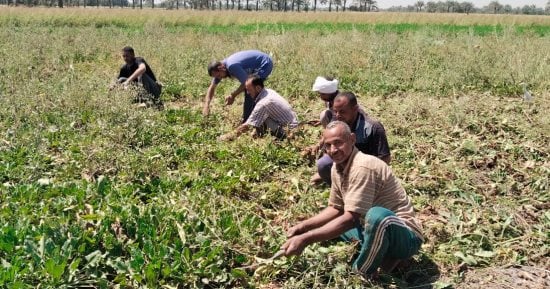
Egypt's agricultural land now covers about 10.5 million feddans, while the country's crop area reaches roughly 17.5 million feddans, Minister of Agriculture and Land Reclamation Alaa Farouk said in remarks reported by the Egyptian newspaper Youm7. The difference between the two figures comes from multiple cropping, with summer and winter rotations planted on the same ground within a single year.
The minister presented the numbers as evidence that enlarging the cultivated area, combined with better use of land already under the plough, is lifting output of strategic crops. A feddan is Egypt's standard land measure, equal to about 0.42 hectares.
Wheat imports down about 10%
According to Youm7, Farouk said agricultural expansion has cut wheat imports by around 10%, while locally produced volumes delivered to the Ministry of Supply have risen. Deliveries of domestic wheat to the ministry passed 5 million tonnes. The minister did not specify the comparison period for the import reduction, and the report gives no base year.
Wheat sits at the centre of Egyptian food security policy because of its link to bread and basic foodstuffs. Procurement by the Ministry of Supply is the channel through which domestic grain enters the state distribution system, so delivery volumes are the practical measure of how much of the crop the government captures rather than the open market.
Key figures cited by the minister:
- Agricultural land: about 10.5 million feddans
- Crop area: about 17.5 million feddans
- Domestic wheat delivered to the Ministry of Supply: more than 5 million tonnes
- Reduction in wheat imports: about 10%
Sugar: self-sufficiency and a surplus
Farouk said Egypt has reached self-sufficiency in sugar and currently holds a surplus. He gave no production, consumption or surplus volumes. Self-sufficiency removes, at least for now, the need to close a supply gap through imports for a commodity tied directly to household demand and to the food processing industry.
Youm7 described the result as a significant step in the food security system, with domestic output covering market needs rather than imports filling the difference.
Horizontal and vertical expansion
The minister described the strategy as running on two tracks. Horizontal expansion means reclaiming new land and enlarging the cultivated area. Vertical expansion means raising yields per unit of area, so that each feddan produces more without requiring additional territory. Multiple cropping sits between the two: it increases the crop area, and therefore output, without a matching increase in the physical land base.
On the figures given, the crop area exceeds the agricultural land base by about 7 million feddans, an indication of how much of Egypt's farm output depends on successive seasons rather than on newly reclaimed ground. That structure lets the sector expand production faster than land reclamation alone would allow, but it also concentrates pressure on the inputs shared by consecutive rotations.
Youm7 reported that the state's stated aim is to raise domestic supply of strategic crops, support market stability and reduce exposure to swings in global agricultural commodity prices. For wheat, that exposure is direct: Egypt is among the world's largest buyers on the international market, and every percentage point shifted from imports to domestic procurement changes the volume it needs to tender for. For sugar, the reported surplus raises a different question — whether the extra volume is held in stock or moves into regional trade.