East Azerbaijan targets wider export markets as apple output reaches 650,000-700,000 tonnes
East Azerbaijan expects to produce 650,000-700,000 tonnes of apples this year, with Maraghe accounting for roughly 35%-40% of the provincial crop. Export growth will depend on additional sorting, packaging and processing capacity as producers target Russia, South Asia, Central Asia, Iraq and the Gulf states.
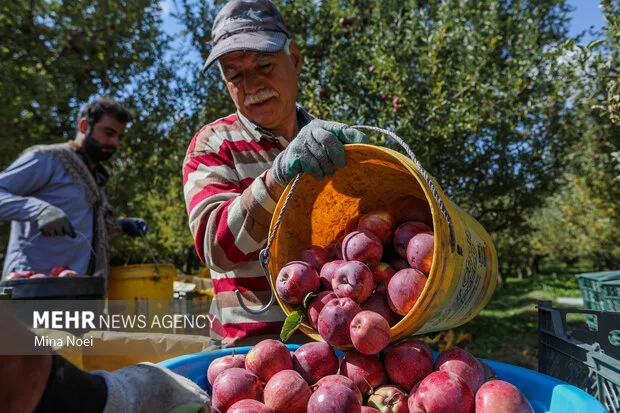
Output rises despite weather and water constraints
East Azerbaijan is seeking wider overseas markets for an apple crop expected to reach 650,000-700,000 tonnes this year. The Iranian province has about 53,000 hectares of apple orchards, of which more than 52,000 hectares are productive, Mehr News Agency reported. Under favorable climatic conditions, its production capacity is estimated at 800,000-850,000 tonnes, but weather damage has reduced the current forecast.
Shahram Shafiei, head of the provincial Agricultural Jihad Organization, identified Maraghe, Ahar, Mianeh, Marand and Tabriz as the main production centers. Maraghe ranks first, contributing about 35%-40% of East Azerbaijan's apples. Provincial officials expect total output to increase by approximately 15%-20% from the previous year, while production in Maraghe is reported to be about 30% higher.
Maraghe anchors the export program
More than 18,000 hectares in Maraghe are planted with apples. Estimates cited by Mehr put annual production at 230,000-300,000 tonnes, while the local agricultural authority gives a range of 250,000-300,000 tonnes. Orchards on the southern slopes of Mount Sahand benefit from elevation and wide day-night temperature differences, which officials say improve color, flavor, storage life and suitability for fresh consumption.
Red Delicious and Golden Delicious are among the district's principal varieties, although growers have also begun planting newer cultivars to improve market acceptance. Roughly 10% of the harvest consists of fallen or lower-grade fruit used by processors to make concentrate and puree. Premium apples are better positioned in the market, while second-grade and fallen fruit face greater price volatility and may sometimes be uneconomic to harvest.
India, Pakistan, Afghanistan, Kazakhstan, Russia and the United Arab Emirates are established destinations for Maraghe apples. Officials also see potential in Iraq, other Gulf states and Central Asian markets. Export statistics in the report differ by reporting period: one passage records about 1,600 tonnes shipped through Maraghe customs in the first three months of 1404 and approximately 9,500 tonnes for the year, while another says exports exceeded 9,000 tonnes in 1404 and surpassed 10,000 tonnes in the first two months of the current year.
Sorting and processing capacity lag behind supply
Maraghe currently has two mechanized sorting facilities with combined annual capacity of only 5,000-6,000 tonnes. The district estimates that export-oriented sorting demand is 15,000-20,000 tonnes a year. This gap is significant because consistent grading and packaging are necessary to place premium fruit in distant markets and raise growers' share of the final sales value.
Local concentrate and puree plants can process approximately 4,500-5,000 tonnes annually. A new factory is expected to add about 10,000 tonnes, lifting total capacity to roughly 15,000 tonnes, but officials say Maraghe needs around 30,000 tonnes. Expansion into concentrate, pectin, fruit chips and vinegar could absorb more lower-grade apples and reduce reliance on raw-fruit sales.
Higher prices for agricultural inputs, pesticides and fertilizers, along with transport, packaging and labor costs, are squeezing growers. Water availability remains a longer-term constraint. Authorities are promoting pressure and drip irrigation, improved water channels, orchard renewal, balanced nutrition and better pruning. For exporters, the central issue is whether investment in sorting, cold-chain handling and processing can keep pace with a crop measured in hundreds of thousands of tonnes.