Drought withers maize across Kenya’s main growing counties
Poor rainfall has left maize withered across several of Kenya’s main producing counties, including Trans Nzoia, Uasin Gishu and Nandi. The damage threatens domestic supply and could reverse recent food security gains, although no national production estimate has been provided.
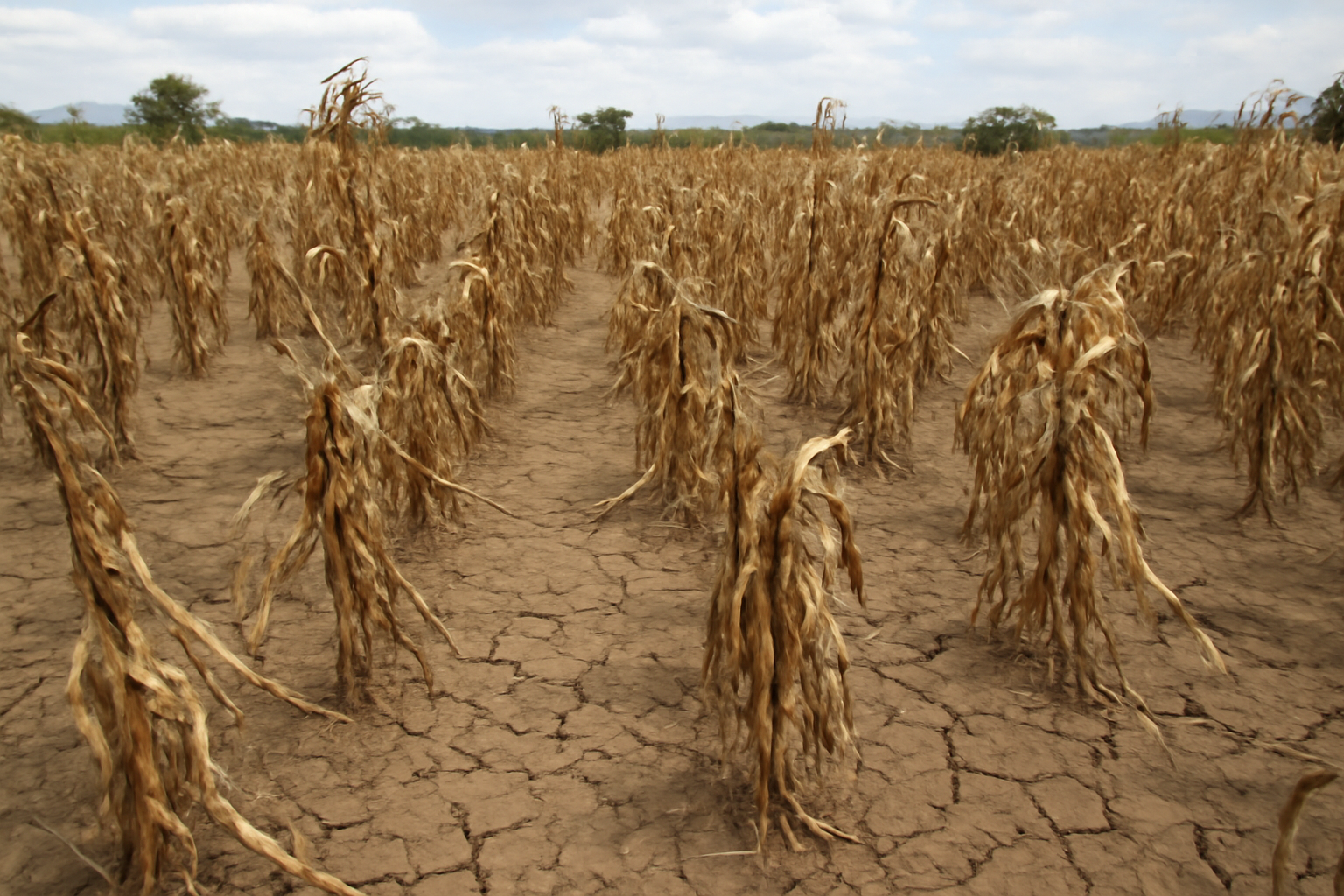
Poor rainfall damages the maize belt
Kenya’s maize sector is facing a production crisis after poor rainfall left crops withered across several of the country’s most important growing counties. The affected areas include Trans Nzoia, Uasin Gishu, Nandi, Elgeyo Marakwet, Bungoma and Kakamega, placing pressure on the regions that normally underpin national maize availability.
Conditions on individual farms illustrate the severity of the rainfall shortage. In Chemomoroch, near Moi’s Bridge, farmer Jacob Kiprono has watched maize deteriorate across his 10-acre holding. The crop should have been standing tall and filling its cobs, but the field has instead turned brown amid dry and windy weather.
No estimate has been provided for the total area damaged, the likely national harvest or the volume of maize that may be lost. That prevents a reliable calculation of the eventual supply gap. Nevertheless, simultaneous crop stress across several major producing counties raises the risk that the problem will extend beyond isolated farms.
Domestic supply faces renewed pressure
A weaker harvest in the main maize belt would reduce the grain available to farmers, processors and domestic buyers. The immediate effect would be tighter competition for sound maize after harvesting, particularly if damage continues across counties rather than remaining concentrated in one locality.
The drought also threatens to undo food security gains. Maize is at the centre of the reported crop crisis, making the condition of fields in the principal growing areas relevant to households as well as commercial market participants. Farmers face lower marketable output, while processors and traders must assess whether local supplies will be sufficient.
Imports could become part of the response if domestic production fails to cover demand, but the available information gives no import forecast, price estimate or timetable. Any assessment of external purchasing requirements will depend on the final harvest outcome and on how much usable grain reaches the market from less affected areas.
Harvest data will determine the market impact
The scale of the disruption will become clearer when authorities and market participants can measure yields, harvested area and grain quality across the affected counties. Until then, the key signal is geographic: poor rainfall has damaged maize in several counties that collectively form Kenya’s principal production zone.
For producers, the priority is the volume that can still be harvested from stressed fields. For millers and traders, attention will shift to available stocks and the pace at which grain enters the market. Without quantified crop-loss data, the direction of risk is clear, but the size of Kenya’s potential supply deficit remains uncertain.