Drought Cuts Bosnian Corn Yields by Up to 70%, Producers Warn of Exiting Livestock
A prolonged summer drought has cut corn yields in Bosnia and Herzegovina by 20 to 70 percent depending on soil and water table, with some plots yielding almost nothing, the portal raport.ba reported. Wheat delivered good yields but sells at around 25 feninga per kilogram, while farmgate milk has fallen to 70–75 feninga per litre. Producers say they are preparing to shut down livestock herds as input costs remain about 100 percent above 2021 levels.
This year's drought has cut agricultural output across Bosnia and Herzegovina, with corn the worst-affected crop, the news portal raport.ba reported. Yields on some plots will be up to 70 percent below normal, and on the poorest land the harvest will be close to nil. High prices for inputs are compounding the damage.
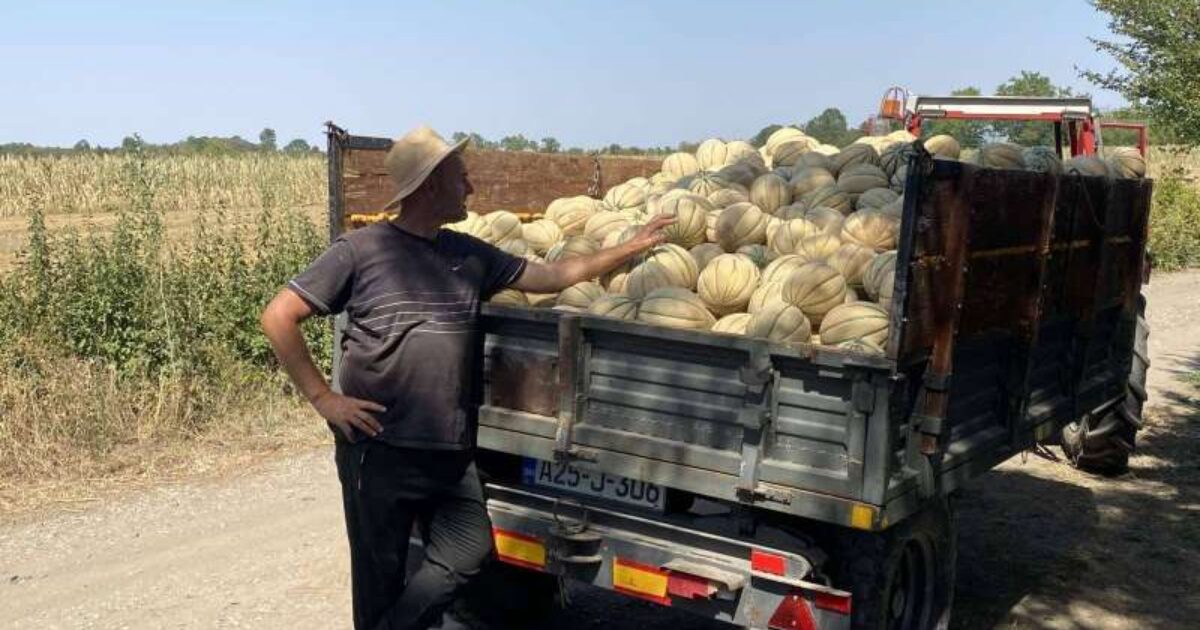
Mustafa Gradaščević, a producer from Janja who has farmed for decades, sows about 150 dulums of corn and about 60 dulums of wheat and barley every year; a dulum equals one tenth of a hectare. This season he also planted two hectares of potatoes alongside cabbage, onions, peppers and melons. He told raport.ba that the year is one of the hardest of the past several.
Corn losses of 20 to 70 percent
«This year is extremely dry. For almost two months there was no significant rainfall here that would cool the plants and give them a push for healthy development», Gradaščević said. Corn, he added, has been practically decimated.
Outcomes vary with soil quality and the depth of the water table. In Semberija, and on some plots around Janja, where the water sits deeper, yields will be very weak or absent altogether. Elsewhere losses run at 20, 30, 50 and up to 70 percent.
Livestock keepers are salvaging what corn remains, mostly as silage, but feed quality is not at a satisfactory level. The drought also hit grasses, clover and other forage crops. Instead of the usual four to five clover cuts a year, many producers managed two, at best three; on some parcels there was not enough growth for a single serious cut.
Wheat delivered, prices did not
Wheat was the exception, with good and in places excellent yields. The constraint is the purchase price. Gradaščević said it stood at around 25 feninga per kilogram this year — the feninga is one hundredth of the convertible mark — a level he described as very low and in line with previous years.
Dairy adds a second squeeze. The farmgate milk price is running at roughly 70 to 75 feninga, against around 95 feninga per litre earlier in the year, according to Gradaščević. «Many agricultural producers I talk to are already announcing that they will shut down their livestock herds, because it is hard to withstand a situation like this», he said.
Costs anchored 100 percent above 2021
Economist Adin Fakić told raport.ba that lower yields are landing on a cost base that has not come back down. Prices of all raw materials and inputs needed for production in Bosnia and Herzegovina, and particularly in the Federation of BiH, have risen by approximately 100 percent since 2021, and that level of costs still applies today.
Farma Spreča, which produces feed for dairy cows on about 850 hectares, illustrates the split season. Regular sowing was relatively successful because of the specific soils of the Spreča field, Fakić said, while the second, catch-crop sowing failed completely after an exceptionally high number of hot days in August.
The milk market offers no offset. Output began rising in 2025 and continued through 2026, pushing supply above demand and pulling prices down. «This drought will certainly lead to a further increase in production costs. But whether farmers will be able to sell their products at higher prices — I doubt it», Fakić said. Producers, he added, are pressed from two sides: costs are rising while yields and the ability to sell at cost-covering prices are falling.
Irrigation and the policy gap
Fakić identifies irrigation as the central response to climate pressure, backed by long-term investment led by a state institution in cooperation with available European Union, European Bank for Reconstruction and Development or World Bank funds. Money for a primary irrigation network was available several years ago, he noted, but further investment is needed. «Irrigation is the key thing, particularly in the production of grains, corn, sunflower and soy. Without irrigation systems we will not be able to count on stable production of these crops in the future», he said. He also called for a shift toward crop varieties more resistant to high temperatures and water shortage.
Gradaščević argues the sector lacks a single institution to create agricultural policy at the level of Bosnia and Herzegovina, and a long-term strategy identifying which branches — livestock, field crops, vegetables or fruit — carry the greatest potential. He described current subsidies as softening the situation rather than providing systemic help, and criticised the absence of a concrete institutional response to the drought, including on declaring a natural disaster in the worst-hit areas. Fakić framed the underlying question as whether Bosnia and Herzegovina wants domestic food production at all, or will rely entirely on imports.