Dieng Coffee Festival records Rp15 billion in bean contracts for 2027
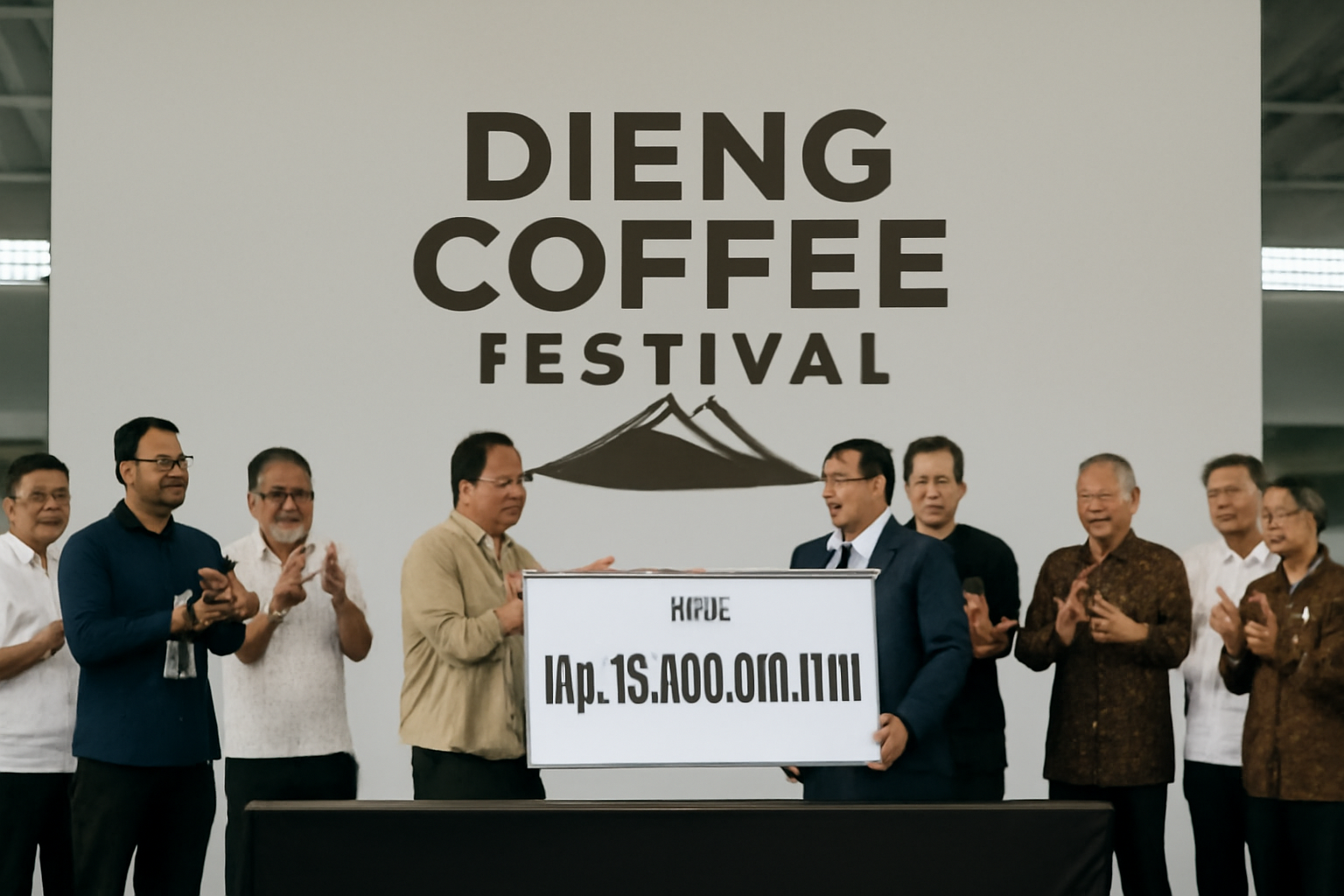
The 2026 Dieng Coffee Festival recorded contracts worth about Rp15 billion for 150 tonnes of roasted coffee beans. Deliveries are scheduled throughout 2027, making supplier performance and farmer participation central to the agreements’ impact.
Festival generates one-year supply commitments
The 2026 Dieng Coffee Festival recorded contracts worth about Rp15 billion for orders covering 150 tonnes of roasted coffee beans, Banjarnegaraku reported. The agreements call for deliveries over the course of 2027, turning a three-day promotional event into a year-long supply commitment for participating coffee businesses.
The festival took place from 28 to 30 August 2026 as part of the 16th Dieng Culture Festival. In addition to the longer-term contracts, direct sales at the venue reached about Rp80 million. Those transactions included prepared coffee and dried coffee beans, providing an immediate sales channel alongside the forward orders.
Contract value is not immediate farmer income
Firman Sapta Adi, head of Banjarnegara Regency’s agriculture, fisheries and food security agency, said the contracts covered arabica, robusta and local Banjarnegara varieties. He described the event as a forum addressing cultivation, farmer empowerment, institutions, markets and downstream processing, rather than coffee consumption alone.
The Rp15 billion figure represents agreed purchases, not cash paid to growers during the festival. Banjarnegaraku noted that actual revenue will depend on suppliers meeting the required volume, quality, pricing terms and delivery schedule. This distinction matters for producers and processors assessing how much of the announced value will reach farms and when it will be received.
Farmer participation will determine local impact
The festival brought together farmers, businesses, buyers, government institutions and other coffee-sector stakeholders. It also featured coffee participants from 14 Indonesian regions. Products presented had geographical-indication status or links to geographical-indication protection and came from Sumatra, Java, Sulawesi, Nusa Tenggara and Papua.
Coffees represented included Dieng Mountains Banjarnegara arabica, Sumatra Simalungun arabica, Minang Solok arabica, Java Preanger, Java Sindoro-Sumbing, Flores Bajawa, Sembalun Lombok, Toraja and Mamasa, as well as robusta coffees from other regions. For Banjarnegara, the commercial test now moves beyond festival visibility: processors must deliver 150 tonnes during 2027, while the benefit to growers will depend on whether procurement arrangements include them on fair terms. The contracts create identifiable demand, but the source report does not disclose the buyers, allocation among coffee varieties, prices paid to farmers or the number of growers involved. Those details will be necessary to evaluate how broadly the Rp15 billion commitment is distributed across the supply chain.