Dhanbad plans pivot from coal to critical minerals as reserves face a 2038 horizon
India's coal capital Dhanbad is positioning itself as a critical-minerals hub, with research showing rare earths, gallium and vanadium in local mining waste. The city backs a 163 billion rupee National Critical Mineral Mission, while coal is expected to underpin its economy through 2038.
Coal remains the foundation, but a shift is under way
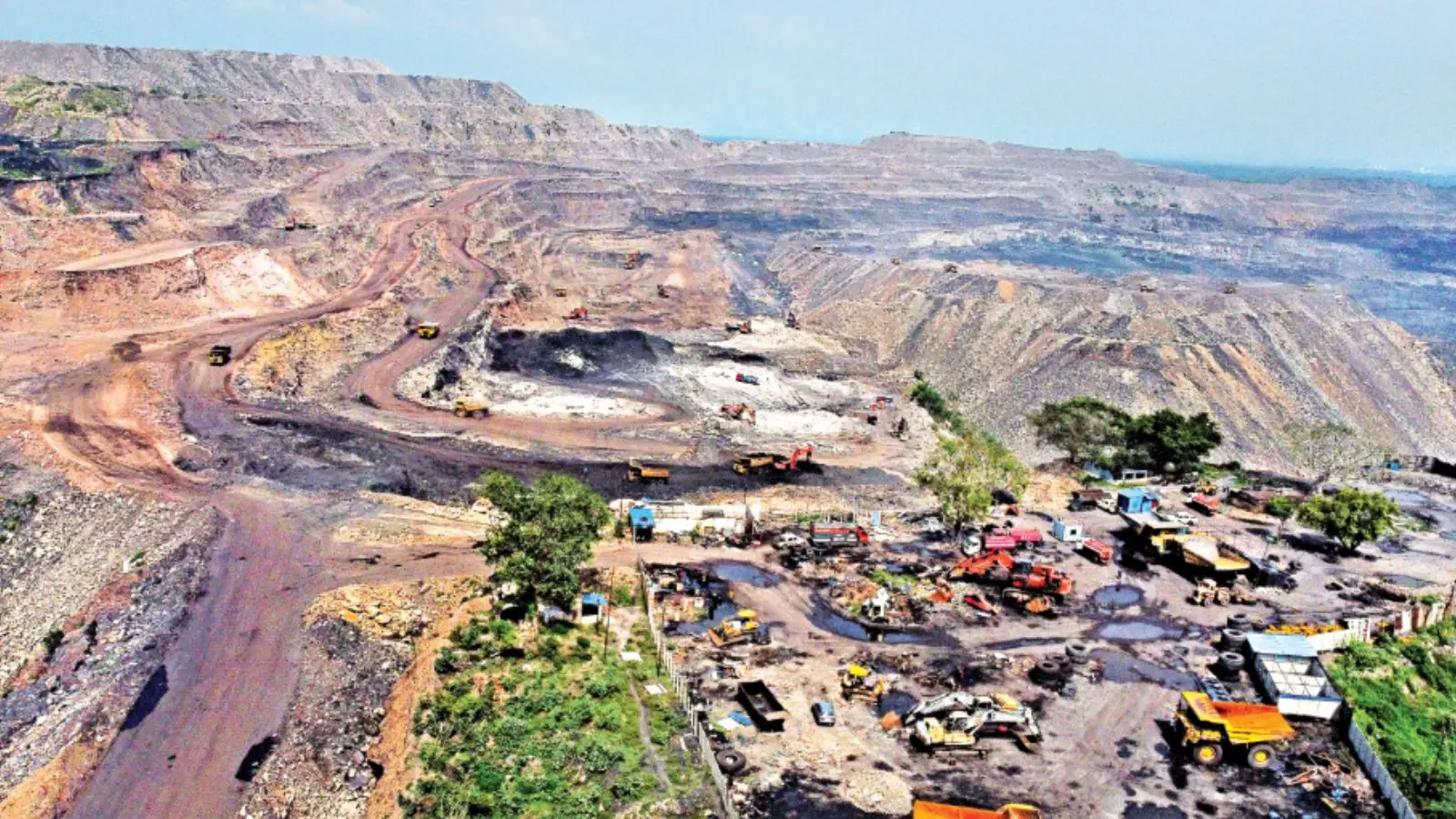
Dhanbad, long known as India's coal capital in the eastern state of Jharkhand, is positioning itself to become a hub for critical minerals as its role in the country's energy system evolves, according to prabhatkhabar.com. The publication cited assessments from Prof. Arvind Kumar Mishra, director of the Central Institute of Mining and Fuel Research (CIMFR), and Prof. Dhiraj Kumar of IIT (ISM) Dhanbad, who is project director of the TEXMIN research park.
The experts told the outlet that the Jharia coalfield's large reserves of high-grade coking coal, which feeds steelmaking, will keep Dhanbad central to India's energy security. Coal still generates about 74% of the country's electricity through thermal power plants, and India produces roughly 1 billion tonnes of coal a year, with the government working to raise domestic output and cut import dependence. According to the report, government assessments expect the coal industry's growth momentum to continue to 2035, with significant challenges emerging only after 2038.
Critical minerals hidden in mining waste
The new opportunity, the experts said, lies in overburden, fly ash and mine tailings that were previously treated as environmental waste. Research by IIT (ISM) has identified critical elements in Dhanbad's waste streams, including potash, titanium dioxide, vanadium, gallium, niobium, tellurium, tin, zirconium, scandium, yttrium, lanthanum and ytterbium. Using samples from mines operated by Bharat Coking Coal Limited (BCCL), the institute is working on extracting rare earth elements through advanced hydrometallurgy, and on recovering critical minerals from fly ash and acid mine drainage.
India's mineral push and global stakes
India released a list of 30 critical minerals in 2024. Auctions have begun for 24 of them, with a target of more than 100 mineral blocks by 2031, prabhatkhabar.com reported. The government has allocated 163 billion rupees to the National Critical Mineral Mission for 2025 to 2031, with an additional 180 billion rupees expected from public-sector undertakings and private investment. The mission targets annual production of about 40,000 tonnes of critical minerals, 270,000 tonnes of recycling capacity, 80 billion rupees in investment and roughly 70,000 jobs.
The push reflects global competition. China dominates critical-mineral supply, prompting India and other countries to develop alternative sources. The report cited market projections of $500 billion for copper and $60 billion for rare earth elements by 2030.
Dhanbad's research role expands
Under the mission, IIT (ISM) Dhanbad and its TEXMIN technology park have been designated a Centre of Excellence. The institute is a partner in the India-UK Critical Mineral Supply Chain Observatory and the India-UK STRATA initiative, and is developing an artificial-intelligence-based mineral targeting system covering 39 districts of Rajasthan.
Near-term demand underlines coal's continuing role: on 21 May 2026, peak electricity demand in India reached a record 270 gigawatts. For now, experts described coal as Dhanbad's present strength and critical minerals as its future.