Darfur famine deepens as prices, not supply, keep food out of reach
Markets across Sudan's Darfur region are stocked with grain, meat and sugar, but prices have risen beyond what displaced families can pay, according to Al Jazeera Net. The IPC reported on 23 July 2026 that 638,000 people face catastrophic hunger and 8.1 million more are on the edge of famine, while the World Food Programme warns its food stocks could be exhausted by September 2026.
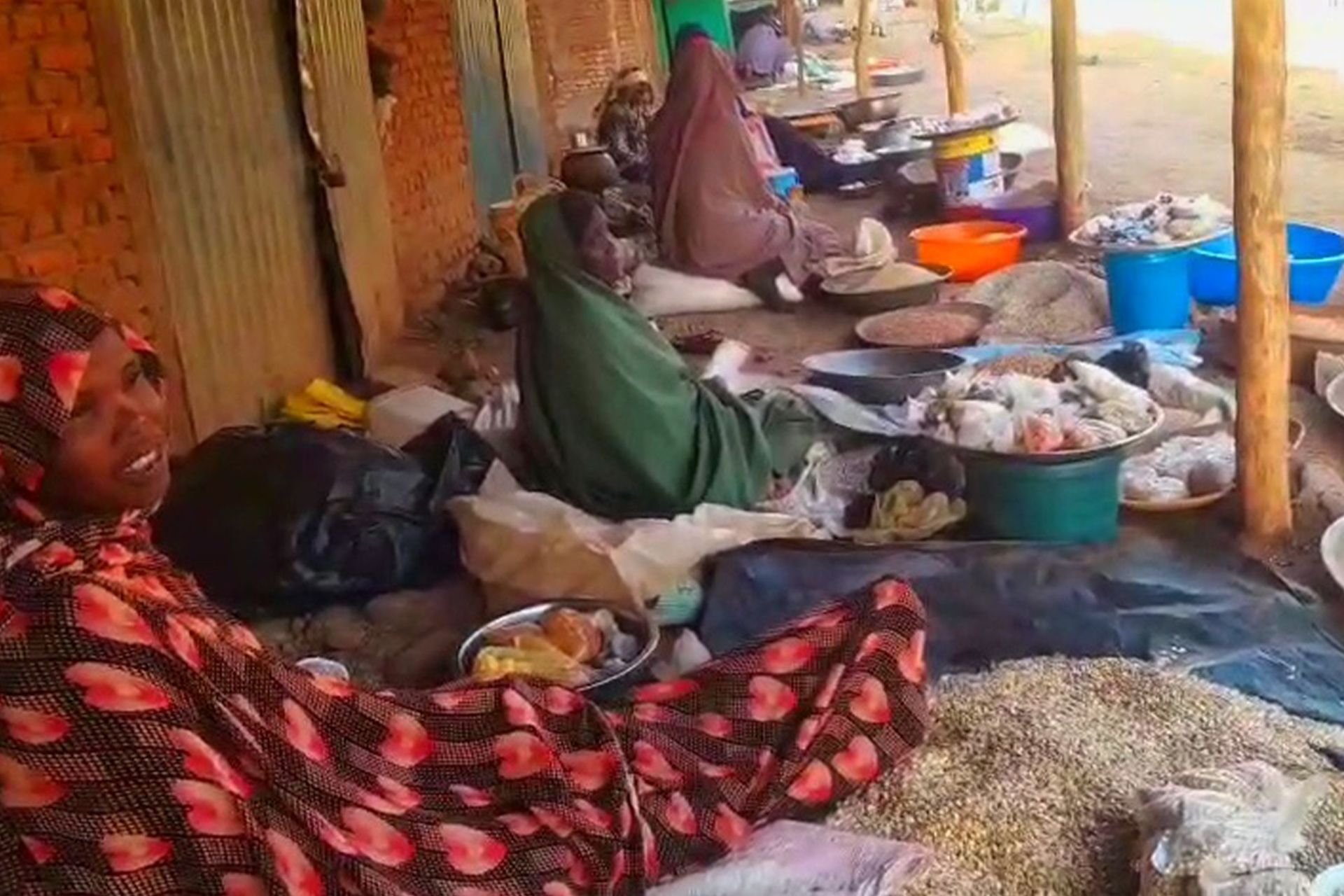
Famine conditions are spreading across Sudan's Darfur region even in areas where food is physically present in local markets, with price spikes, collapsed purchasing power and shrinking aid budgets driving the crisis, according to reporting by Al Jazeera Net.
Adam Rijal, official spokesman for the General Coordination for Displaced Persons and Refugees in Darfur, told Al Jazeera Net that markets in the region are full of food commodities, “but prices are insane and unbearable.” He said an ordinary resident can no longer afford a kayla of millet or a rotl of sugar, and that the problem is not the absence of food but the absence of the ability to buy it. Rijal added that the start of the rainy season has brought fears of a collapse in agricultural production because of scarce rainfall.
Price levels in the Jebel Marra markets
Rijal cited the following prices from the markets of Golo and Nertiti in the Jebel Marra area. The Sudanese pound is worth less than two US cents.
- A kayla of sorghum (about 4 kilogrammes): 12,000 Sudanese pounds in Golo and 10,000 pounds in Nertiti
- Meat: 12,000 to 20,000 pounds per kilogramme in Golo, and 10,000 to 15,000 pounds in other areas
- Sugar: 3,000 pounds per rotl, a local pound weight
- Cooking oil: 5,000 pounds per bottle
- A bar of soap and a rotl of salt: 2,000 pounds each
Livestock, long the main source of both food and cash income for Darfuri households, has lost much of its value after large numbers of animals died from a shortage of pasture and fodder, Rijal said, even as meat prices surged. A trader in the Golo market, who asked not to be identified, told Al Jazeera Net that the goods are there but people are not buying, because the cost of moving supply from source to market has multiplied tens of times. “The buyer wants the old price, and the seller cannot sell at a loss,” he said.
IPC counts 638,000 people in catastrophic hunger
A report issued on 23 July 2026 by the Integrated Food Security Phase Classification (IPC) warned that 638,000 people currently face catastrophic levels of hunger, with a further 8.1 million on the brink of famine. The report confirmed that famine had widened to three camps in North Darfur — Zamzam, Abu Shouk and Al Salam — as well as among displaced and resident communities in the Nuba Mountains of South Kordofan.
Jean-Martin Bauer, director of food security and nutrition analysis at the World Food Programme, said in a press statement on 17 June 2026 that a protracted famine has taken hold in Sudan, warning that people are weakening and dying from a lack of food and health care.
Aid pipeline running down
On 14 July 2026 the World Food Programme warned that Sudan risks sliding back into deeper hunger because of the continuing war, cuts to aid funding and higher farming costs caused by war-related disruption in the Strait of Hormuz. The agency said it had reduced the number of people receiving assistance from 5 million a year earlier to about 3.5 million and cut rations in many areas, including Tawila in Darfur, because of a funding shortfall of $646 million.
In an update issued on 24 July 2026, the agency warned that its food stocks could be exhausted by September 2026 and that funding for cash assistance was expected to run out in August, cutting off support for millions of the most vulnerable people.
Displacement keeps adding demand
The International Organization for Migration reported on 15 July 2026 that 595 people were displaced from the town of Kulbus in West Darfur between 10 and 13 July, after saying on 2 July that more than 6,000 people had fled Kulbus and three neighbouring villages following threats from the Rapid Support Forces. Field reports recorded 544 families, more than 3,000 people, moving to the Karnoi area of North Darfur in three days because of intensified fighting around Abu Leiha, Urshi and Umbaru. The UN Office for the Coordination of Humanitarian Affairs said on 22 July that displacement from fighting in Jebel Marra had risen from 38,000 to 73,000 people, and warned on 28 July that conflict and intercommunal violence had displaced more than 20,000 people in a matter of days.
The UN refugee agency put the number of Sudanese refugees who have fled to Chad since April 2023 at 938,127 as of 20 July, and says camps in eastern Chad face unprecedented pressure. In North Darfur, the International Organization for Migration reported on 21 July 2026 that 3,000 tents had been installed at the Dabba Naira site in the Tawila area, which alone hosts about 665,000 displaced people, most of them from El Fasher and surrounding areas. Rijal said women and children are the most exposed to acute malnutrition and that without urgent intervention the crisis will turn into a large-scale catastrophe.