Croatia’s corn harvest could fall below one million tonnes after drought
Croatia’s 2026 corn harvest could fall below one million tonnes after drought destroyed an estimated 50% of the crop. The country should remain self-sufficient, but the decline could eliminate exports after shipments reached almost 910,000 tonnes last year.
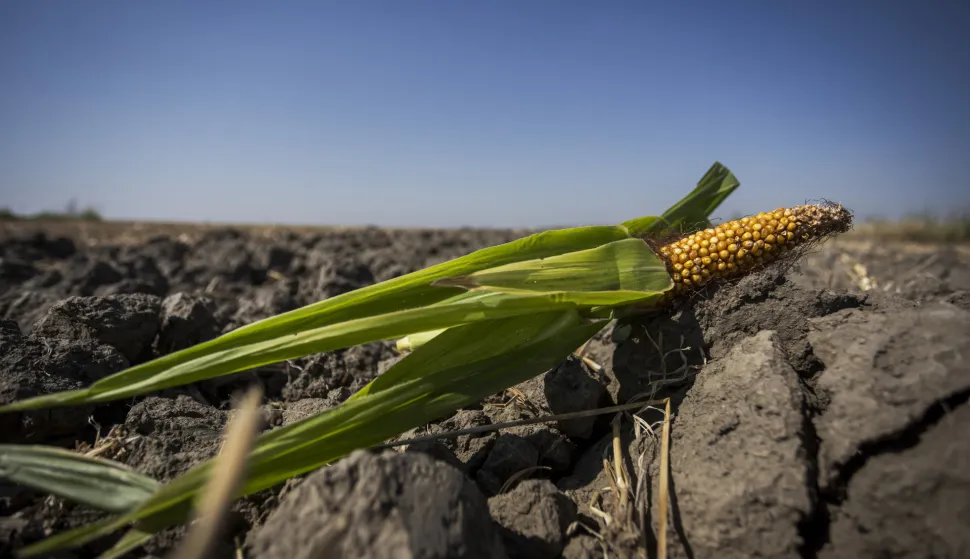
Drought points to an unprecedented harvest low
Croatia’s corn harvest could fall below one million tonnes in 2026, a level the country has never previously recorded, as drought damages fields and reduces yields. Current forecasts are based on estimates that dry weather has destroyed 50% of the crop, according to Glas Slavonije.
The projected decline would be particularly sharp compared with recent seasons. Croatia harvested 1.7 million tonnes of corn last year, 2.06 million tonnes in 2024 and almost two million tonnes in 2023. Even the previous low of 1.6 million tonnes, recorded in 2017, remained well above the current forecast. Production reached almost 2.5 million tonnes in 2020, the strongest year cited in the report.
Yields and planted area are both declining
Drought is affecting not only total output but also average yields. Last year’s average was 6.4 tonnes per hectare, compared with 7.5 tonnes in both 2024 and 2023. In the more favourable seasons of 2018 and 2019, yields were approximately 8.5 tonnes per hectare. Nada Barišić, director of Croatian grain industry association Žitozajednica, said the longer-term decline from nearly nine tonnes to around 6.5 tonnes per hectare demonstrates corn’s dependence on rainfall.
The planted area is also contracting. Preliminary estimates indicate that farmers sowed 260,000 hectares of corn this spring, 0.8% less than in 2025. The source reports areas of 267,000 hectares last year and 273,000 hectares the year before. At the same time, preliminary 2026 sowing estimates show the area under rapeseed rising by 36.8% and sunflower by 20%, suggesting that growers are shifting toward crops considered more resistant to drought.
Self-sufficiency remains, but exports could disappear
Croatia should still be able to cover its domestic corn requirements if production falls below one million tonnes, Barišić said. However, she expects that there would be no surplus available for export. That would mark a major change from last year, when Croatia shipped almost 910,000 tonnes, more than half of its 1.7-million-tonne harvest.
Italy was the largest destination for Croatian corn, followed by Slovenia, Austria and Bosnia and Herzegovina. The prospective loss of Croatian supply would therefore be felt most directly by buyers in neighbouring European markets. Domestic processors and livestock producers would retain priority access to the smaller crop, while Croatian growers and grain traders would have far less volume to market abroad.
Prices remain stable despite poor forecasts
Žita Osijek quoted corn for September-October delivery at €170 per tonne at all its purchasing locations on August 7, while the July-August price was available on request. Barišić said later-delivery corn on MATIF was around €218 per tonne and subsequently moved slightly higher. Depending on the futures contract, global exchange prices ranged from €175 to around €220 per tonne.
Croatia’s annual average corn price was €178 per tonne last year, according to the national statistics office, up from €167 per tonne in the preceding period. Barišić described prices as stable despite weak corn outlooks across Europe. For Croatian market participants, however, the central issue is physical availability: a harvest below one million tonnes would preserve national self-sufficiency but remove a sizeable regional export flow.