Croatia's Agro Simpa to Build First Foreign Plant in Odessa, 2,000 Tonnes of Bee Feed a Year
Croatian bee-feed manufacturer Agro Simpa is launching production in Odessa with Ukrainian partner VRM AHRO LLC, its first plant outside Croatia, with a planned annual capacity of 2,000 tonnes. The Croatian side supplies technology, formulations and protein additives, while the Ukrainian partner handles manufacturing and distribution for a market of some 2.3 million bee colonies.
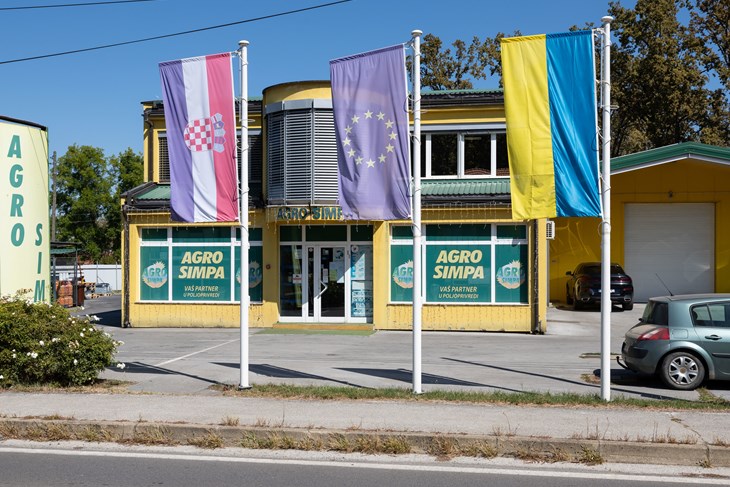
Croatian company Agro Simpa, based in Sisak, is launching bee-feed production in Odessa in partnership with the Ukrainian firm VRM AHRO LLC. It will be the first manufacturing facility the company has operated outside Croatia, with a planned annual capacity of 2,000 tonnes, Glas Istre reported.
The Ukrainian partner formally took delivery in Sisak on Tuesday of the machine intended for the new plant. Output is to be directed at the Ukrainian market.
How the partnership is structured
Agro Simpa provides the technology, the formulations and the production know-how, and will supply Ukraine with protein additives and supplements developed in Croatia. VRM AHRO takes over local production and distribution. Agro Simpa describes its partner as an already recognised company in Ukrainian beekeeping.
The arrangement gives each side a defined role:
- Agro Simpa: technology, recipes, production know-how, quality control and the supply of Croatian-made protein additives and supplements.
- VRM AHRO: local manufacturing, distribution and market access.
The two companies also plan to cooperate on new product development and to exchange experience from the markets in which they operate. For Agro Simpa, the project opens the prospect of a joint brand in Ukraine, higher overall production volumes through raw-material supply, and further expansion of the business beyond Croatia. VRM AHRO gains technology and support in production and product optimisation.
Cost, not market access, drives the decision
Agro Simpa director Sasa Simic said one of the main reasons for starting production in Ukraine is the scope to reduce costs compared with exporting the finished product from Croatia.
"The advantages of organising production directly in Ukraine are significantly lower prices for the key raw material, sugar, as well as lower labour and logistics costs compared with importing finished products from Croatia. Production quality remains under Agro Simpa's control, while VRM AHRO, as an already recognised company in Ukrainian beekeeping, organises production and distribution," Simic said.
Sugar is identified as the key raw material for the product range, which covers energy feed given to colonies during overwintering and periods without nectar flow, alongside protein feed. Sourcing it locally therefore changes the cost base of the finished goods rather than only the delivery leg.
A demand base of 2.3 million colonies
According to figures cited by Agro Simpa in its statement, Ukraine has around 2.3 million bee colonies and approximately 187,000 beekeepers. The company estimates that long, cold winters and increasingly pronounced summer droughts create substantial demand for supplementary feeding: energy feed during overwintering and dearth periods, and protein feed required for the development of bee colonies.
Proceeding despite the war
Agro Simpa and VRM AHRO decided to continue with the project even though the war in Ukraine has been going on for four years. The Sisak-based company says it is counting on establishing production, positioning the product on the Ukrainian market and developing cooperation with its local partner by the time the war ends, after which production capacity could be increased further.
Agro Simpa was founded in 1996 and employs 45 people. It operates in agricultural product trading and bee-feed manufacturing, and runs a network of 14 stores across Sisak-Moslavina, Karlovac and Zagreb counties. Its production arm makes bee patties and syrups, among other products, which it exports to more than 20 European Union countries as well as to the United States, Canada and Australia.
The Odessa plant marks a move from that export-led model towards manufacturing inside a target market, with Croatia continuing to supply the protein component of the range.