Crimean wineries face falling output and soaring logistics costs despite promising harvest
Crimea’s grape harvest is expected to deliver good volumes and quality, but wine production and local demand have weakened. Small wineries face diesel prices of 120–140 rubles per liter, sharply higher freight rates and packaging costs that threaten margins.
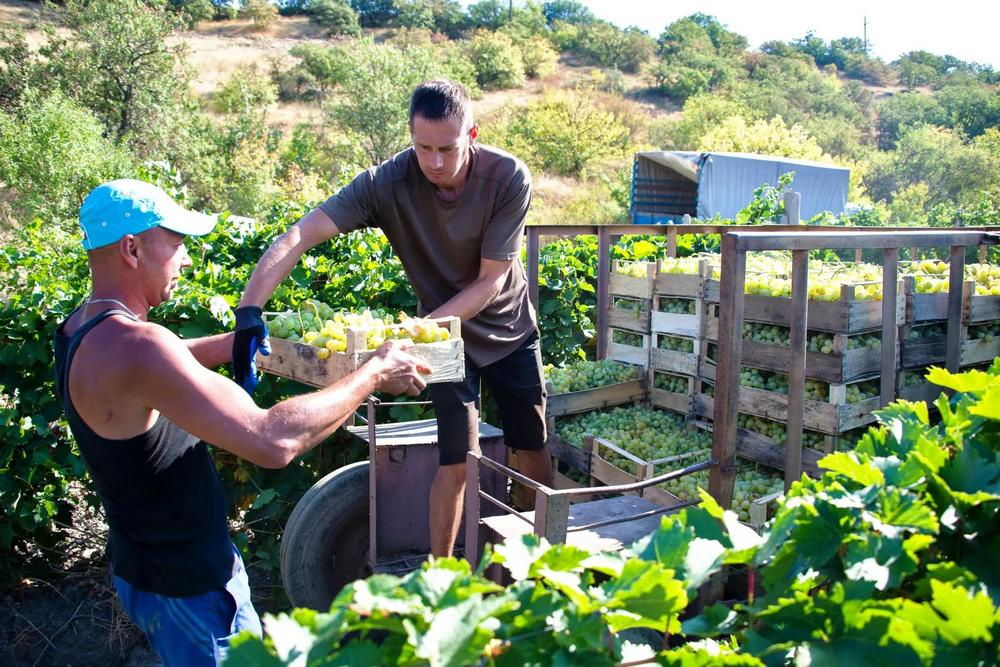
Promising grapes, weaker wine production
Crimea’s grape harvest has begun with expectations of good volumes and berry quality, but the outlook for wineries is being clouded by falling production, weaker tourist demand and sharply higher operating costs. Data from Rosalkogoltabakkontrol cited by Rossiyskaya Gazeta show that Russian grape-wine production fell 14.8% year on year in the first eight months of 2026, while cognac output declined 16.8%.
The contraction was deeper in Crimea. Still-wine production dropped 24.7% over the same period and sparkling-wine output fell 38%. This creates a difficult imbalance for growers and processors: a promising crop is arriving as wineries are producing less and smaller operators have limited capacity to absorb grapes, hold inventory or distribute bottles beyond the peninsula.
Lower tourism is a central part of the pressure. Rossiyskaya Gazeta described the current season as likely to be the weakest in a decade. Surveys from the previous year found that a visitor spending two weeks in Crimea consumed 10 liters of wine on average, alongside 3.5 liters of spirits and as much as 20 liters of beer. Large wineries can partly compensate through sales to mainland markets, but small producers depend more heavily on local visitors and direct sales.
Freight and packaging squeeze margins
Wine park co-founder Yuri Shavardov identified logistics and fuel as two costs affecting every Crimean business. Diesel, which was difficult to obtain during the summer, is now available but costs 120–140 rubles per liter. Freight charges on the Novorossiya highway increased fivefold over the summer, threatening to absorb the profit from his company’s supply contract with Auchan.
Anatoly Tsurkin, chairman of Crimea’s association of freight carriers and forwarders, told Rossiyskaya Gazeta that daily truck traffic on the route had declined from as many as 2,000 vehicles in May to 500–600. The price of an 86-cubic-meter truckload rose from about 90,000–100,000 rubles in May to 350,000–400,000 rubles a week before his comments, and then to 500,000–550,000 rubles.
Packaging has also become more expensive. UPPA Winery owner Pavel Shvets said his business had already replaced imported bottles with domestic ones, but their price doubled from 40 to 80 rubles. The combination of bottles, fuel and outbound transport raises the break-even price for wine just as local consumption is weakening.
Small wineries seek regulatory and credit relief
Producers want a temporary change allowing alcoholic beverages to be shipped as part of consolidated loads. Current Rosalkogoltabakkontrol rules prevent that arrangement, meaning a winery sending five pallets must pay for a dedicated truck or smaller vehicle at a similar cost. As an illustration of the savings, a two-pallet industrial generator would have cost 140,000 rubles to deliver separately with insurance, while transport company Delovye Linii carried it in a consolidated load for 23,000 rubles.
Crimea’s parliament has separately asked Russian Prime Minister Mikhail Mishustin to extend credit holidays for small and medium-sized businesses in tourism and agriculture. Speaker Vladimir Konstantinov said the proposed deferral would last up to 18 months, compared with the maximum six months currently provided under federal law. Lawmakers also proposed removing restrictions tied to loan agreements signed before March 1, 2024. For small wineries, access to cheaper freight and longer payment relief could determine whether a good harvest supports production or instead adds to inventories and working-capital pressure.