Crimean Wine Output Rises 3.6-Fold Between 2014 and 2025, Ministry Says
Crimean grape-wine production increased 3.6-fold between 2014 and 2025, according to the region’s Agriculture Ministry. Vineyard area grew by almost 30%, while the grape harvest rose by more than 53%.
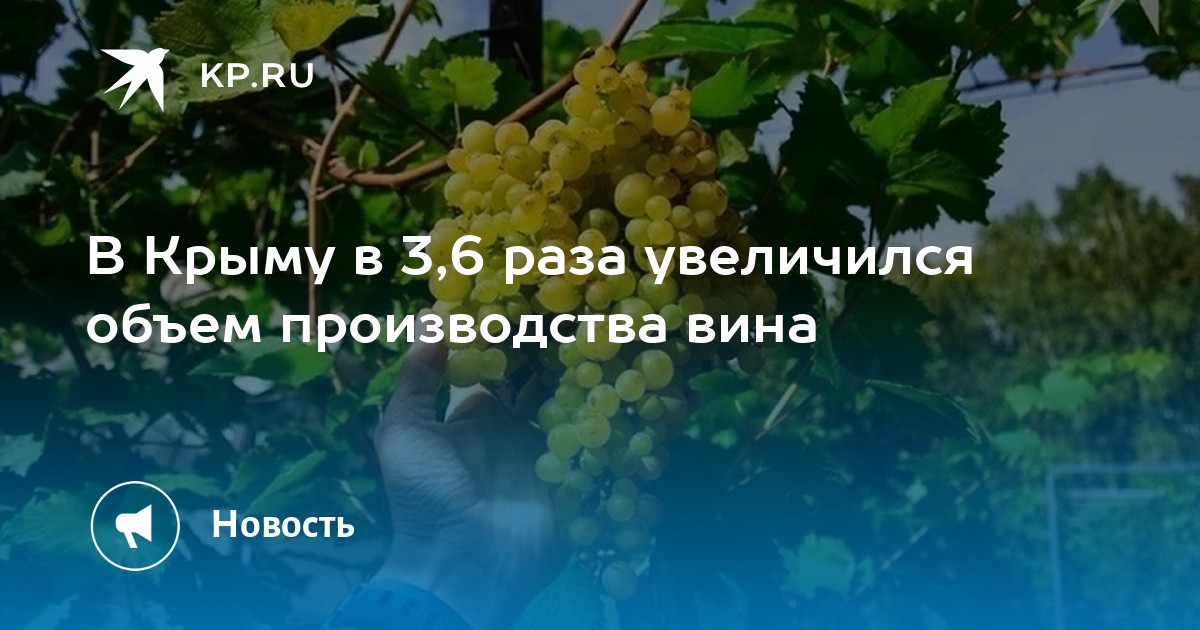
Wine production outpaces vineyard expansion
Crimean grape-wine production increased 3.6-fold between 2014 and 2025, according to figures from the region’s Agriculture Ministry reported by Komsomolskaya Pravda. The expansion was substantially faster than the growth in planted area: the region’s vineyards increased by almost 30% over the same period.
The ministry also reported that the gross grape harvest grew by more than 53%. Together, the figures indicate that the increase in finished-wine output was not driven by vineyard expansion alone. Greater availability of locally harvested grapes contributed to the increase, while the gap between harvest growth and wine-production growth points to a broader rise in processing activity. The source did not provide annual production volumes, yields per hectare or plant-capacity figures, so the respective contribution of each factor cannot be quantified.
Sparkling wine and cognac also expand
Growth extended beyond still grape wine. Sparkling-wine production nearly tripled between 2014 and 2025, while cognac production increased by more than 62%, according to the ministry. These figures show expansion across several processing categories, although grape wine recorded the largest stated increase.
The different growth rates matter for wineries and grape suppliers. A larger vineyard base and a harvest increase of more than 53% provide more raw material, while faster growth in wine and sparkling-wine production raises demand for processing, storage, bottling and other winery equipment. The available data do not specify how much output was sold locally or outside the region, nor do they include prices, inventories, company-level market shares or export volumes.
State funding supports planting and modernization
The regional authorities spent 5.8 billion rubles on the sector from 2014 onward, the Agriculture Ministry said. Funding was directed toward new vineyard planting, modernization and equipment. More than 930 million rubles was allocated in 2026 for the same areas, extending support beyond the production period covered by the 2014-2025 comparison.
For producers, the 2026 allocation can support further renewal of vineyards and processing assets. For equipment suppliers, nurseries and other businesses serving wineries, it preserves a state-backed source of demand. However, the ministry did not disclose the division of the 5.8 billion rubles among planting, modernization and machinery, or identify the beneficiaries and projects financed.
Data leave trade and market access unanswered
The reported indicators establish the direction of the region’s production growth, but they do not describe its commercial destination. No information was provided on shipments to other markets, imports of wine or production inputs, average selling prices, or the share of output held in stock. The source also offered no comparable figures for competing wine-producing regions.
That limits assessment of whether the 3.6-fold increase represents equivalent growth in sales or consumption. For growers, processors, distributors and investors, the next relevant indicators will be absolute production volumes, vineyard yields, winery utilization, inventories and sales by destination. Until those figures are available, the ministry’s data document a major expansion in physical production and capacity-related investment, but not the profitability or trade performance of the sector.