C.P. Vietnam Builds Processed Chicken Export Capacity Through Integrated Production
C.P. Vietnam has shipped Vietnam’s first processed chicken consignment to South Korea after completing an eight-step assessment. Its $250 million CPV Food Binh Phuoc complex integrates feed production, farming, slaughter and processing.
First Vietnamese shipment enters South Korea
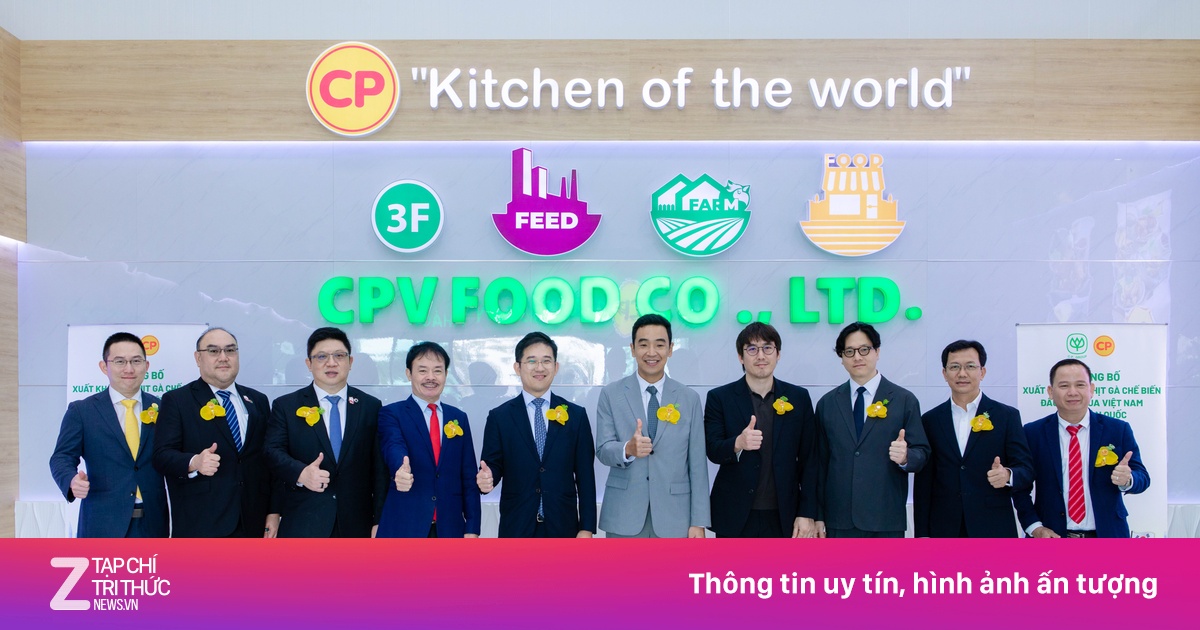
Vietnam’s first processed chicken shipment to South Korea was officially exported on August 25, more than four months after the two countries announced the opening of their respective markets to the product. During the initial phase, two companies from each country are permitted to export processed chicken to the other market. C.P. Vietnam became the first Vietnamese company to qualify, according to Znews.
South Korea adds another destination to C.P. Vietnam’s processed chicken business. The company had already supplied markets with demanding food-safety requirements, including Japan, Singapore, Hong Kong, China, and Russia. The broader market portfolio gives the producer experience in adapting production and documentation to different national standards.
A $250 million integrated production base
C.P. Vietnam’s export platform is centered on the CPV Food Binh Phuoc poultry production and processing complex. Built with total investment of about $250 million, the site includes a feed mill, hatchery, farm network, slaughter facility and processing plant. These operations are connected through the company’s integrated “Feed - Farm - Food” model.
The model gives C.P. Vietnam oversight from animal feed and poultry farming to finished food products. According to Znews, continuous control across the chain supports food safety, product quality and traceability. It also allows the company to design its production base around international standards before approaching individual export markets with different technical criteria.
This integration is commercially relevant because market access depends on more than the processing plant alone. Animal health in farming areas, veterinary controls before and after slaughter, heat treatment, packaging and transport all formed part of South Korea’s review. A company seeking approval therefore needs coordinated records and operating controls across the full supply chain.
South Korea imposed a detailed approval process
C.P. Vietnam completed an eight-step assessment conducted by South Korea’s Animal and Plant Quarantine Agency and Ministry of Food and Drug Safety. The company also prepared two sets of detailed questionnaires, each running to about 1,000 pages. South Korean interagency teams carried out on-site assessments in Vietnam from July 2025 through December 2025, covering the feed mill, farms and processing facilities.
The technical conditions extended to plant layout and production procedures. Birds used as raw material had to be healthy and pass inspections by the competent veterinary authority both before and after slaughter. During processing, the product’s core temperature had to exceed 80 degrees Celsius for at least one minute. Areas before and after heat treatment had to remain separate, with distinct arrangements for personnel, entrances, changing rooms and supporting facilities to limit contamination risks.
A new outlet for Vietnam’s poultry sector
Nguyen Xuan Duong, chairman of the Vietnam Animal Husbandry Association, said market access remains one of the livestock sector’s difficulties. With the domestic market gradually becoming saturated, he argued that overseas destinations such as South Korea can expand the available outlet for Vietnamese livestock and food-processing businesses. He also identified linked production from feed through slaughter and deeper processing as a route to higher quality and compliance with international requirements.
Duong Tat Thang, head of Vietnam’s Department of Livestock Production and Animal Health, expressed the expectation that more Vietnamese companies would qualify to export to South Korea after C.P. Vietnam. C.P. Vietnam chief executive Pawalit Ua-amornwanit said the first shipment would encourage further investment in technology and deeper processing. The immediate milestone is market access rather than disclosed sales volume: neither shipment size nor planned export capacity was provided.