Counterfeit cigarettes approach 20% of tobacco consumption in Toulouse
Counterfeit cigarettes accounted for 19.3% of tobacco consumption in Toulouse in the fourth quarter of 2025, up from 0.7% in the same period of 2018, according to figures cited by Imperial Brands-Seita. A recent seizure involving 237 cartons highlights the enforcement and product-safety challenges facing France.
Counterfeit share rises sharply in Toulouse
Counterfeit cigarettes accounted for 19.3% of tobacco consumption in Toulouse in the fourth quarter of 2025, compared with 0.7% in the fourth quarter of 2018, according to figures presented by Hervé Natali of Imperial Brands-Seita in an interview with La Dépêche. The company monitors tobacco consumption twice a year and has done so for more than ten years. Natali also put counterfeit tobacco's share of consumption across the wider Occitanie region at 25.5%.
The figures describe counterfeit products rather than legal cigarettes bought in lower-tax jurisdictions. Natali said authenticity studies can identify whether a packet belongs to an official market. Cigarettes sold through authorized retailers in Andorra, Spain and Belgium are supplied by legal manufacturers, while a counterfeit packet is not registered in any authorized distribution system.
Road seizure illustrates cross-border enforcement
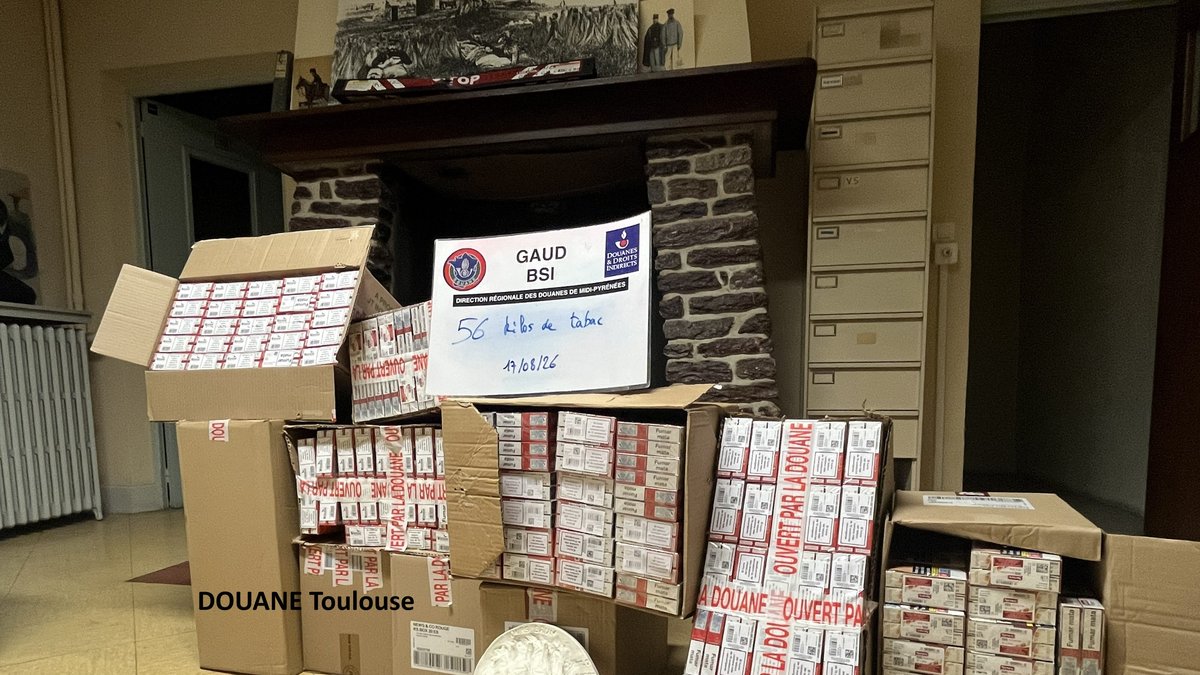
The scale of the parallel market was illustrated by a road inspection in Haute-Garonne on Monday, 17 August. Customs officers in Cierp-Gaud seized 237 cartons of cigarettes and 3.5 kg of hookah tobacco from a driver returning from Spain, La Dépêche reported. The driver said the cigarettes had been purchased for personal consumption. The report did not specify whether laboratory tests established that the seized products were counterfeit.
Production is also moving closer to consumers. According to Natali, no counterfeit cigarette factory had been identified in France until recently, but seven clandestine workshops have been discovered in the country since 2021. He said dismantled organizations have mainly involved networks connected with Ukraine, Poland, Moldova, Armenia and Georgia. Raw materials including tobacco, paper and cellulose wadding also arrive from Asia and emerging countries.
Unregulated production raises safety risks
Counterfeit cigarettes do not comply with the manufacturing and sanitary requirements imposed on legal tobacco products. Natali said sawdust and animal excrement can be present in counterfeit tobacco, while fungi have been documented in filters or paper by the French customs laboratory. These risks add an uncontrolled layer of exposure to a product that is already harmful when legally manufactured.
The supply model ranges from organized criminal factories to small-scale domestic production. La Dépêche reported that more individuals are ordering raw tobacco and machines for cutting, grinding and filling cigarette tubes online, then producing cigarettes for sale. Legal manufacturers, meanwhile, dismantle and certify machinery when equipment is upgraded or a site closes to prevent industrial assets from reaching the black market. Natali argued that tobacco taxation has had a deterrent role but questioned whether further tax pressure remains the most effective way to encourage smokers to quit. For producers, licensed retailers and enforcement agencies, the reported growth of counterfeit supply means legal sales data increasingly provide only a partial view of total tobacco consumption.